



For years, businesses protected their data like a medieval castle: build a thick wall (a…
Read More
Did you know that over 90 percent of UK businesses rely on IT support desks to keep daily operations running smoothly? In Lancashire and Manchester, the right IT support can mean the difference between costly downtime and seamless productivity. As companies face growing digital demands, understanding the critical role of IT support desks helps local businesses improve resilience, tackle technical challenges fast, and stay ahead in a rapidly changing environment.
| Point | Details |
|---|---|
| Central Role of IT Support Desk | The IT support desk serves as the first point of contact for technical issues, ensuring effective incident management and operational efficiency for businesses. |
| Multi-Tiered Support Structure | An organized service delivery model allows businesses to effectively address technical issues, from basic troubleshooting to strategic systems development. |
| Transformative Benefits for SMEs | Implementing a professional IT support desk can enhance productivity, reduce costs, and provide strategic insights enabling data-driven decisions. |
| Importance of Clear Protocols | Establishing defined roles and effective communication channels is crucial to mitigate common challenges in IT support functions, ensuring operational resilience. |
In the dynamic digital landscape of Lancashire and Manchester, a professional IT support desk serves as the critical nerve centre for businesses navigating technological challenges. According to research from Oxford University, an IT support desk fundamentally acts as the central point of contact for resolving user queries and providing specialist technical assistance.
The core responsibilities of an IT support desk extend far beyond simple troubleshooting.
These specialist teams are tasked with managing complex technical incidents, handling service requests, and ensuring smooth operational continuity for businesses across Preston, Blackburn, Bolton, and other key Lancashire commercial hubs. As OpusTech explains, the primary aim is to resolve technical problems efficiently and fulfill service requests with minimal disruption.
Key functions of a modern IT support desk typically include:
For Lancashire and Manchester SMEs, an effective IT support desk isn’t just a technical resource – it’s a strategic partner ensuring business resilience, productivity, and technological adaptability in an increasingly digital marketplace.
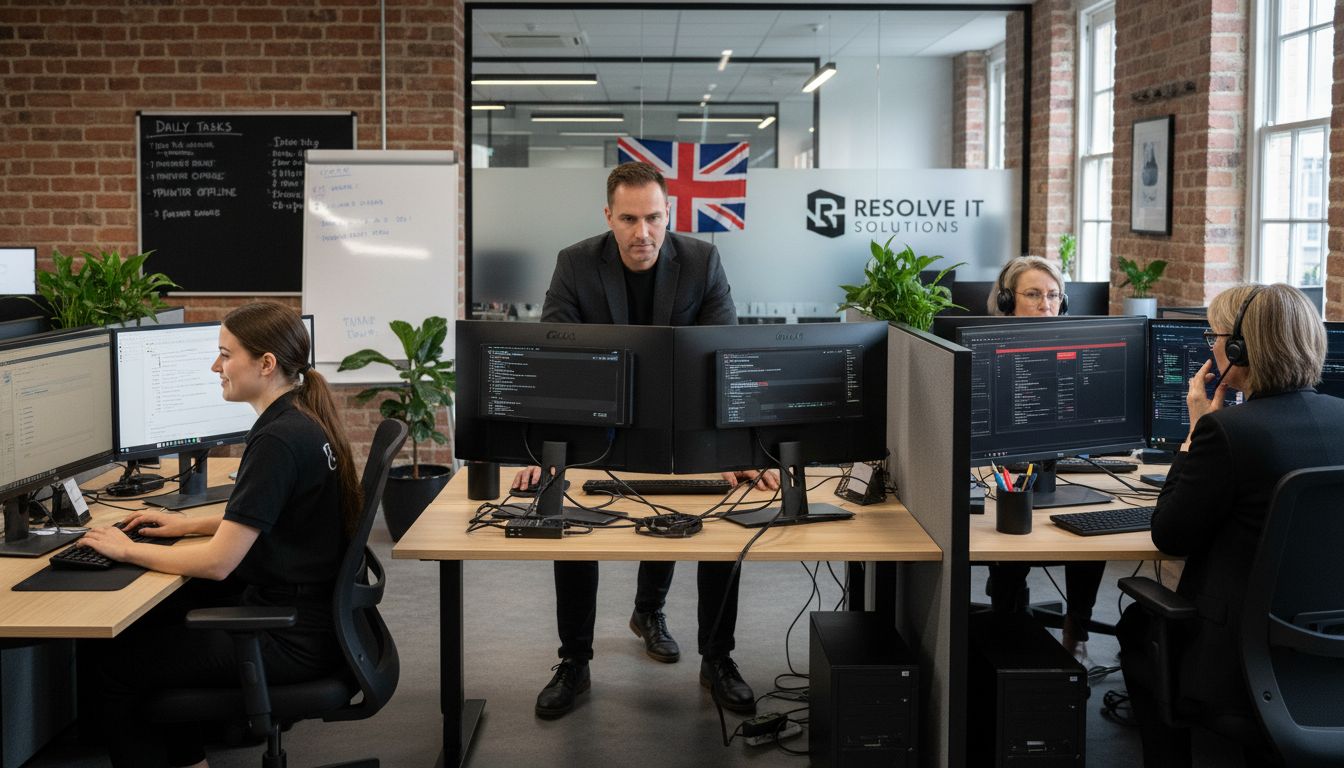
For Lancashire and Manchester businesses, an IT support desk plays a pivotal role in maintaining technological infrastructure and operational efficiency. According to research from Oxford University, these specialized teams are responsible for responding to IT incidents and service requests through various communication channels, ensuring comprehensive technical support.
Research from OpusTech indicates that modern IT support desks utilise sophisticated ticketing systems and proactive monitoring techniques to manage technical challenges effectively. The primary functions extend beyond mere problem resolution, encompassing strategic technological management and user empowerment.
Key primary functions of an IT support desk include:
By implementing these functions, IT support desks transform from reactive technical support to proactive technological partners. For SMEs across Lancashire and Manchester, this means reduced downtime, enhanced productivity, and strategic technological management that adapts to evolving business needs.
In the dynamic technological landscape of Lancashire and Manchester, IT support services have evolved into sophisticated, multi-tiered systems designed to address diverse business technology challenges. According to research from OpusTech, IT support is strategically structured across multiple levels to ensure comprehensive technical assistance.
These support services are typically categorised into distinct levels, each addressing increasingly complex technological issues. Research indicates that these levels range from basic first-line support to advanced system development and long-term technological improvements. This hierarchical approach ensures that businesses receive targeted, efficient technical resolution tailored to their specific needs.
Key types of IT support services include:
Here’s a comparison of the main IT support service levels:
| Support Level | Main Focus | Typical Responsibilities |
|---|---|---|
| Level 1 (First-Line) | Initial contact Basic support |
Basic troubleshooting Immediate queries Service request logging |
| Level 2 (Second-Line) | Advanced resolution | Complex issues Escalated cases Deeper technical expertise |
| Level 3 (Third-Line) | Critical systems Specialist intervention |
Major incidents Specialist support System architecture |
| Level 4 (Development/Engineering) | Strategic planning | System upgrades Long-term improvement Custom solutions |
As Arc Systems explains, these support services distinguish between IT support (which resolves technical issues) and IT helpdesk (which manages and logs technical tickets). For SMEs across Lancashire and Manchester, understanding these service types is crucial in selecting the right technological support strategy.
For SMEs across Lancashire and Manchester, a strategic IT support desk delivers transformative advantages that extend far beyond traditional technical troubleshooting. According to research from Rock Consulting, implementing an effective IT support infrastructure can significantly enhance business efficiency while simultaneously reducing operational costs.
The comprehensive benefits of a professional IT support desk are multifaceted. Indeed UK highlights that these services leverage advanced business intelligence to provide real-time insights, enabling companies to make data-driven decisions and maintain competitive technological edges. By streamlining incident management and eliminating data silos, businesses can unlock unprecedented operational potential.
Key benefits for UK businesses include:
By investing in a robust IT support desk, Lancashire and Manchester businesses can transform technological challenges into strategic opportunities, ensuring sustainable growth and technological resilience in an increasingly digital marketplace.
Businesses across Lancashire and Manchester frequently encounter complex technological challenges that can significantly disrupt operational efficiency. According to research from OpusTech, managing intricate technical issues across different support levels requires strategic implementation of comprehensive support structures.
One of the most prevalent challenges is distinguishing and effectively coordinating between IT support and helpdesk functions. As Arc Systems explains, unclear role definitions can lead to inefficient problem resolution and communication breakdowns. Successful organisations overcome these challenges by establishing clear protocols and maintaining robust knowledge management systems.
Key strategies for mitigating common IT support challenges include:
By proactively addressing these challenges, Lancashire and Manchester businesses can transform potential technological obstacles into opportunities for improved operational resilience and technological efficiency.
Managing IT support desks can be confusing when dealing with multiple support levels and ensuring quick incident resolution. The article highlights how SMEs in Lancashire and Manchester face challenges like downtime and unclear IT roles that disrupt productivity and increase costs. You deserve a local partner who offers proactive IT support that covers everything from basic troubleshooting to advanced cybersecurity and cloud solutions, tailored specifically for your business needs.
Explore how J700 Group’s dedicated team specialises in managed IT services and business connectivity designed to keep your operations secure and efficient. Learn more through our Connectivity Archives – J700 Group and understand how seamless communication tools from our Teams Archives – J700 Group can empower your workforce.
Don’t let IT headaches hold you back any longer. Contact our Lancashire-based experts today for a free consultation at J700 Group Contact and experience technology support that transforms challenges into growth opportunities. Act now and secure a smoother, safer, and more productive tomorrow.
The primary function of an IT support desk is to act as the central point of contact for resolving user queries and providing specialist technical assistance. This includes managing complex technical incidents, handling service requests, and ensuring operational continuity for businesses.
IT support services are typically categorized into four levels: Level 1 (First-Line Support) handles basic issues, Level 2 (Second-Line Support) addresses more complex challenges, Level 3 (Third-Line Support) manages critical systems, and Level 4 (Development/Engineering) focuses on strategic planning and long-term improvements.
An effective IT support desk can reduce operational costs by minimizing downtime, eliminating redundant IT expenditures, and optimizing resource allocation, which leads to more efficient management of technological resources.
Common challenges include unclear role definitions between IT support and helpdesk functions, ineffective communication, and inefficient problem resolution processes. Addressing these issues involves establishing clear protocols, enhancing cross-team collaboration, and maintaining robust knowledge management systems.
For years, businesses protected their data like a medieval castle: build a thick wall (a…
Read More
For many small and medium-sized businesses, cybersecurity is still viewed as an IT problem. Firewalls,…
Read More
Cloud technology is no longer a luxury or a cost-saving alternative to on-site servers. For…
Read More
Remember when we jokingly wondered if Apple was borrowing our name? Well, the rumours were…
Read More
AI hasn’t just changed the way we work, it has completely rewritten the rulebook for…
Read More
For many businesses, the office phone is like part of the furniture, it’s always there,…
Read More
We are thrilled to announce a significant milestone in the J700 Group journey. To keep…
Read More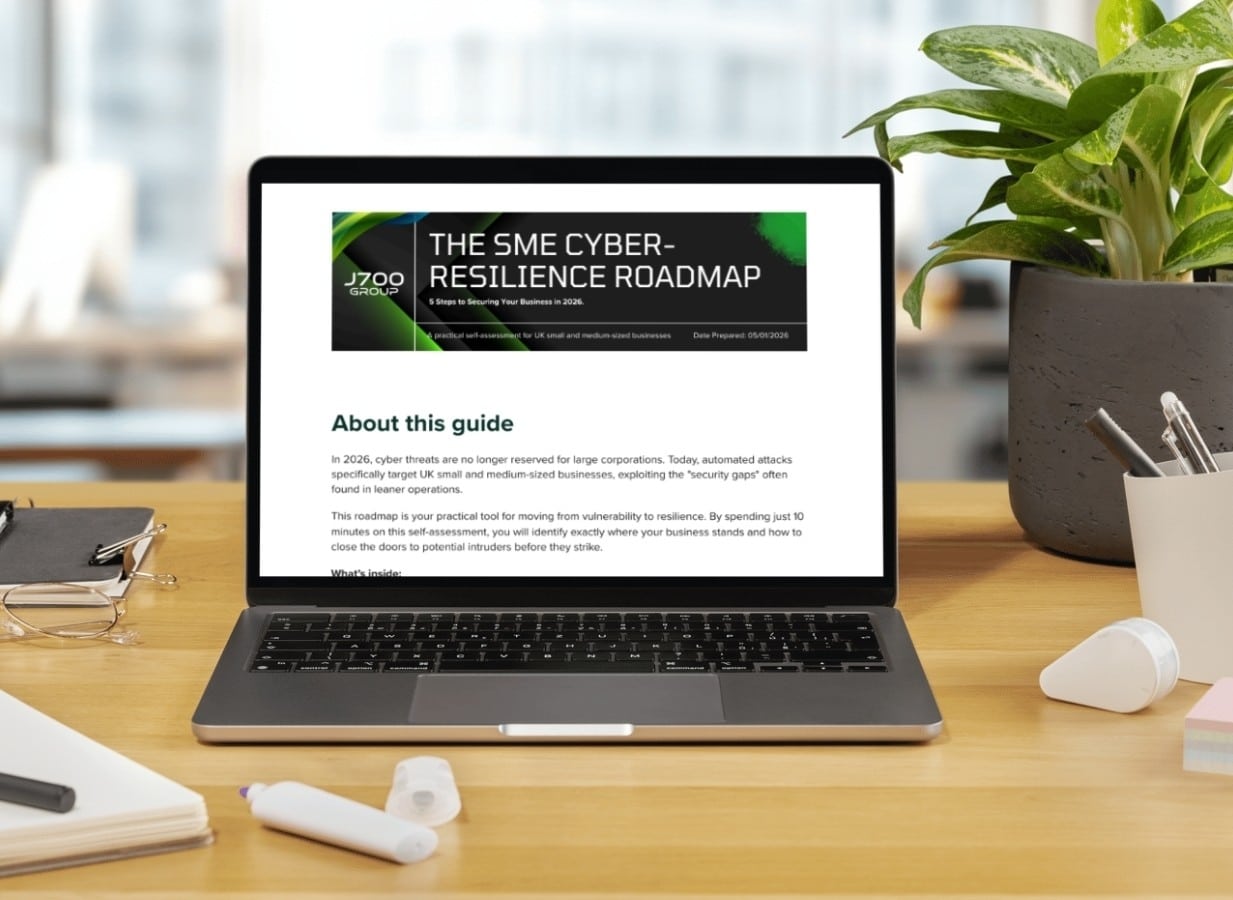
For years, many small and medium-sized business owners in the North West have operated under…
Read More
In a modern healthcare setting, the stethoscope and the blood pressure cuff aren’t the only…
Read More
When people hear the word cybersecurity, they often imagine complex systems, expensive software and specialist…
Read More
As we count down to midnight, most of us are thinking about gym memberships or…
Read More
It’s Christmas Eve in Lancashire. The Preston bypass is a nightmare, the last-minute dash to…
Read More
For many businesses, the Christmas period means quieter offices, reduced staffing and systems left running…
Read More
Or: Why we’d like to have a word with Tim Cook this Christmas. There are…
Read More
Hackers Love Christmas: Learn Why your Business Could be at Risk This Holiday SeasonThe festive…
Read More
In recent months, high-profile companies like Land Rover and Co-op have made headlines due to…
Read More
Explore 7 essential tips for effective cloud solutions comparison to find the best fit for…
Read More
Learn how to secure business data for UK SMEs with this step-by-step guide focused on…
Read More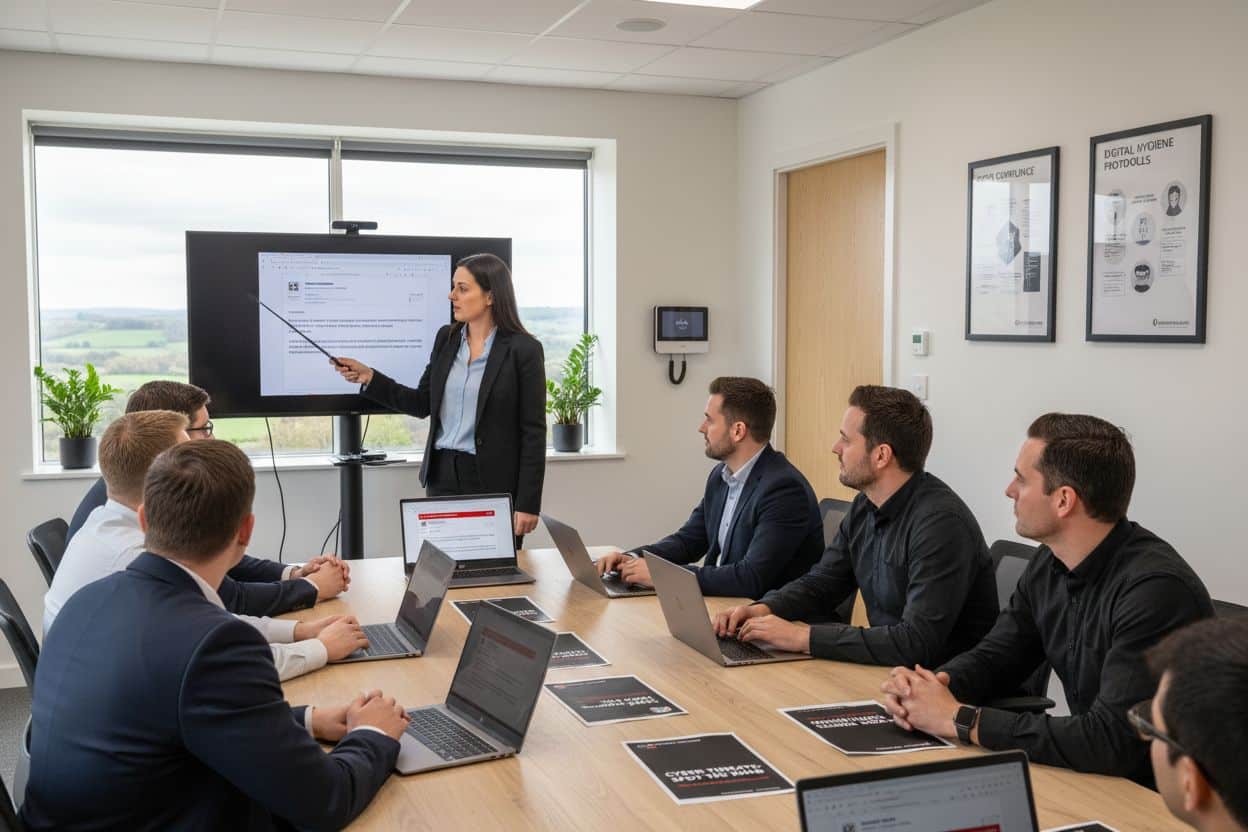
Cybersecurity basics explained for UK businesses—core concepts, major threats, essential safeguards, and compliance requirements. A…
Read More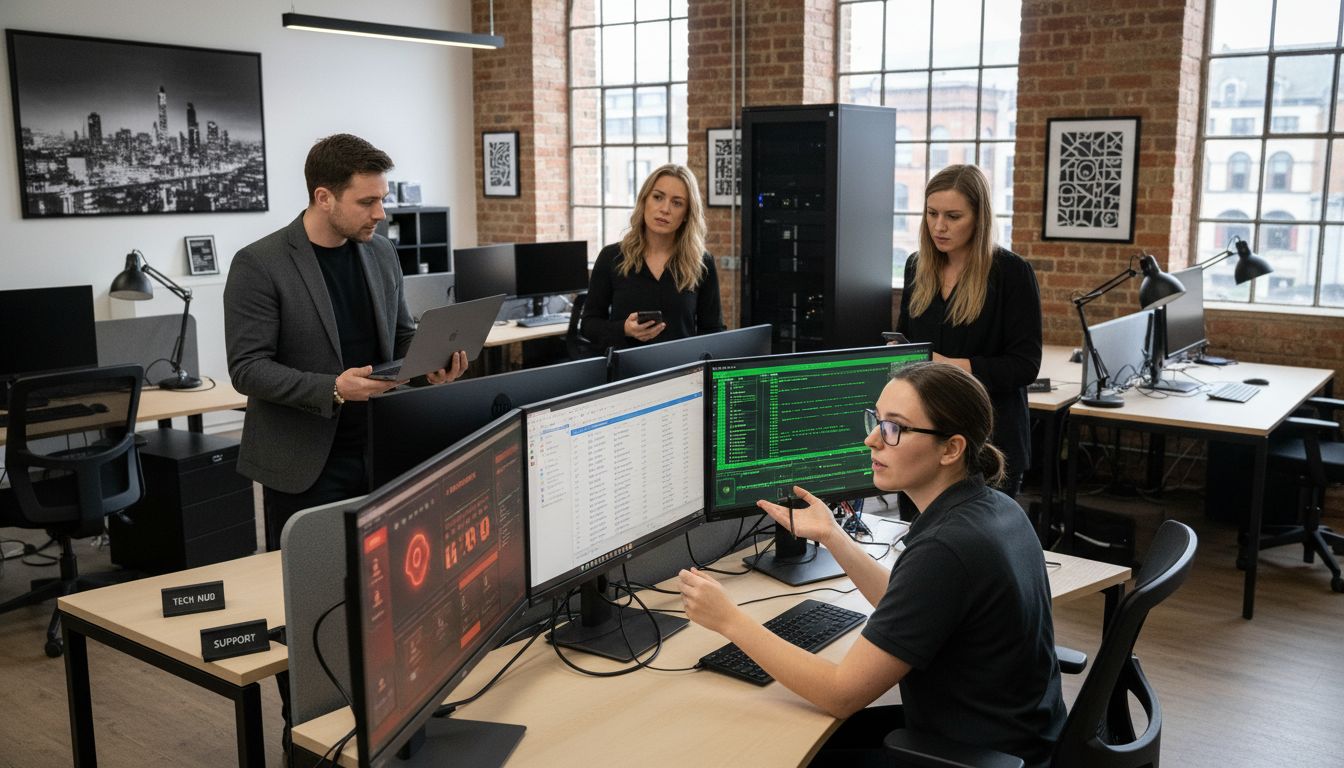
Discover the essential role of IT support desks, core functions, key benefits, types of support,…
Read More
Discover 10 microsoft 365 alternatives for UK SMEs, comparing features and benefits to help your…
Read More
Discover the best microsoft 365 alternatives in our comparison of 10 top products to enhance…
Read More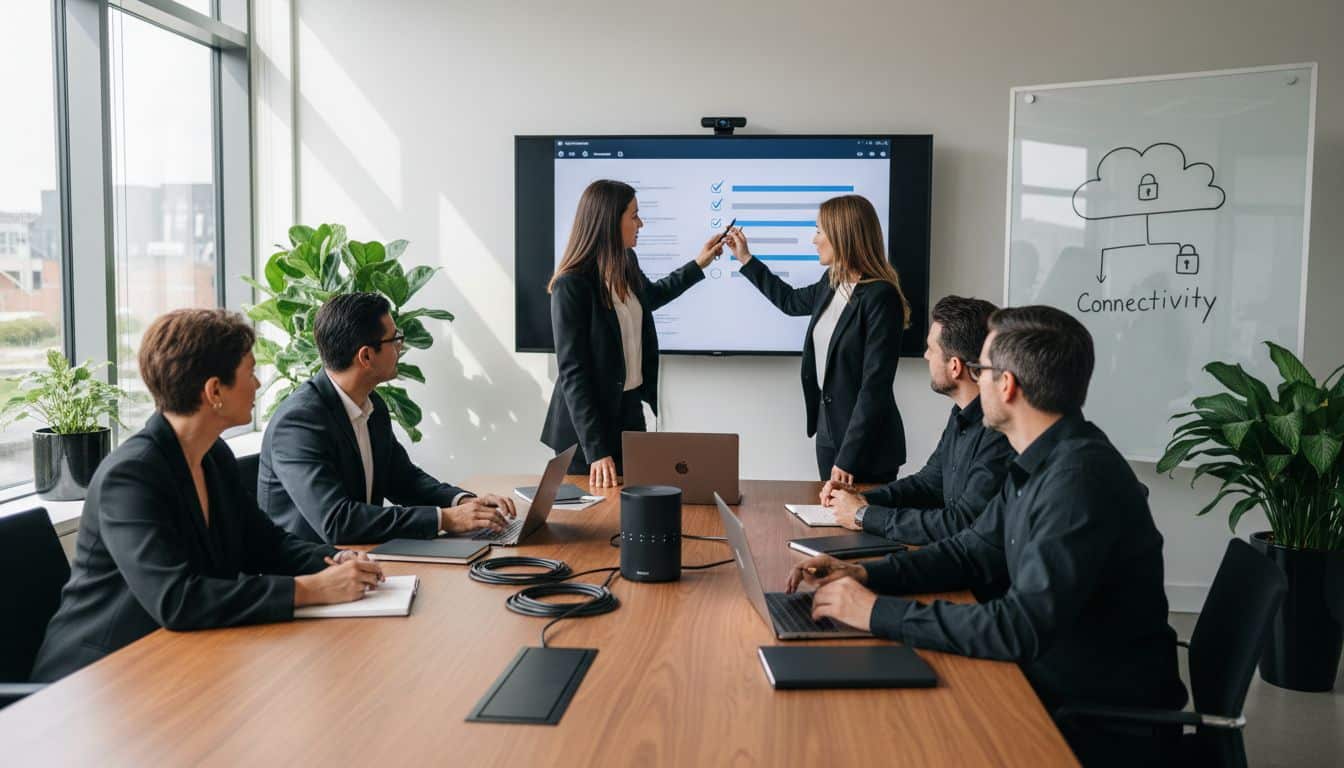
Discover a business connectivity checklist with 7 actionable steps to boost IT reliability, security, and…
Read More
Discover 7 essential business continuity planning steps to protect your SME. Learn practical strategies for…
Read More
Small Business Office 365 comprehensive guide for UK SMEs: core features, setup process, security essentials,…
Read More
Small Business Office 365 guide for UK firms. Learn core features, setup, security, costs, and…
Read More
Small business Office 365 guide covering essential features, security, costs, local support, and practical benefits…
Read More
Follow this cybersecurity checklist for SMEs to secure your business in Lancashire and Manchester. Step-by-step…
Read More
Follow this cybersecurity checklist for SMEs to boost protection, reduce risks, and secure business data…
Read More
Cloud security explained: A comprehensive guide for UK businesses covering threat types, protection strategies, compliance,…
Read More
Data protection strategies for UK SMEs—types, key components, GDPR compliance, business risks, and best practices…
Read More
Why cybersecurity matters for UK businesses: core concepts, main risks, common threats, legal requirements, and…
Read More
Comprehensive guide to IT issues Lancashire businesses face, including security threats, system downtime, cloud solutions,…
Read More
Comprehensive guide on cyber security threats in the UK. Learn common types, key characteristics, real-world…
Read More
Follow this IT security checklist for a step-by-step process to secure your business effectively in…
Read More
Explore the benefits of managed IT services for businesses in Manchester and Lancashire, enhancing efficiency…
Read More
Explore the role of cybersecurity in business. Understand its importance, how it works, and key…
Read More
Discover 7 key advantages of Microsoft 365 for SMEs that can enhance productivity, collaboration, and…
Read More
Explore why use managed IT services and how they benefit businesses. Gain comprehensive insights on…
Read More
Comprehensive guide explaining cyber threats, focusing on their importance, how they work, and the key…
Read More