



For years, businesses protected their data like a medieval castle: build a thick wall (a…
Read More
Every business relies on helpdesk support to keep staff and customers running smoothly, yet many still treat it as a background service. Most people do not realise that effective helpdesk teams can reduce downtime by up to 40 percent and directly influence customer loyalty. Oddly enough, the real value of helpdesk support goes way beyond fixing computers and resetting passwords. Its true power lies in transforming technical chaos into smooth, productive days—and happier customers on the other end of every phone or chat.
| Takeaway | Explanation |
|---|---|
| Helpdesk support is essential for operations | It provides technical assistance, ensuring minimal disruption to business processes. |
| Effective communication enhances user experience | Timely updates and responses build trust and foster customer loyalty. |
| Invest in technology for efficiency | Advanced tools improve ticket management and problem resolution speed. |
| Data-driven improvements elevate service quality | Collecting feedback helps identify areas for support enhancement. |
| Training staff is crucial for success | Well-prepared teams provide better service and reduce resolution times. |
Helpdesk support represents a critical communication channel where businesses provide technical assistance and problem resolution to their customers and employees. At its core, a helpdesk functions as a centralised point of contact for addressing technological challenges, service requests, and operational queries.
The primary objective of helpdesk support is to provide swift, efficient solutions that minimise disruption to business operations. When technical issues arise, organisations need a structured approach to troubleshooting and resolution. According to NHS Digital Service Desk Guidelines, effective helpdesk support involves several key components:
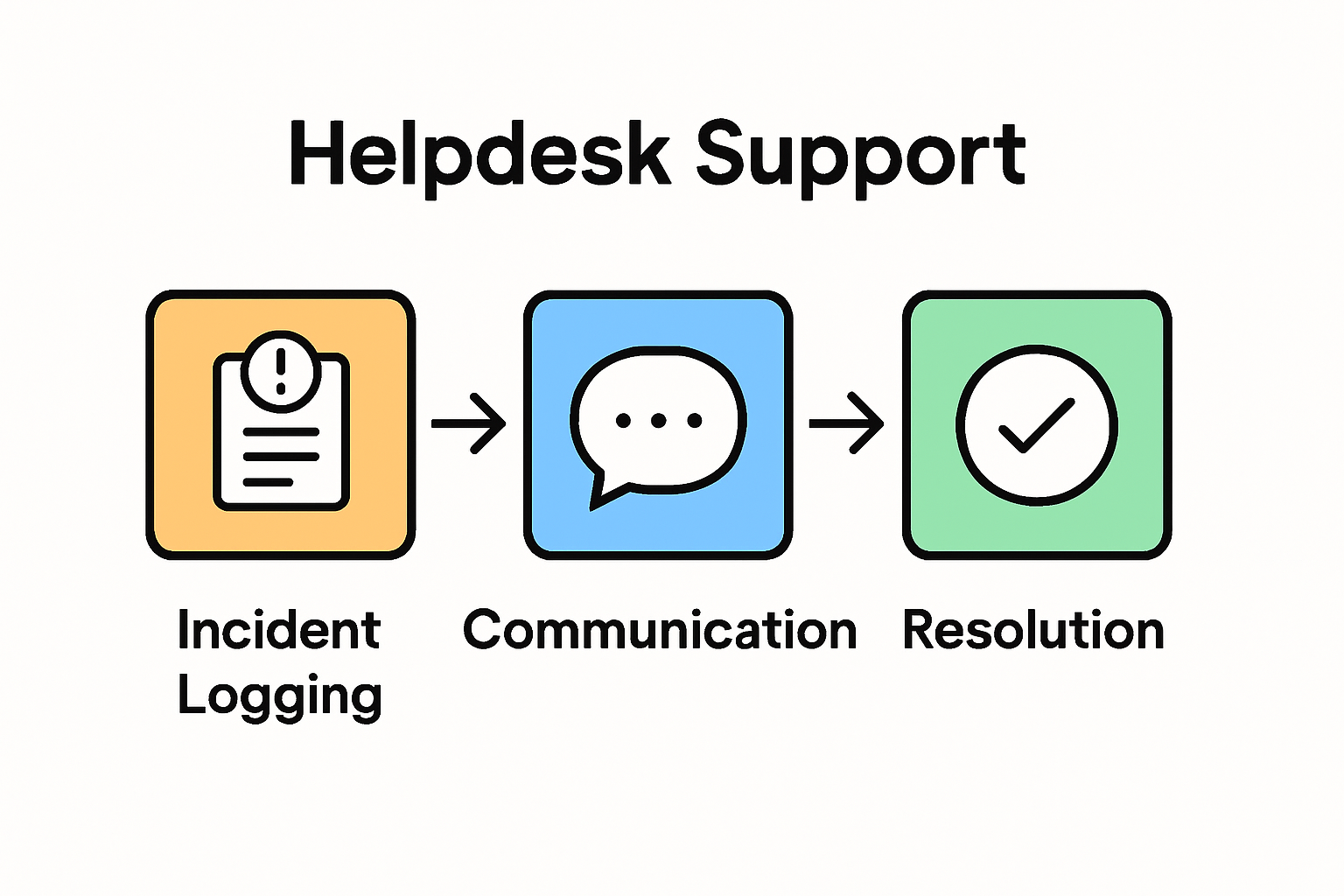
Helpdesk support typically involves multiple interaction channels, including telephone support, email correspondence, web portals, and live chat platforms. Support teams are trained to handle diverse technical challenges, ranging from software glitches to hardware malfunctions. Their responsibilities extend beyond mere problem resolution to include:
By creating a structured approach to technical support, helpdesk teams ensure that businesses can maintain operational continuity and minimize productivity losses associated with technological interruptions.
Helpdesk support transcends mere technical problem solving and represents a strategic business function that directly impacts organisational performance, customer satisfaction, and operational efficiency. In an increasingly digital business landscape, the role of helpdesk support has evolved from a reactive service to a proactive business enabler.
Modern businesses recognise that effective helpdesk support is not just about resolving technical issues but about creating seamless user experiences. By implementing robust support mechanisms, organisations can transform potential technological disruptions into opportunities for enhanced productivity. According to UK Government Digital Service, technical support teams play a critical role in:
A well-structured helpdesk support system delivers significant operational benefits. By quickly diagnosing and resolving technical issues, businesses can minimise downtime, prevent productivity losses, and reduce long-term technology-related expenses. Our guide on reducing business communication barriers further explores how streamlined support mechanisms can transform operational workflows.
Moreover, helpdesk support serves as an essential knowledge repository, enabling organisations to:
By investing in sophisticated helpdesk support infrastructure, businesses can create a responsive, efficient, and user-centric technological ecosystem that adapts to evolving operational challenges.
Customer satisfaction represents the cornerstone of successful business relationships, and helpdesk support plays a pivotal role in nurturing positive user experiences. By providing timely, empathetic, and effective technical assistance, organisations can transform potential frustration into lasting customer loyalty.
Helpdesk support goes beyond technical problem resolution it represents a critical touchpoint for building trust and demonstrating organisational commitment to customer needs. According to UK Government Service Manual, effective user support involves understanding and anticipating customer expectations.
Key elements of customer-centric helpdesk support include:
Modern helpdesk support teams utilise sophisticated tracking mechanisms to continuously assess and enhance customer satisfaction. By collecting detailed feedback and performance metrics, businesses can identify areas for improvement and refine their support strategies. Our comprehensive guide on communication strategies explores how effective communication transforms customer relationships.
Successful helpdesk support contributes to customer satisfaction through:
By prioritising customer experience within helpdesk support, organisations can create lasting positive impressions that differentiate them in competitive markets.

Effective helpdesk support represents a sophisticated ecosystem of technological infrastructure, human expertise, and strategic processes designed to deliver exceptional problem resolution and user experience. Success depends on carefully integrating multiple interconnected elements that work seamlessly to address technological challenges.
Modern helpdesk support requires robust technological foundations that enable rapid, precise issue resolution. According to NHS Digital Service Manual, organisations must develop comprehensive technological frameworks that support efficient service delivery.
Critical technical infrastructure components include:
Technological tools alone cannot guarantee successful helpdesk support. The human element remains paramount in delivering exceptional service. Support teams require comprehensive training, clear communication protocols, and well-defined escalation procedures. Our communication strategies guide provides deeper insights into effective support mechanisms.
Key process optimization strategies encompass:
By integrating sophisticated technological tools with well-trained, motivated support professionals, businesses can create helpdesk support systems that not only resolve technical issues but also enhance overall organisational efficiency and user satisfaction.
The following table provides an overview of the key components that make up effective helpdesk support systems, highlighting both their technological and human aspects.
| Component | Description |
|---|---|
| Advanced ticketing management systems | Streamline the process of logging, tracking, and resolving support requests |
| Secure remote access technologies | Enable support teams to troubleshoot and resolve issues without being physically present |
| Comprehensive knowledge management | Centralise documentation of common problems and solutions for easy reference |
| Real-time communication tools | Facilitate prompt collaboration within the support team and with users |
| Standardised problem-solving protocols | Ensure a consistent and efficient approach to resolving technical issues |
| Continuous training programmes | Keep support staff up-to-date with evolving technologies and processes |
| Performance monitoring mechanisms | Enable regular assessment and improvement of support quality |
The landscape of helpdesk support is rapidly transforming, driven by technological advancements and evolving customer expectations. Modern organisations are increasingly leveraging cutting-edge technologies to reimagine traditional support models and deliver more sophisticated, intelligent user experiences.
Artificial intelligence represents a groundbreaking frontier in helpdesk support services. According to UK Government Technology Innovation Strategy, emerging digital technologies are revolutionising service delivery across multiple sectors.
Key AI-driven helpdesk innovations include:
Helpdesk support is no longer confined to traditional communication channels. Modern support ecosystems integrate multiple technological platforms to create seamless, responsive user experiences. Our guide on transformative technology trends explores how technological convergence is reshaping business support models.
Emergent technological integration strategies encompass:
By embracing these innovative approaches, organisations can develop more responsive, intelligent, and user-centric helpdesk support services that anticipate and resolve technological challenges with unprecedented efficiency.
This table compares the traditional and modern (innovative) approaches to helpdesk support, showing how technological advancements are shaping service delivery.
| Aspect | Traditional Helpdesk Support | Modern/Innovative Helpdesk Support |
|---|---|---|
| Support hours | Business hours only | 24/7 with AI-driven tools |
| Initial contact | Telephone or email | Multiple channels incl. chatbots, video |
| Issue handling | Manual ticket assignment | Automated ticket classification/prioritisation |
| Documentation | Basic knowledge bases | Comprehensive, searchable repositories |
| Resolution strategies | Reactive problem solving | Predictive and proactive problem management |
| Performance metrics | Basic tracking (e.g. ticket closure rate) | Real-time analytics and feedback mechanisms |
Are you constantly troubled by slow systems, endless support tickets, or unresolved technical issues? The article highlighted how even a minor IT problem can disrupt your productivity and diminish customer satisfaction. At J700 Group, we understand the frustration of recurring technical headaches and the importance of robust helpdesk support for uninterrupted business operations.
Make downtime a thing of the past with our proactive, Lancashire-based team. We deliver managed IT solutions—everything from business connectivity and reliable support to Microsoft 365 integration and cloud computing. Visit J700 Group today to discover how your business can benefit from expert helpdesk support that truly puts you first. Book your free consultation now and start enjoying smoother, safer technology.
Helpdesk support is a centralised communication channel through which businesses provide technical assistance and problem resolution to their customers and employees. It involves addressing technological challenges, service requests, and operational queries.
Helpdesk support enhances customer satisfaction by providing timely and effective technical assistance, creating positive interactions, and maintaining open communication. It aims to resolve issues quickly and ensures that customers feel supported throughout the process.
Effective helpdesk support consists of robust technical infrastructure (such as ticketing systems and knowledge management platforms), trained support staff, standardised processes for troubleshooting, and performance monitoring to ensure continuous improvement.
Technology is transforming helpdesk support through innovations like artificial intelligence and machine learning, which enable features such as intelligent chatbots and automated ticket prioritisation. These advancements lead to more efficient and responsive support services.
For years, businesses protected their data like a medieval castle: build a thick wall (a…
Read More
For many small and medium-sized businesses, cybersecurity is still viewed as an IT problem. Firewalls,…
Read More
Cloud technology is no longer a luxury or a cost-saving alternative to on-site servers. For…
Read More
Remember when we jokingly wondered if Apple was borrowing our name? Well, the rumours were…
Read More
AI hasn’t just changed the way we work, it has completely rewritten the rulebook for…
Read More
For many businesses, the office phone is like part of the furniture, it’s always there,…
Read More
We are thrilled to announce a significant milestone in the J700 Group journey. To keep…
Read More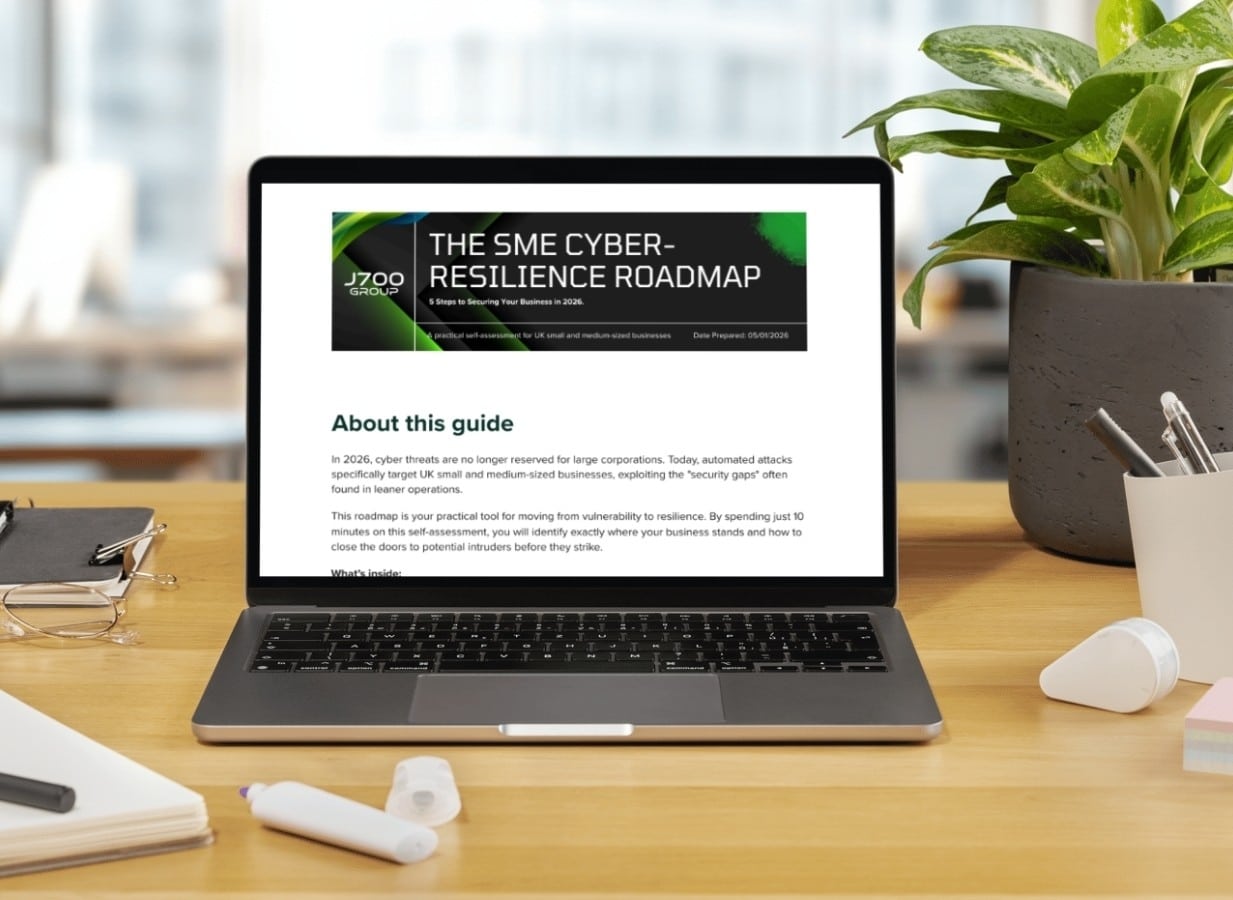
For years, many small and medium-sized business owners in the North West have operated under…
Read More
In a modern healthcare setting, the stethoscope and the blood pressure cuff aren’t the only…
Read More
When people hear the word cybersecurity, they often imagine complex systems, expensive software and specialist…
Read More
As we count down to midnight, most of us are thinking about gym memberships or…
Read More
It’s Christmas Eve in Lancashire. The Preston bypass is a nightmare, the last-minute dash to…
Read More
For many businesses, the Christmas period means quieter offices, reduced staffing and systems left running…
Read More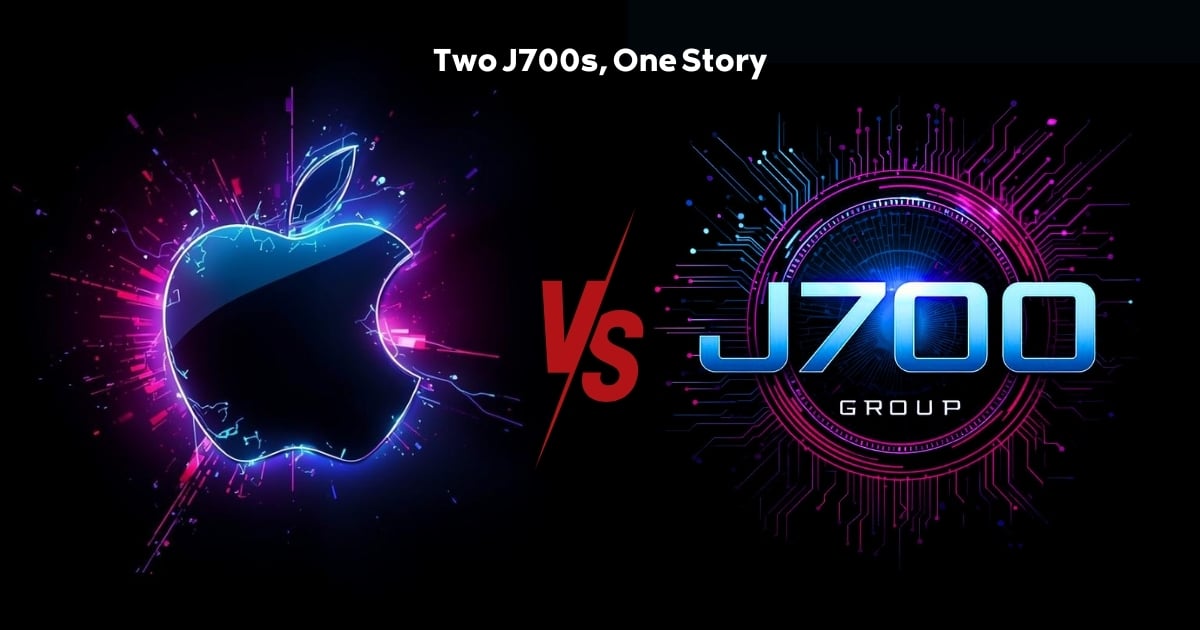
Or: Why we’d like to have a word with Tim Cook this Christmas. There are…
Read More
Hackers Love Christmas: Learn Why your Business Could be at Risk This Holiday SeasonThe festive…
Read More
In recent months, high-profile companies like Land Rover and Co-op have made headlines due to…
Read More
Explore 7 essential tips for effective cloud solutions comparison to find the best fit for…
Read More
Learn how to secure business data for UK SMEs with this step-by-step guide focused on…
Read More
Cybersecurity basics explained for UK businesses—core concepts, major threats, essential safeguards, and compliance requirements. A…
Read More
Discover the essential role of IT support desks, core functions, key benefits, types of support,…
Read More
Discover 10 microsoft 365 alternatives for UK SMEs, comparing features and benefits to help your…
Read More
Discover the best microsoft 365 alternatives in our comparison of 10 top products to enhance…
Read More
Discover a business connectivity checklist with 7 actionable steps to boost IT reliability, security, and…
Read More
Discover 7 essential business continuity planning steps to protect your SME. Learn practical strategies for…
Read More
Small Business Office 365 comprehensive guide for UK SMEs: core features, setup process, security essentials,…
Read More
Small Business Office 365 guide for UK firms. Learn core features, setup, security, costs, and…
Read More
Small business Office 365 guide covering essential features, security, costs, local support, and practical benefits…
Read More
Follow this cybersecurity checklist for SMEs to secure your business in Lancashire and Manchester. Step-by-step…
Read More
Follow this cybersecurity checklist for SMEs to boost protection, reduce risks, and secure business data…
Read More
Cloud security explained: A comprehensive guide for UK businesses covering threat types, protection strategies, compliance,…
Read More
Data protection strategies for UK SMEs—types, key components, GDPR compliance, business risks, and best practices…
Read More
Why cybersecurity matters for UK businesses: core concepts, main risks, common threats, legal requirements, and…
Read More
Comprehensive guide to IT issues Lancashire businesses face, including security threats, system downtime, cloud solutions,…
Read More
Comprehensive guide on cyber security threats in the UK. Learn common types, key characteristics, real-world…
Read More
Follow this IT security checklist for a step-by-step process to secure your business effectively in…
Read More
Explore the benefits of managed IT services for businesses in Manchester and Lancashire, enhancing efficiency…
Read More
Explore the role of cybersecurity in business. Understand its importance, how it works, and key…
Read More
Discover 7 key advantages of Microsoft 365 for SMEs that can enhance productivity, collaboration, and…
Read More
Explore why use managed IT services and how they benefit businesses. Gain comprehensive insights on…
Read More
Comprehensive guide explaining cyber threats, focusing on their importance, how they work, and the key…
Read More