



For years, businesses protected their data like a medieval castle: build a thick wall (a…
Read More
IT support is the backbone of modern businesses and keeps everything running smoothly when technology decides to put up a fight. Yet over 90 percent of organisations in the UK experience at least one significant IT problem each year. Most people think the real skill is fixing broken computers or resetting passwords. The real power of IT support is actually in keeping you working, protecting your data, and helping your business get ahead before most problems begin.
| Takeaway | Explanation |
|---|---|
| IT support ensures systems operate smoothly and securely. | It resolves technical issues and maintains infrastructure for uninterrupted business functionality. |
| Proactive strategies mitigate risks and ensure continuity. | Regular vulnerability assessments and disaster recovery plans protect against disruptions and enhance operational resilience. |
| Effective communication channels enhance support delivery. | Multi-platform systems such as helpdesks and live chat facilitate seamless interactions between users and IT professionals. |
| Continuous learning keeps IT support adaptive and innovative. | Ongoing training and skill development ensure teams can meet emerging technological challenges effectively. |
| Strategic IT support transforms challenges into opportunities. | By leveraging technology efficiently, organisations can drive growth and improve overall workplace productivity and collaboration. |
IT support represents a comprehensive technical service designed to help businesses and individuals resolve computer and technology-related challenges. At its core, this service ensures that technological systems operate smoothly, efficiently, and securely across various digital environments.
IT support professionals act as critical problem solvers who diagnose, troubleshoot, and resolve technical issues affecting computer systems, networks, and digital infrastructure. According to the University of Oxford, these experts provide technical assistance that encompasses multiple dimensions of technological management.
Their responsibilities typically include:
IT support operates across different service levels, ranging from basic troubleshooting to advanced technological consulting. These levels are designed to address varying complexity of technical challenges businesses might encounter.
Basic support often involves resolving immediate technical problems such as:
Advanced IT support extends beyond immediate problem resolution, offering strategic technological guidance that helps organisations leverage digital tools more effectively.
The table below summarises the different service levels of IT support, highlighting their main focus and representative tasks to clarify their distinct roles within an organisation.
| Service Level | Primary Focus | Representative Tasks |
|---|---|---|
| Basic Support | Immediate technical problem-solving | Password resets, software installations, connectivity fixes |
| Intermediate Support | Incident response and system updates | Hardware diagnostics, routine updates, troubleshooting |
| Advanced Support | Strategic technological guidance | Network design, cybersecurity planning, system integration |
| Consulting/Strategic | Business-aligned IT strategy | Technology road mapping, IT project management, compliance |
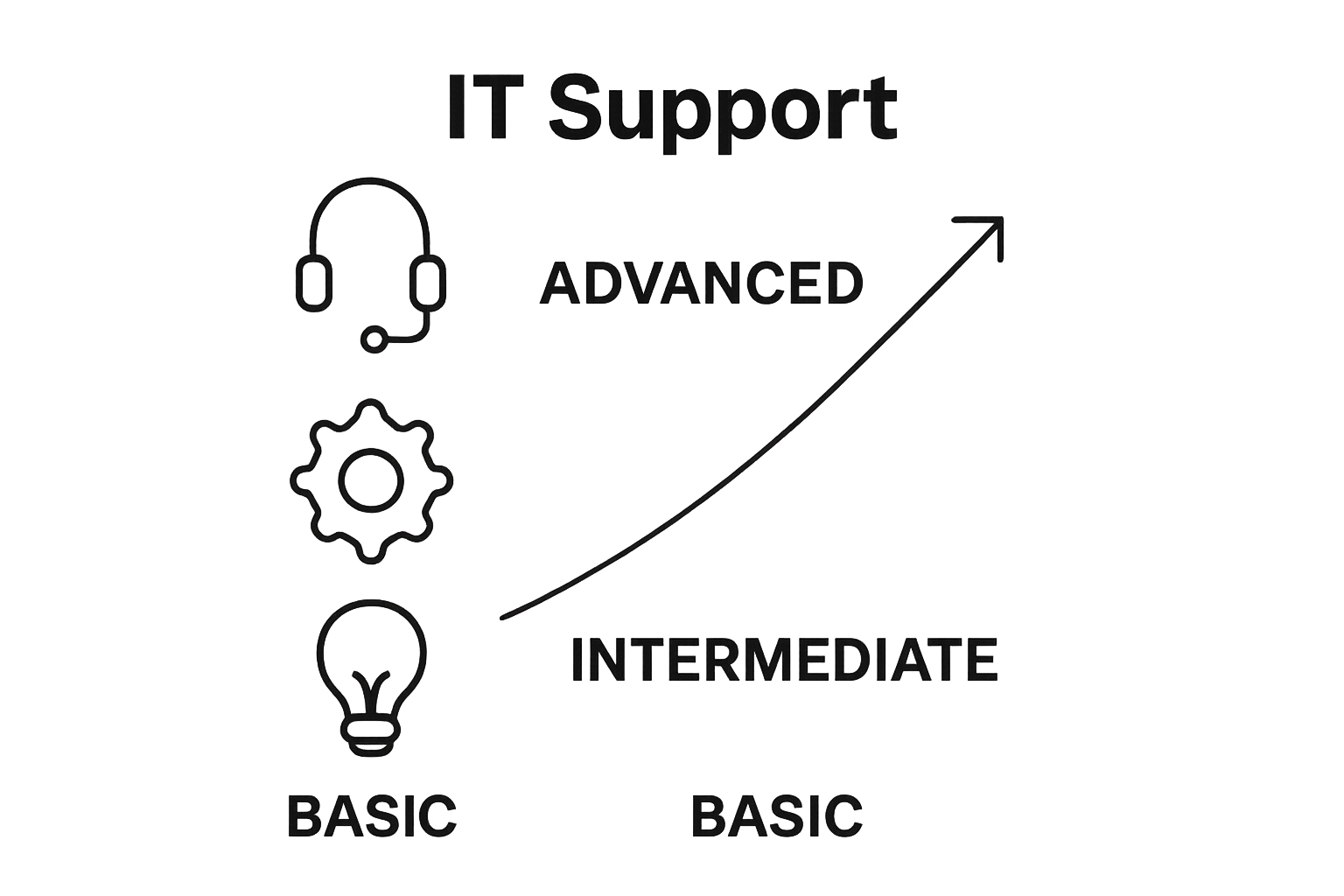 This includes network infrastructure design, cybersecurity planning, and technology integration strategies that align with broader business objectives.
The ultimate goal of IT support is not merely fixing technical problems but creating a stable, secure, and efficient technological ecosystem that enables businesses to operate without interruption.
In today’s digital landscape, IT support has transformed from a peripheral service to a critical business function that directly influences organisational performance, productivity, and competitive advantage. Businesses increasingly recognise that robust technological infrastructure and responsive technical support are fundamental to sustainable operational success.
IT support plays a pivotal role in maintaining business continuity by minimising technological disruptions. When computer systems, networks, or software experience problems, every minute of downtime translates into potential financial loss and reduced productivity. Learn more about how IT can better serve your business and understand the strategic importance of proactive technological management.
Key operational benefits include:
Moreover, IT support serves as a critical shield against technological vulnerabilities. Cybersecurity threats continue to evolve, making professional technical oversight increasingly essential. According to NHS England’s e-business overview, technological systems must not only function effectively but also protect organisational data and maintain user trust.
Strategic risk management through IT support encompasses:
By integrating comprehensive IT support, businesses transform potential technological challenges into strategic opportunities for innovation and growth. The right support enables organisations to focus on core business objectives while maintaining a secure, efficient, and adaptable digital infrastructure.
Building a robust IT support system requires strategic planning, comprehensive technological understanding, and a multi-layered approach that addresses various organisational technological needs. An effective support framework goes beyond simple problem resolution and encompasses a holistic strategy for technological management and operational excellence.
The foundation of any effective IT support system lies in its underlying technological infrastructure. This involves creating a scalable and adaptable technological ecosystem that can respond dynamically to changing business requirements. Discover our comprehensive remote support process to understand how modern support systems function.
Critical infrastructure components include:
Modern IT support systems must provide multiple communication channels that enable seamless interaction between technical experts and end-users. According to UK Government technology guidelines, accessibility and responsiveness are paramount in technological service delivery.
Effective communication channels encompass:
An exceptional IT support system is not static but continuously evolves through ongoing training, technological assessment, and proactive skill development. This approach ensures that support teams remain ahead of emerging technological challenges and can provide cutting-edge solutions.
Key elements of continuous technological adaptation include regular performance reviews, investment in staff training programmes, monitoring of emerging technological trends, and maintaining a flexible technological infrastructure that can integrate new tools and methodologies seamlessly.
By implementing these comprehensive components, organisations create IT support systems that are not merely reactive problem-solving mechanisms but strategic technological partners driving business innovation and operational efficiency.
The following table outlines key components of effective IT support systems, detailing the purpose and examples of each element to enhance understanding of a robust technological framework.
| Component | Purpose | Example Elements |
|---|---|---|
| Infrastructure & Technical Architecture | Provides the foundation for scalable operations | Network design, cloud platforms, backup systems |
| Communication & Service Delivery | Ensures responsive support for users | Helpdesk, live chat, email tickets |
| Continuous Learning & Evolution | Maintains up-to-date and adaptive IT capabilities | Staff training, tech trend monitoring, performance reviews |
Business continuity represents an organisation’s ability to maintain essential functions during and after significant technological disruptions. IT support serves as a critical guardian, ensuring that technological infrastructure remains resilient, responsive, and capable of withstanding unexpected challenges.
Effective IT support goes beyond reactive problem solving by implementing comprehensive risk management approaches. Learn more about business continuity planning essentials to understand how technological preparedness safeguards organisational operations.
Key proactive risk mitigation strategies include:
When technological disruptions occur, the speed and efficiency of recovery become paramount. According to Suffolk County Council’s business continuity guidelines, organisations must have clear incident management protocols that enable quick restoration of critical systems.
Essential recovery mechanisms encompass:
Strategic IT support transforms business continuity from a theoretical concept into a practical, actionable strategy. By developing adaptive technological ecosystems, organisations can maintain operational integrity even during unexpected challenges.
This approach requires a holistic view that integrates technological infrastructure, human expertise, and strategic planning. The goal is not merely to survive disruptions but to emerge stronger, with enhanced technological capabilities and improved organisational responsiveness.
By investing in robust IT support systems, businesses create a technological safety net that protects against potential operational interruptions, ensuring consistent performance and long-term sustainability.

IT support transcends theoretical concepts, delivering practical solutions that transform workplace productivity, communication, and operational efficiency. By addressing technological challenges in real-time, IT support professionals enable organisations to navigate complex digital environments with confidence and strategic agility.
Modern workplaces rely heavily on seamless digital communication platforms that connect teams across different locations and technologies. Discover how technology is changing workplace dynamics to understand the critical role of IT support in facilitating these interactions.
Practical collaboration applications include:
IT support plays a crucial role in creating accessible technological environments that accommodate diverse workforce needs. According to the UK Department for Work and Pensions’ Access to Work programme, technological support can significantly enhance workplace inclusivity by providing specialised technological solutions.
Inclusive technology support strategies involve:
Beyond immediate technical support, IT professionals contribute to organisational learning and technological adaptation. They bridge the gap between current technological capabilities and emerging innovation, ensuring that businesses remain competitive and technologically resilient.
This approach involves ongoing technological education, proactive skill development, and strategic implementation of emerging digital tools. By providing targeted training, troubleshooting complex systems, and offering expert guidance, IT support transforms technological challenges into opportunities for organisational growth and innovation.
Ultimately, real-world IT support is about empowering employees, optimising technological infrastructure, and creating adaptive digital environments that drive business success.
If you are feeling the strain of slow systems, cybersecurity threats or unreliable connectivity, you are not alone. As described in our article, operational continuity and technology frustrations can severely impact productivity. You need a partner who understands modern IT support from proactive risk management to everyday technical challenges. Explore our Connectivity expertise to see how reliable, secure business infrastructure can transform your workplace.
Now is the moment to leave behind technical headaches and ensure your business never stops moving forward. Let our local experts at J700 Group provide tailored solutions for your unique needs, including support for Microsoft 365. Contact us today for a free consultation and discover how seamless IT support can protect your business and unlock new opportunities.
IT support professionals diagnose, troubleshoot, and resolve technical issues affecting computer systems, networks, and digital infrastructure, ensuring smooth and secure operations.
IT support minimizes technological disruptions, enhances business continuity, and reduces downtime, directly influencing organisational performance and productivity.
Basic IT support often addresses internet connectivity problems, email configuration issues, hardware malfunctions, software installations, and password management.
IT support facilitates seamless digital communication by configuring cloud-based tools, integrating video conferencing systems, and troubleshooting connectivity issues, improving overall collaboration and efficiency.
For years, businesses protected their data like a medieval castle: build a thick wall (a…
Read More
For many small and medium-sized businesses, cybersecurity is still viewed as an IT problem. Firewalls,…
Read More
Cloud technology is no longer a luxury or a cost-saving alternative to on-site servers. For…
Read More
Remember when we jokingly wondered if Apple was borrowing our name? Well, the rumours were…
Read More
AI hasn’t just changed the way we work, it has completely rewritten the rulebook for…
Read More
For many businesses, the office phone is like part of the furniture, it’s always there,…
Read More
We are thrilled to announce a significant milestone in the J700 Group journey. To keep…
Read More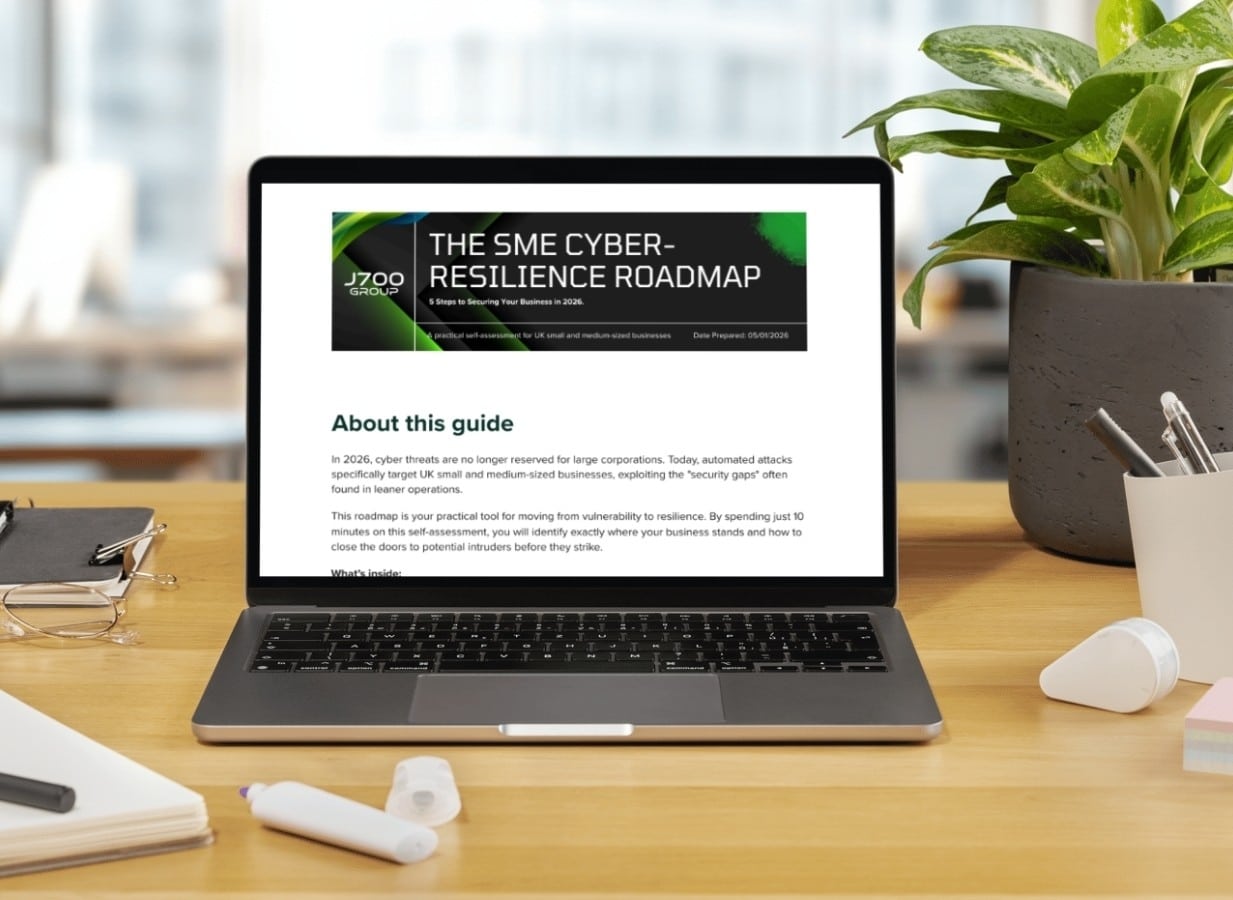
For years, many small and medium-sized business owners in the North West have operated under…
Read More
In a modern healthcare setting, the stethoscope and the blood pressure cuff aren’t the only…
Read More
When people hear the word cybersecurity, they often imagine complex systems, expensive software and specialist…
Read More
As we count down to midnight, most of us are thinking about gym memberships or…
Read More
It’s Christmas Eve in Lancashire. The Preston bypass is a nightmare, the last-minute dash to…
Read More
For many businesses, the Christmas period means quieter offices, reduced staffing and systems left running…
Read More
Or: Why we’d like to have a word with Tim Cook this Christmas. There are…
Read More
Hackers Love Christmas: Learn Why your Business Could be at Risk This Holiday SeasonThe festive…
Read More
In recent months, high-profile companies like Land Rover and Co-op have made headlines due to…
Read More
Explore 7 essential tips for effective cloud solutions comparison to find the best fit for…
Read More
Learn how to secure business data for UK SMEs with this step-by-step guide focused on…
Read More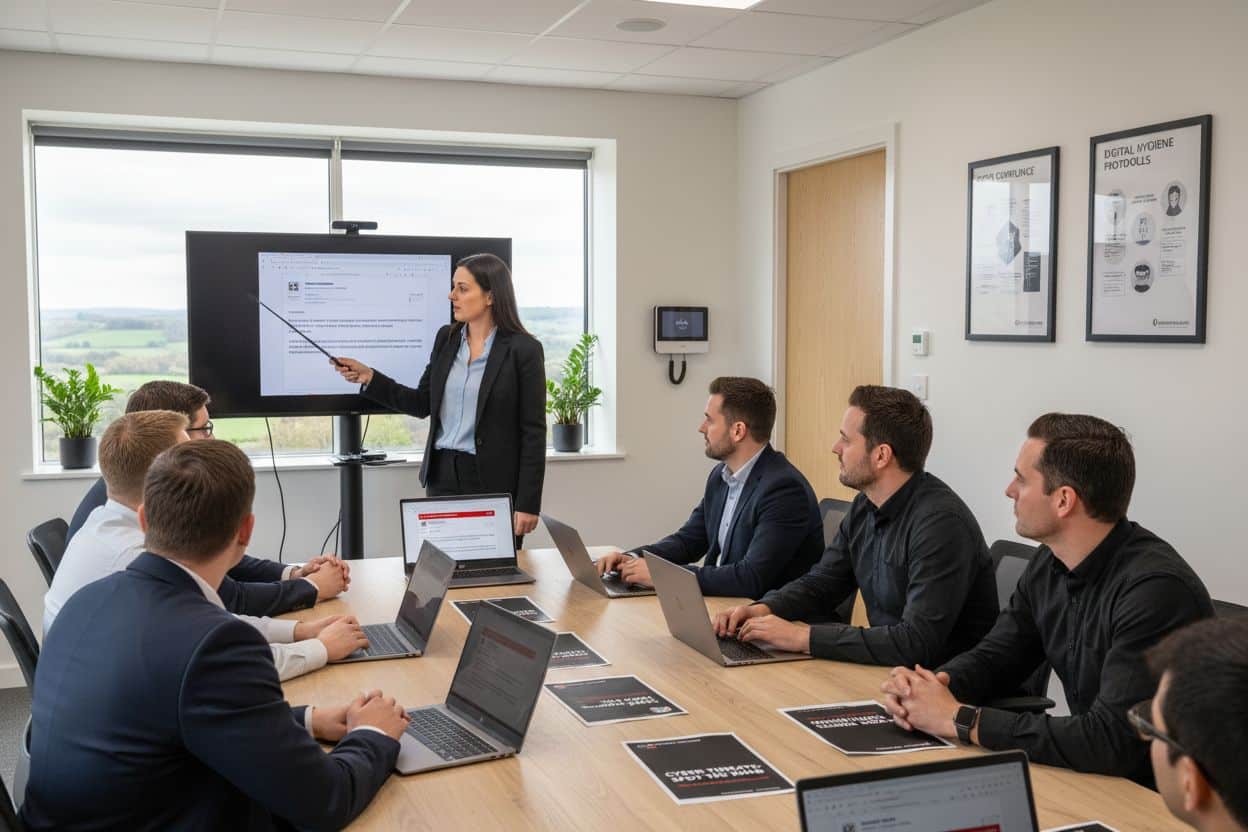
Cybersecurity basics explained for UK businesses—core concepts, major threats, essential safeguards, and compliance requirements. A…
Read More
Discover the essential role of IT support desks, core functions, key benefits, types of support,…
Read More
Discover 10 microsoft 365 alternatives for UK SMEs, comparing features and benefits to help your…
Read More
Discover the best microsoft 365 alternatives in our comparison of 10 top products to enhance…
Read More
Discover a business connectivity checklist with 7 actionable steps to boost IT reliability, security, and…
Read More
Discover 7 essential business continuity planning steps to protect your SME. Learn practical strategies for…
Read More
Small Business Office 365 comprehensive guide for UK SMEs: core features, setup process, security essentials,…
Read More
Small Business Office 365 guide for UK firms. Learn core features, setup, security, costs, and…
Read More
Small business Office 365 guide covering essential features, security, costs, local support, and practical benefits…
Read More
Follow this cybersecurity checklist for SMEs to secure your business in Lancashire and Manchester. Step-by-step…
Read More
Follow this cybersecurity checklist for SMEs to boost protection, reduce risks, and secure business data…
Read More
Cloud security explained: A comprehensive guide for UK businesses covering threat types, protection strategies, compliance,…
Read More
Data protection strategies for UK SMEs—types, key components, GDPR compliance, business risks, and best practices…
Read More
Why cybersecurity matters for UK businesses: core concepts, main risks, common threats, legal requirements, and…
Read More
Comprehensive guide to IT issues Lancashire businesses face, including security threats, system downtime, cloud solutions,…
Read More
Comprehensive guide on cyber security threats in the UK. Learn common types, key characteristics, real-world…
Read More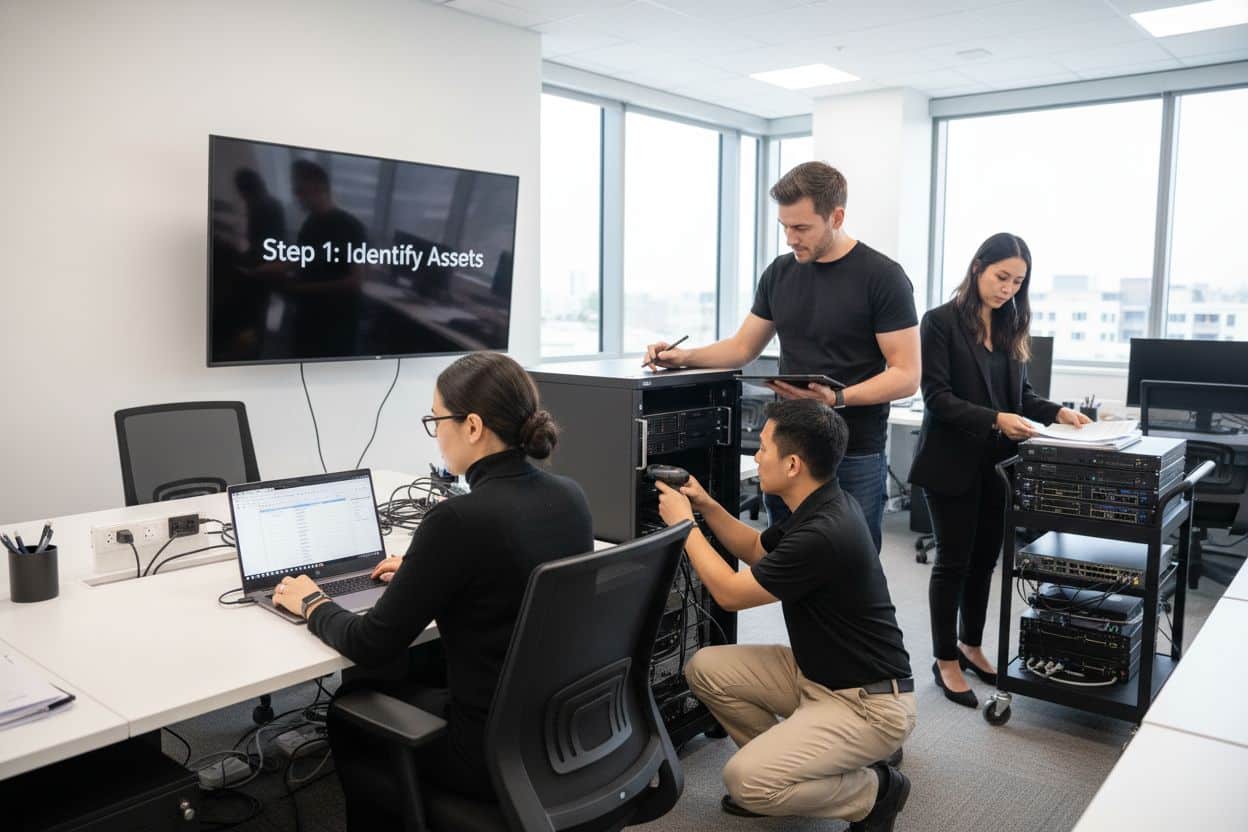
Follow this IT security checklist for a step-by-step process to secure your business effectively in…
Read More
Explore the benefits of managed IT services for businesses in Manchester and Lancashire, enhancing efficiency…
Read More
Explore the role of cybersecurity in business. Understand its importance, how it works, and key…
Read More
Discover 7 key advantages of Microsoft 365 for SMEs that can enhance productivity, collaboration, and…
Read More
Explore why use managed IT services and how they benefit businesses. Gain comprehensive insights on…
Read More
Comprehensive guide explaining cyber threats, focusing on their importance, how they work, and the key…
Read More