



For years, businesses protected their data like a medieval castle: build a thick wall (a…
Read More
Cloud solutions are changing the way businesses handle technology. Nearly 94 percent of enterprises now use cloud services for at least part of their operations. Many believe the cloud is just another storage option or a way to cut IT costs. The true surprise is how cloud technology has become the backbone for business growth, rapid innovation, and resilience in ways traditional computing could never imagine.
| Takeaway | Explanation |
|---|---|
| Cloud solutions reduce technology costs. | Transitioning to cloud computing eliminates substantial upfront hardware investments and converts capital expenses into predictable operational costs. |
| Cloud services increase business agility. | Adopting cloud solutions allows for rapid deployment and scalability, enabling businesses to adapt swiftly to changing market demands. |
| Enhanced data security through cloud technologies. | Cloud systems offer advanced security protocols, automatic data backups, and thorough monitoring to ensure business continuity and safeguard data. |
| Improves collaboration and productivity. | Cloud solutions facilitate seamless remote work, real-time data sharing, and integrated communication platforms that enhance teamwork and efficiency. |
| Supports industry-specific applications. | Different sectors like healthcare and finance leverage cloud solutions to address unique challenges, improving operational capabilities and service delivery. |
Cloud solutions represent a transformative approach to computing and data management that enables businesses to access powerful technological resources without maintaining extensive physical infrastructure. At its core, cloud computing allows organisations to store, manage, and process data through remote servers hosted on the internet, rather than relying on local computer hardware.
Cloud solutions operate on a distributed computing model where multiple interconnected servers work together to provide seamless digital services. Instead of purchasing expensive hardware and managing complex IT systems internally, businesses can leverage cloud services in Lancashire to access scalable and flexible technological resources.
The primary components of cloud infrastructure include:
Cloud solutions typically come in three primary service models that cater to different business requirements. According to Gartner Research, these models provide varying levels of management and control:
By understanding these models, businesses can select cloud solutions that precisely match their technological needs and operational complexity.
The following table compares the three primary cloud service models, outlining their core features and typical business use cases to aid understanding of their differences and ideal applications.
| Cloud Service Model | Key Features | Typical Use Cases |
|---|---|---|
| Infrastructure as a Service (IaaS) | Virtualised computing, flexible resource scaling, managed infrastructure | Hosting websites, storage, disaster recovery |
| Platform as a Service (PaaS) | Development and deployment environments, integrated tools | Application development, testing, data analysis |
| Software as a Service (SaaS) | Ready-to-use software, accessed via the internet | Email, CRM systems, project management tools |
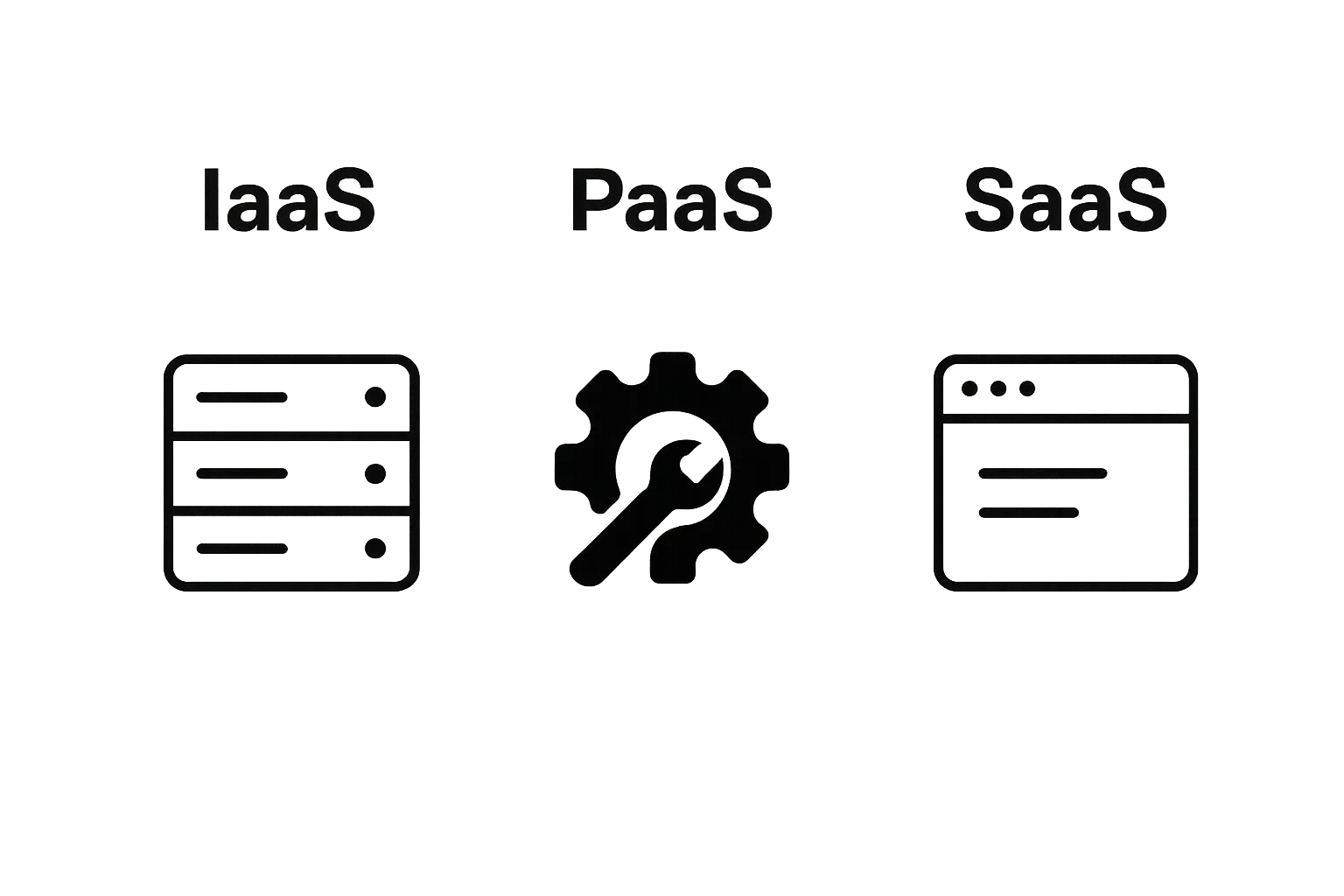
Cloud computing empowers organisations to access cutting-edge technology without significant upfront investments, making advanced digital capabilities more accessible than ever before.
In the rapidly evolving digital landscape, cloud solutions have become a critical strategic asset for businesses seeking competitive advantage and operational efficiency. Modern organisations recognise that technological agility is no longer a luxury but a fundamental requirement for sustainable growth and resilience.
Cloud solutions offer transformative benefits that extend far beyond traditional IT infrastructure. By embracing these technologies, businesses can unlock unprecedented scalability, flexibility, and cost-effectiveness.
Our small business cloud migration guide provides deeper insights into this strategic transition.
Key strategic advantages include:
Business continuity has become paramount in an unpredictable global environment. According to Deloitte’s Digital Transformation Research, cloud solutions provide robust disaster recovery and business continuity mechanisms that traditional IT infrastructures cannot match.
Businesses leveraging cloud technologies benefit from:
By integrating cloud solutions, organisations transform potential technological vulnerabilities into strategic strengths, ensuring operational stability and competitive responsiveness in an increasingly digital business ecosystem.
Cloud solutions represent a powerful technological strategy that offers businesses substantial competitive advantages beyond traditional computing models. By reimagining how organisations manage digital infrastructure, cloud technologies enable unprecedented operational efficiency and strategic flexibility.
Businesses can dramatically reduce technology expenditure through cloud solutions. Our comprehensive guide on cloud solution factors highlights the transformative financial benefits these technologies provide.
Key financial advantages include:
Modern cloud solutions fundamentally transform workplace dynamics. According to McKinsey & Company’s Digital Transformation Research, organisations adopting cloud technologies experience significant productivity improvements.
Critical collaboration benefits include:
By embracing cloud solutions, businesses create more agile, responsive, and interconnected work environments that transcend traditional geographical and technological limitations. The ability to access critical business resources from anywhere provides organisations with unprecedented operational flexibility and competitive advantage.
Cloud solutions have revolutionised business operations by creating dynamic, interconnected technological ecosystems that adapt seamlessly to organisational requirements. These advanced platforms transcend traditional computing limitations, providing businesses with sophisticated tools for strategic growth and operational optimisation.
Modern cloud technologies enable businesses to integrate complex processes with unprecedented efficiency. Our guide on technology trends changing workplace dynamics explores how these innovations transform operational strategies.
Key workflow enhancements include:
Cloud solutions provide comprehensive performance analytics that empower businesses to make data-driven decisions. According to Gartner’s Digital Workplace Research, organisations implementing cloud technologies experience significant operational transparency and efficiency improvements.
Critical performance monitoring capabilities include:
By leveraging cloud solutions, businesses transform technological infrastructure from a passive support system into a proactive strategic asset. These platforms enable organisations to respond rapidly to market changes, optimise resource allocation, and maintain a competitive edge in an increasingly digital business landscape.

Cloud solutions have transcended theoretical potential, becoming fundamental transformative technologies across diverse industry sectors. By enabling flexible, scalable, and secure digital infrastructures, these technologies provide businesses with unprecedented operational capabilities.
Different industries leverage cloud solutions to address unique technological challenges. Our guide on customer experience applications demonstrates how cloud technologies can directly enhance business performance.
Industry cloud solution applications include:
According to Healthcare Technology Research, cloud computing enables organisations to implement sophisticated digital strategies that were previously economically or technologically unfeasible.
Practical cloud integration benefits encompass:
By embracing cloud solutions, businesses transform technological infrastructure from a reactive support system into a proactive strategic asset. These platforms empower organisations to innovate rapidly, reduce operational complexities, and maintain competitive advantage in an increasingly digital global marketplace.
This table summarises how cloud solutions are implemented across key industries and highlights the specific business benefits realised in each case.
| Industry | Example Cloud Applications | Key Business Benefits |
|---|---|---|
| Healthcare | Secure patient records, telemedicine | Improved data security, remote care |
| Finance | Risk management, compliance tracking | Regulatory savings, enhanced analysis |
| Manufacturing | Predictive maintenance, supply chain integration | Enhanced efficiency, reduced downtime |
| Multisite Business | Centralised data management | Streamlined operations, scalability |
| SME/General | Real-time collaboration tools | Workforce flexibility, cost efficiency |
Struggling with slow systems, rising IT costs or concerns about security? This article has shown how moving to the cloud can revolutionise your business by improving efficiency and resilience. Many businesses worry about the complexities of migration, fears of downtime, or simply not having the right strategy. At J700 Group, we specialise in supporting SMEs across Lancashire and the North West to enjoy seamless, secure and scalable cloud solutions tailored to their needs. See how others have benefitted by exploring our case studies.
Why wait to eliminate IT headaches? Take the next step towards streamlined, future-proof operations. Reach out to our friendly Lancashire-based team today via our contact page and discover how cloud solutions can help your business grow and thrive right now.
Cloud solutions are a computing approach that allows businesses to store, manage, and process data through remote servers accessed via the internet, rather than relying on local hardware. They offer scalable and flexible technological resources without the need for extensive physical infrastructure.
The primary cloud service models are Infrastructure as a Service (IaaS), which provides virtualised computing resources; Platform as a Service (PaaS), offering environments for development and deployment; and Software as a Service (SaaS), which delivers ready-to-use applications over the internet.
Cloud solutions promote productivity by providing seamless remote working capabilities, real-time document sharing, and integrated communication platforms. This fosters collaboration among teams, regardless of their geographical locations.
Choosing cloud solutions can lead to significant financial advantages such as predictable operational costs, reduced hardware investments, and scalable resource allocation, allowing businesses to pay only for the resources they actively use.
For years, businesses protected their data like a medieval castle: build a thick wall (a…
Read More
For many small and medium-sized businesses, cybersecurity is still viewed as an IT problem. Firewalls,…
Read More
Cloud technology is no longer a luxury or a cost-saving alternative to on-site servers. For…
Read More
Remember when we jokingly wondered if Apple was borrowing our name? Well, the rumours were…
Read More
AI hasn’t just changed the way we work, it has completely rewritten the rulebook for…
Read More
For many businesses, the office phone is like part of the furniture, it’s always there,…
Read More
We are thrilled to announce a significant milestone in the J700 Group journey. To keep…
Read More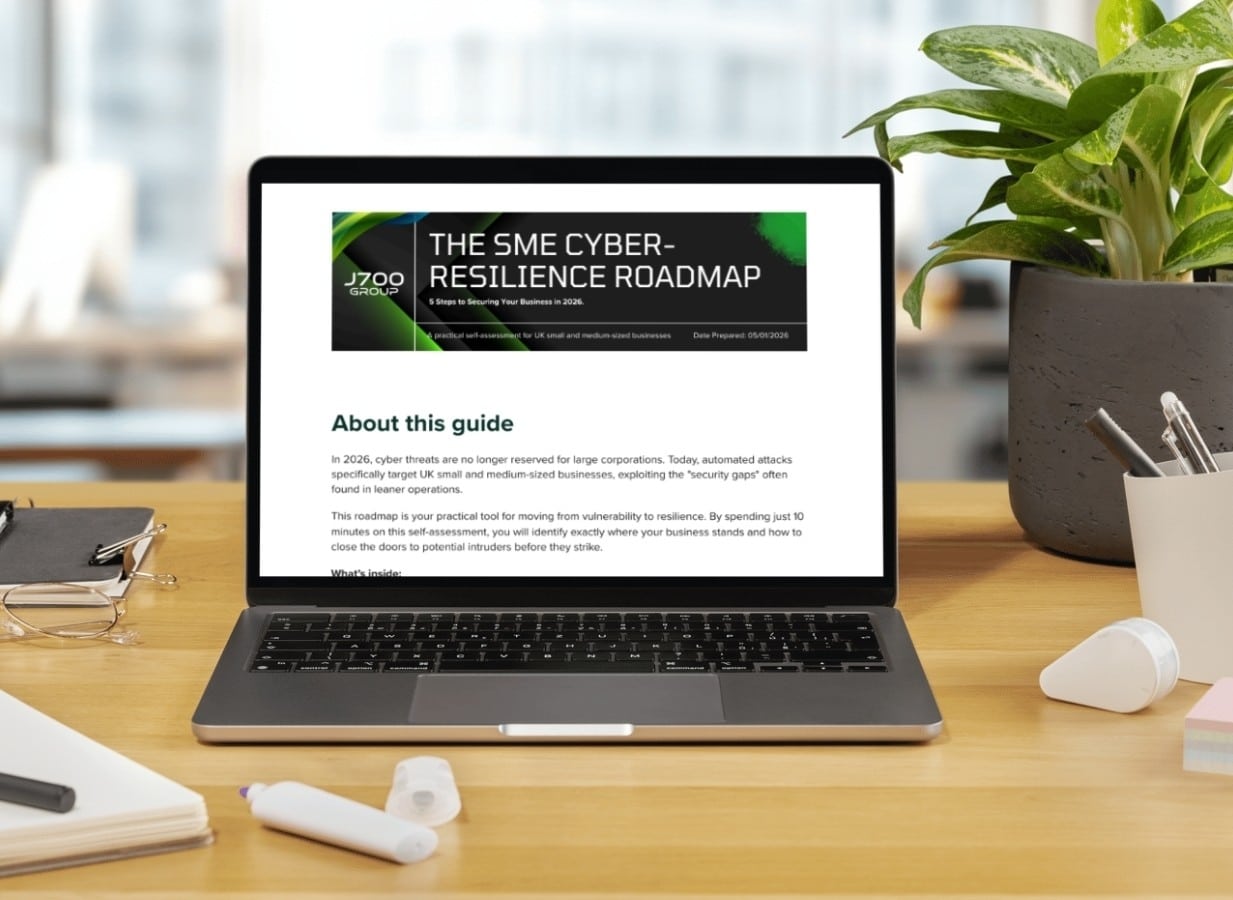
For years, many small and medium-sized business owners in the North West have operated under…
Read More
In a modern healthcare setting, the stethoscope and the blood pressure cuff aren’t the only…
Read More
When people hear the word cybersecurity, they often imagine complex systems, expensive software and specialist…
Read More
As we count down to midnight, most of us are thinking about gym memberships or…
Read More
It’s Christmas Eve in Lancashire. The Preston bypass is a nightmare, the last-minute dash to…
Read More
For many businesses, the Christmas period means quieter offices, reduced staffing and systems left running…
Read More
Or: Why we’d like to have a word with Tim Cook this Christmas. There are…
Read More
Hackers Love Christmas: Learn Why your Business Could be at Risk This Holiday SeasonThe festive…
Read More
In recent months, high-profile companies like Land Rover and Co-op have made headlines due to…
Read More
Explore 7 essential tips for effective cloud solutions comparison to find the best fit for…
Read More
Learn how to secure business data for UK SMEs with this step-by-step guide focused on…
Read More
Cybersecurity basics explained for UK businesses—core concepts, major threats, essential safeguards, and compliance requirements. A…
Read More
Discover the essential role of IT support desks, core functions, key benefits, types of support,…
Read More
Discover 10 microsoft 365 alternatives for UK SMEs, comparing features and benefits to help your…
Read More
Discover the best microsoft 365 alternatives in our comparison of 10 top products to enhance…
Read More
Discover a business connectivity checklist with 7 actionable steps to boost IT reliability, security, and…
Read More
Discover 7 essential business continuity planning steps to protect your SME. Learn practical strategies for…
Read More
Small Business Office 365 comprehensive guide for UK SMEs: core features, setup process, security essentials,…
Read More
Small Business Office 365 guide for UK firms. Learn core features, setup, security, costs, and…
Read More
Small business Office 365 guide covering essential features, security, costs, local support, and practical benefits…
Read More
Follow this cybersecurity checklist for SMEs to secure your business in Lancashire and Manchester. Step-by-step…
Read More
Follow this cybersecurity checklist for SMEs to boost protection, reduce risks, and secure business data…
Read More
Cloud security explained: A comprehensive guide for UK businesses covering threat types, protection strategies, compliance,…
Read More
Data protection strategies for UK SMEs—types, key components, GDPR compliance, business risks, and best practices…
Read More
Why cybersecurity matters for UK businesses: core concepts, main risks, common threats, legal requirements, and…
Read More
Comprehensive guide to IT issues Lancashire businesses face, including security threats, system downtime, cloud solutions,…
Read More
Comprehensive guide on cyber security threats in the UK. Learn common types, key characteristics, real-world…
Read More
Follow this IT security checklist for a step-by-step process to secure your business effectively in…
Read More
Explore the benefits of managed IT services for businesses in Manchester and Lancashire, enhancing efficiency…
Read More
Explore the role of cybersecurity in business. Understand its importance, how it works, and key…
Read More
Discover 7 key advantages of Microsoft 365 for SMEs that can enhance productivity, collaboration, and…
Read More
Explore why use managed IT services and how they benefit businesses. Gain comprehensive insights on…
Read More
Comprehensive guide explaining cyber threats, focusing on their importance, how they work, and the key…
Read More