



Why Zero Trust Security Is No Longer Optional for Lancashire and Manchester SMEs Most small…
Read More
Moving your small business to the cloud can feel overwhelming. There are endless questions about security, downtime, costs, and whether the move is even worth it. Yet research shows that 62 percent of UK small businesses report improved collaboration and efficiency after cloud adoption. Most worry about technical hurdles or losing critical data, but the real surprise is how a careful step-by-step plan makes the whole process far smoother than you might expect.
| Key Point | Explanation |
|---|---|
| 1. Conduct a thorough infrastructure assessment | Map out all current hardware, software, and network resources to identify migration opportunities and challenges. |
| 2. Align migration strategy with business goals | Ensure your cloud migration objectives support overall business aims such as cost efficiency or improved security. |
| 3. Carefully select your cloud service provider | Evaluate providers based on security, performance, and flexibility to ensure they meet your business needs. |
| 4. Plan and execute a structured migration | Develop a detailed plan for transitioning applications and data systematically, focusing on minimal disruption and backing up data. |
| 5. Implement strong security measures post-migration | Establish multi-layered security protocols, including data encryption and access controls, to protect cloud resources. |
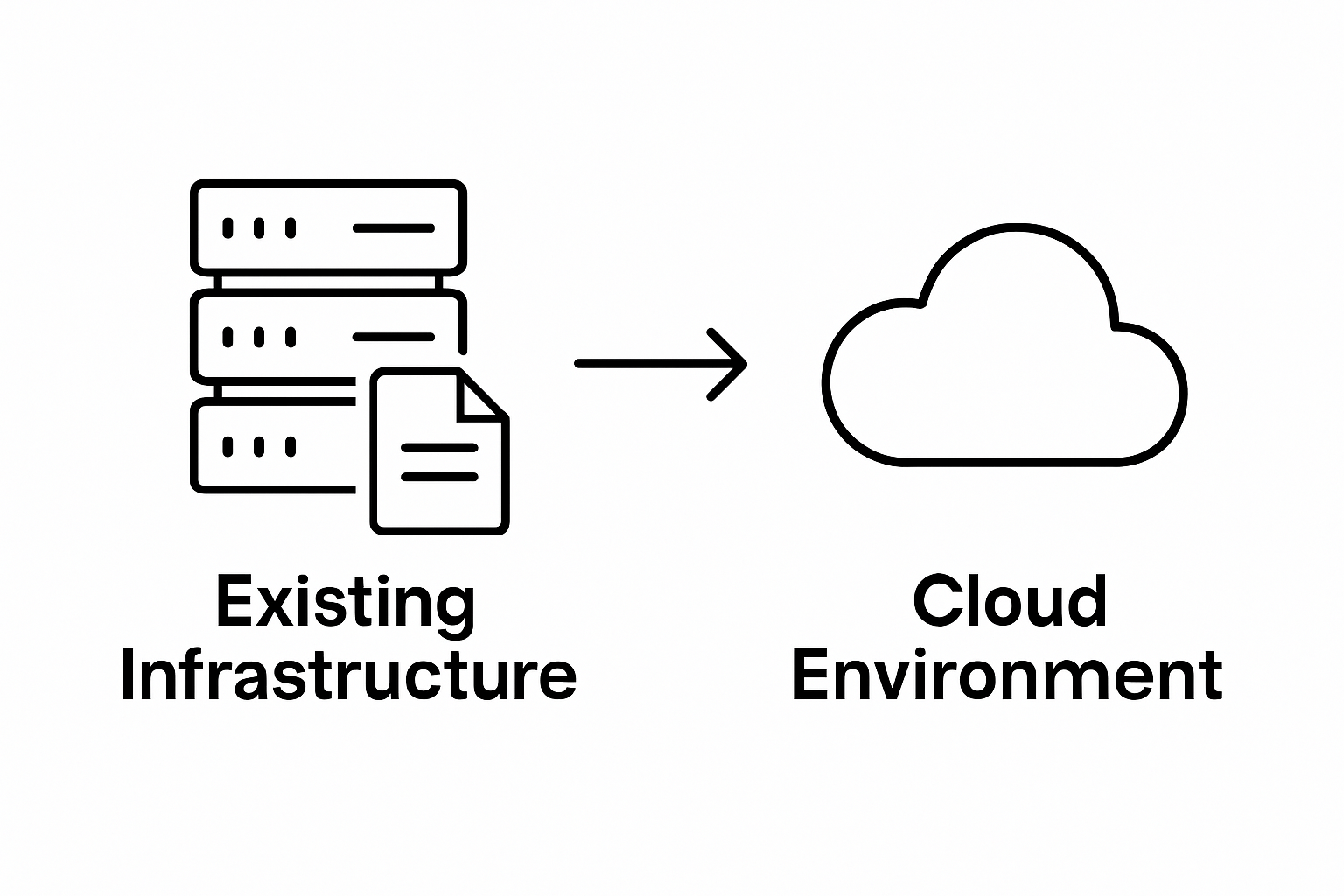
Transitioning your small business to cloud infrastructure begins with a comprehensive assessment of your existing technology landscape. This critical first step allows you to understand precisely what systems, applications, and data you currently operate and how they might migrate effectively.
Start by conducting a detailed inventory of your current IT infrastructure. This means mapping out every piece of hardware, software, network connection, and digital resource your business uses. Document each system’s purpose, current performance, age, and interdependencies. Pay special attention to legacy systems that might require additional configuration or potential replacement during cloud migration.
Your assessment should include a thorough evaluation of current computing resources. Examine server configurations, storage capacities, network bandwidth, and application dependencies. Consider creating a spreadsheet that captures critical details such as software versions, licensing information, data storage requirements, and potential compatibility challenges with cloud platforms.
According to the UK Government Digital Service’s hosting guidance, businesses should critically evaluate which systems are suitable for cloud migration. Not every application will transfer seamlessly, so identifying potential roadblocks early prevents costly surprises later in the migration process.
Key aspects to document during your infrastructure assessment include:
By meticulously documenting your current technological ecosystem, you create a comprehensive blueprint that will guide your cloud migration strategy.
The following checklist table helps ensure your infrastructure assessment is complete, capturing all critical details before starting your cloud migration.
| Assessment Area | What to Document | Completed (Yes/No) |
|---|---|---|
| Hardware Specifications | Model, age, performance status | |
| Software Licensing & Version | Software names, versions, licence status | |
| Network Configuration | Network layout, bandwidth, reliability | |
| Data Storage Requirements | Capacity needs, current usage, growth | |
| Security & Compliance | Current controls, regulatory needs | |
| Application Dependencies | Relationships, compatibility challenges |
Building upon your infrastructure assessment, developing a comprehensive cloud migration strategy transforms your technological roadmap from a simple inventory to an actionable plan. This crucial step determines how your business will transition existing systems, applications, and data to cloud environments while minimizing disruption and maximizing operational efficiency.
Begin by aligning your cloud migration strategy with broader business objectives. Consider your primary goals: cost reduction, improved scalability, enhanced security, or increased operational flexibility. Each objective will influence your migration approach, determining whether you pursue a complete system overhaul or a phased, incremental transition.
Your strategy should include a detailed approach to application migration. Some applications might require complete refactoring to function effectively in cloud environments, while others can be lifted and shifted with minimal modifications. Evaluate each application’s complexity, dependencies, and performance requirements to determine the most appropriate migration pathway.
According to the UK Government Digital Service’s cloud migration guidance, businesses should prioritize workloads based on their complexity and strategic importance. This means identifying which systems are mission-critical and which can be migrated with less immediate urgency.
Key considerations for your cloud migration strategy include:
A well-defined strategy provides a clear roadmap, helping your business navigate the complexities of cloud migration with confidence and precision. By methodically planning each aspect of your transition, you create a foundation for a successful, transformative technological upgrade.
Below is an overview table summarising each main step of the cloud migration process, along with its key objectives and typical outcomes for small businesses.
| Migration Step | Key Objective | Typical Outcome |
|---|---|---|
| Assess Current Infrastructure | Identify existing resources and dependencies | Complete technology inventory and blueprint |
| Define Migration Strategy | Align plan with business goals and priorities | Clear, actionable migration roadmap |
| Choose Cloud Service Provider | Select provider matching business requirements | Reliable, strategic partnership |
| Migrate Data and Applications | Transfer systems with minimal disruption | Successful migration with reduced downtime |
| Implement Security Measures and Testing | Safeguard data, control access, and ensure compliance | Robust, secure cloud environment |
| Monitor and Evaluate Post-Migration Performance | Continuously assess and improve cloud operations | Efficient, optimised business systems |
Selecting the appropriate cloud service provider represents a pivotal moment in your migration journey. This decision will significantly impact your business’s technological capabilities, operational efficiency, and long-term digital strategy. The right provider transforms your cloud migration from a technical exercise into a strategic business advantage.
Evaluate potential cloud providers through a comprehensive lens that extends beyond simple pricing considerations. Look deeply into each provider’s service offerings, performance capabilities, security protocols, compliance standards, and scalability potential. Consider how well their infrastructure aligns with your specific business requirements uncovered during your initial infrastructure assessment.
Your selection process should involve thorough due diligence. Request detailed service level agreements (SLAs), understand their data protection mechanisms, and investigate their track record of reliability and customer support. Pay particular attention to providers offering transparent pricing models, robust security features, and flexible scaling options that can adapt to your business’s evolving technological needs.
According to the UK Government Digital Service’s Cloud First policy, organizations should prioritize cloud solutions that offer maximum flexibility and cost-effectiveness. This means looking beyond surface-level features and understanding how each provider’s ecosystem can support your specific operational requirements.
Key evaluation criteria for cloud service providers include:
Remember that your chosen cloud service provider is more than a technical vendor they are a strategic partner in your digital transformation. Take time to thoroughly compare options, request demonstrations, and potentially start with smaller, lower-risk workloads to test compatibility before committing to a full-scale migration.

Migrating data and applications represents the most technically complex phase of your cloud transformation journey. This critical step requires meticulous planning, precise execution, and a strategic approach to transferring your digital assets without disrupting business operations.
Begin by developing a detailed migration plan that prioritizes applications and data based on their complexity and business criticality. Not all systems will migrate simultaneously or using identical methods. Some applications might require complete redesign, while others can be transferred using straightforward lift-and-shift techniques. Create a phased migration timeline that allows for incremental transitions, minimizing potential operational disruptions.
Implement robust data backup and validation processes before initiating any migration activities. This means creating comprehensive backup copies of all critical systems, verifying data integrity, and establishing clear rollback procedures in case unexpected challenges emerge during the transition. Test migration pathways using staging environments that mirror your production infrastructure, allowing you to identify and resolve potential compatibility issues before executing live transfers.
According to the UK Government Digital Service’s multi-region cloud guidance, organizations should consider geographic and regulatory implications when migrating data and applications. This involves understanding data sovereignty requirements, ensuring compliance with protection standards, and selecting migration strategies that maintain data security throughout the transfer process.
Key migration considerations include:
Successful data and application migration requires patience, technical expertise, and a methodical approach. By breaking the process into manageable phases and maintaining rigorous testing protocols, you can ensure a smooth transition that preserves your business’s operational continuity and technological integrity.
Cloud migration introduces new security challenges that demand a proactive and comprehensive approach to protecting your business’s digital assets. This critical step transforms your cloud infrastructure from a potentially vulnerable system into a robust, secure technological ecosystem.
Establish a multi-layered security strategy that encompasses data protection, access control, and continuous monitoring. Begin by implementing robust encryption mechanisms for data both in transit and at rest. This means utilizing advanced encryption technologies that protect sensitive information from unauthorized access, ensuring that your business data remains confidential and secure across cloud environments.
Develop a comprehensive access management protocol that defines precise user permissions and authentication requirements. Implement multi-factor authentication, role-based access controls, and detailed audit trails that track and log all system interactions. These measures create a granular security framework that prevents unauthorized access while maintaining operational flexibility for legitimate users.
According to the UK Government’s Cloud Security Guidance, organizations must conduct thorough security testing and vulnerability assessments throughout the cloud migration process. This involves running comprehensive penetration tests, simulating potential cyber attack scenarios, and identifying potential security weaknesses before they can be exploited.
Key security implementation considerations include:
Remember that security is not a one-time implementation but an ongoing process. Continuously monitor your cloud environment, stay updated on emerging security threats, and be prepared to adapt your security strategies as your business and technological landscape evolve.
The final stage of cloud migration transforms your technological transition from a project into an ongoing strategic initiative. Continuous monitoring and performance evaluation ensure that your cloud infrastructure delivers the operational benefits and efficiency gains promised during the initial planning phases.
Establish a comprehensive performance monitoring framework that tracks key metrics across multiple dimensions. This means implementing robust monitoring tools that provide real-time insights into system performance, resource utilisation, application responsiveness, and potential bottlenecks. Pay close attention to metrics such as processing speed, data transfer rates, system uptime, and overall computational efficiency.
Develop a systematic approach to performance analysis that goes beyond surface-level metrics. Regularly conduct deep-dive assessments that compare current cloud performance against your original migration objectives and baseline infrastructure capabilities. Look for opportunities to optimize resource allocation, identify potential cost-saving measures, and fine-tune your cloud configuration to match evolving business requirements.
According to the UK Government’s Cloud Guide, organizations should prioritize cross-functional collaboration and continuous evaluation throughout the cloud service lifecycle. This means creating feedback mechanisms that involve technical teams, business stakeholders, and end-users in assessing the effectiveness of your cloud migration.
Key performance monitoring considerations include:
Remember that cloud migration is not a destination but a continuous journey of technological refinement. By maintaining a proactive, data-driven approach to performance monitoring, you can ensure that your cloud infrastructure remains agile, efficient, and aligned with your business’s strategic objectives.
Migrating your small business to the cloud can feel daunting with concerns around system downtime, data loss, or security vulnerabilities. The article highlighted how overwhelming it can be to assess your infrastructure, choose the right provider, and implement strong security measures. At J700 Group we understand that cloud migration is not just a technical upgrade but a crucial step for business growth and resilience. That is why our local experts in Lancashire work with you to map out each stage, eliminating uncertainty and protecting your critical data throughout the process. Discover real-world solutions and expert insights on our Cloud Solutions page.

Stop letting technology headaches hold your business back. Book your free consultation today via our contact page. Our proactive team is ready to help you unlock seamless migration and secure IT support so you can focus on your business with complete peace of mind. Explore more practical advice in our IT Tips and Tricks section and make the move to a smarter workspace now.
Begin by conducting a detailed inventory of your existing IT infrastructure. Document each piece of hardware, software, network connection, and digital resource, including their purposes, performance metrics, and interdependencies. Assess current computing resources like server configurations and storage capacities to create a comprehensive blueprint.
Align your cloud migration strategy with your business objectives, such as cost reduction or improved scalability. Evaluate applications for their complexity and criticality, deciding whether to refactor, lift and shift, or phase the migration. Outline migration priorities, security requirements, and budget considerations to form an actionable plan.
Evaluate potential cloud providers based on their service offerings, security protocols, compliance standards, and scalability options. Request detailed service level agreements, assess performance guarantees, and ensure the provider meets your specific operational requirements to support your migration goals.
Establish a multi-layered security strategy that includes data encryption for data in transit and at rest, robust access control protocols, and continuous monitoring. Conduct regular security audits and vulnerability assessments to maintain compliance with data protection regulations and to identify potential security weaknesses.

Why Zero Trust Security Is No Longer Optional for Lancashire and Manchester SMEs Most small…
Read More
A practical guide for SMEs across Lancashire and the North West If you’ve been hearing…
Read More
Running a business in Lancashire is hard enough without your IT company adding to your…
Read More
Most businesses don’t lose data because of a dramatic cyberattack. They lose it, or expose…
Read More
For manufacturers, downtime isn’t just frustrating, it’s expensive. When production stops, everything slows down. Orders…
Read More
Artificial Intelligence is no longer something businesses are experimenting with. In 2026, it’s becoming part…
Read More
An email landed in my inbox this week from “Jonathan Cundliffe” — our Managing Director.…
Read More
For years, businesses protected their data like a medieval castle: build a thick wall (a…
Read More
For many small and medium-sized businesses, cybersecurity is still viewed as an IT problem. Firewalls,…
Read More
Cloud technology is no longer a luxury or a cost-saving alternative to on-site servers. For…
Read More
Remember when we jokingly wondered if Apple was borrowing our name? Well, the rumours were…
Read More
AI hasn’t just changed the way we work, it has completely rewritten the rulebook for…
Read More
For many businesses, the office phone is like part of the furniture, it’s always there,…
Read More
We are thrilled to announce a significant milestone in the J700 Group journey. To keep…
Read More
For years, many small and medium-sized business owners in the North West have operated under…
Read More
In a modern healthcare setting, the stethoscope and the blood pressure cuff aren’t the only…
Read More
When people hear the word cybersecurity, they often imagine complex systems, expensive software and specialist…
Read More
As we count down to midnight, most of us are thinking about gym memberships or…
Read More
It’s Christmas Eve in Lancashire. The Preston bypass is a nightmare, the last-minute dash to…
Read More
For many businesses, the Christmas period means quieter offices, reduced staffing and systems left running…
Read More
Or: Why we’d like to have a word with Tim Cook this Christmas. There are…
Read More
Hackers Love Christmas: Learn Why your Business Could be at Risk This Holiday SeasonThe festive…
Read More
In recent months, high-profile companies like Land Rover and Co-op have made headlines due to…
Read More
Explore 7 essential tips for effective cloud solutions comparison to find the best fit for…
Read More
Learn how to secure business data for UK SMEs with this step-by-step guide focused on…
Read More
Cybersecurity basics explained for UK businesses—core concepts, major threats, essential safeguards, and compliance requirements. A…
Read More
Discover the essential role of IT support desks, core functions, key benefits, types of support,…
Read More
Discover 10 microsoft 365 alternatives for UK SMEs, comparing features and benefits to help your…
Read More
Discover the best microsoft 365 alternatives in our comparison of 10 top products to enhance…
Read More
Discover the best microsoft 365 alternatives in our comparison of 10 top products to enhance…
Read More
Discover a business connectivity checklist with 7 actionable steps to boost IT reliability, security, and…
Read More
Discover 7 essential business continuity planning steps to protect your SME. Learn practical strategies for…
Read More
Small Business Office 365 comprehensive guide for UK SMEs: core features, setup process, security essentials,…
Read More
Small Business Office 365 guide for UK firms. Learn core features, setup, security, costs, and…
Read More
Small business Office 365 guide covering essential features, security, costs, local support, and practical benefits…
Read More
Follow this cybersecurity checklist for SMEs to secure your business in Lancashire and Manchester. Step-by-step…
Read More
Follow this cybersecurity checklist for SMEs to boost protection, reduce risks, and secure business data…
Read More
Cloud security explained: A comprehensive guide for UK businesses covering threat types, protection strategies, compliance,…
Read More
Data protection strategies for UK SMEs—types, key components, GDPR compliance, business risks, and best practices…
Read More
Why cybersecurity matters for UK businesses: core concepts, main risks, common threats, legal requirements, and…
Read More