



For years, businesses protected their data like a medieval castle: build a thick wall (a…
Read More
Cybersecurity keeps your digital world safe and it is now a core requirement for every business or organisation. Yet over 80 percent of UK businesses faced a cyber attack or breach in the past year. Most people think fancy computers are enough to keep out trouble but the real battle happens because of simple human mistakes and overlooked vulnerabilities.
| Takeaway | Explanation |
|---|---|
| Invest in robust cybersecurity measures | Implementing strong technological protections is crucial for safeguarding against cyber threats and potential breaches. |
| Educate employees on cybersecurity risks | Training staff helps mitigate human errors that often lead to security vulnerabilities and enhances overall corporate defence. |
| Conduct regular risk assessments | Continuously evaluating potential vulnerabilities is essential for maintaining effective cybersecurity strategies and readiness. |
| Develop incident response protocols | Establishing clear procedures allows organisations to act swiftly and effectively in case of a security incident. |
| Adopt a multilayered defence approach | Utilizing a combination of different security measures enhances protection against various types of cyber threats. |
Cybersecurity represents a critical protective strategy for digital systems, networks, and information infrastructure. At its core, it involves defending digital assets from malicious attacks, unauthorized access, and potential disruptions that could compromise data integrity and operational continuity.
Understanding cybersecurity requires examining its fundamental components. According to the UK House of Commons Library, cybersecurity encompasses practices designed to safeguard IT systems, devices, and their associated data from potential cyber threats.
The key elements include:
Every digital system contains potential weaknesses that malicious actors might exploit. These vulnerabilities can emerge from outdated software, misconfigured network settings, human error, or sophisticated technological gaps. Cybersecurity professionals work continuously to identify, assess, and mitigate these risks before they can be leveraged by potential attackers.
The goal of cybersecurity extends beyond mere technical defence. It involves creating a holistic approach that integrates technological solutions, human awareness, and proactive risk management strategies. By understanding potential threats and implementing robust protective measures, organisations can significantly reduce their exposure to digital risks and maintain the integrity of their technological infrastructure.
Below is a table summarising the key components of cybersecurity, providing concise definitions to clarify how each element contributes to a holistic defence strategy.
| Component | Definition |
|---|---|
| Technological Protections | Hardware and software defences (e.g., firewalls, encryption) that prevent unauthorised access |
| Human Expertise | Skilled professionals monitoring, analysing, and responding to security incidents |
| Strategic Protocols | Formal procedures and guidelines for managing digital risks and incident response |
| Ongoing Risk Assessment | Continuous identification, evaluation, and mitigation of vulnerabilities |
| Employee Awareness | Training and educating staff to recognise and avoid cybersecurity threats |
As digital technologies become increasingly integrated into business operations, cybersecurity has transformed from a technical consideration to a fundamental business survival strategy. Every organisation, regardless of size or sector, faces potential digital threats that could compromise operational integrity, financial stability, and reputation.
Cybersecurity breaches can result in substantial financial losses. According to the UK Government’s National Cyber Strategy, organisations must proactively defend against digital vulnerabilities. The potential consequences of inadequate cybersecurity extend far beyond immediate financial damage.
Key economic risks include:
Modern businesses rely on digital infrastructure for critical operations. Protecting these systems is not just about preventing technical breaches but maintaining customer confidence. A single security incident can erode years of carefully built reputation. Companies must view cybersecurity as an essential investment, not an optional expense.
Moreover, robust cybersecurity practices are increasingly becoming a competitive advantage. Customers and partners expect organisations to demonstrate responsible data management. Learn more about preventing common cybersecurity mistakes to understand how proactive protection can safeguard your business ecosystem.
The digital landscape continues to evolve rapidly, with new threats emerging constantly. Businesses must adopt a dynamic, comprehensive approach to cybersecurity that combines technological solutions, continuous education, and adaptive strategies.
Cybersecurity operates through a sophisticated network of technological defences, human expertise, and strategic protocols designed to protect digital assets from potential threats. Understanding its functional framework requires examining the intricate interactions between various protective mechanisms.
Effective cybersecurity relies on comprehensive, interconnected defence layers. According to the UK Ministry of Defence Cyber Primer, these layers create multiple barriers against potential cyber intrusions.
Key defence mechanisms include:
Cybersecurity is not merely about establishing static defences but continuously monitoring and responding to emerging threats. Professionals use advanced tools and analytical techniques to identify potential vulnerabilities before they can be exploited.
Explore our comprehensive guide to vulnerability management to understand how organisations can systematically identify and mitigate potential security risks.
Modern cybersecurity approaches integrate artificial intelligence and machine learning algorithms that can predict and neutralize potential threats in real-time. These intelligent systems analyse vast amounts of network data, identifying unusual patterns that might indicate a potential security breach.
The ultimate goal of cybersecurity is not just prevention but creating a resilient digital environment that can rapidly detect, respond to, and recover from potential security incidents. This requires a holistic approach that combines technological solutions, human expertise, and continuous learning.
Cyber threats represent complex digital risks that can compromise technological systems, organisational infrastructure, and individual privacy. These threats continuously evolve, becoming increasingly sophisticated and potentially devastating for businesses and individuals alike.
According to University of Oxford research, cyber-attacks generate multifaceted impacts that extend beyond immediate technological disruption.
Primary threat categories include:
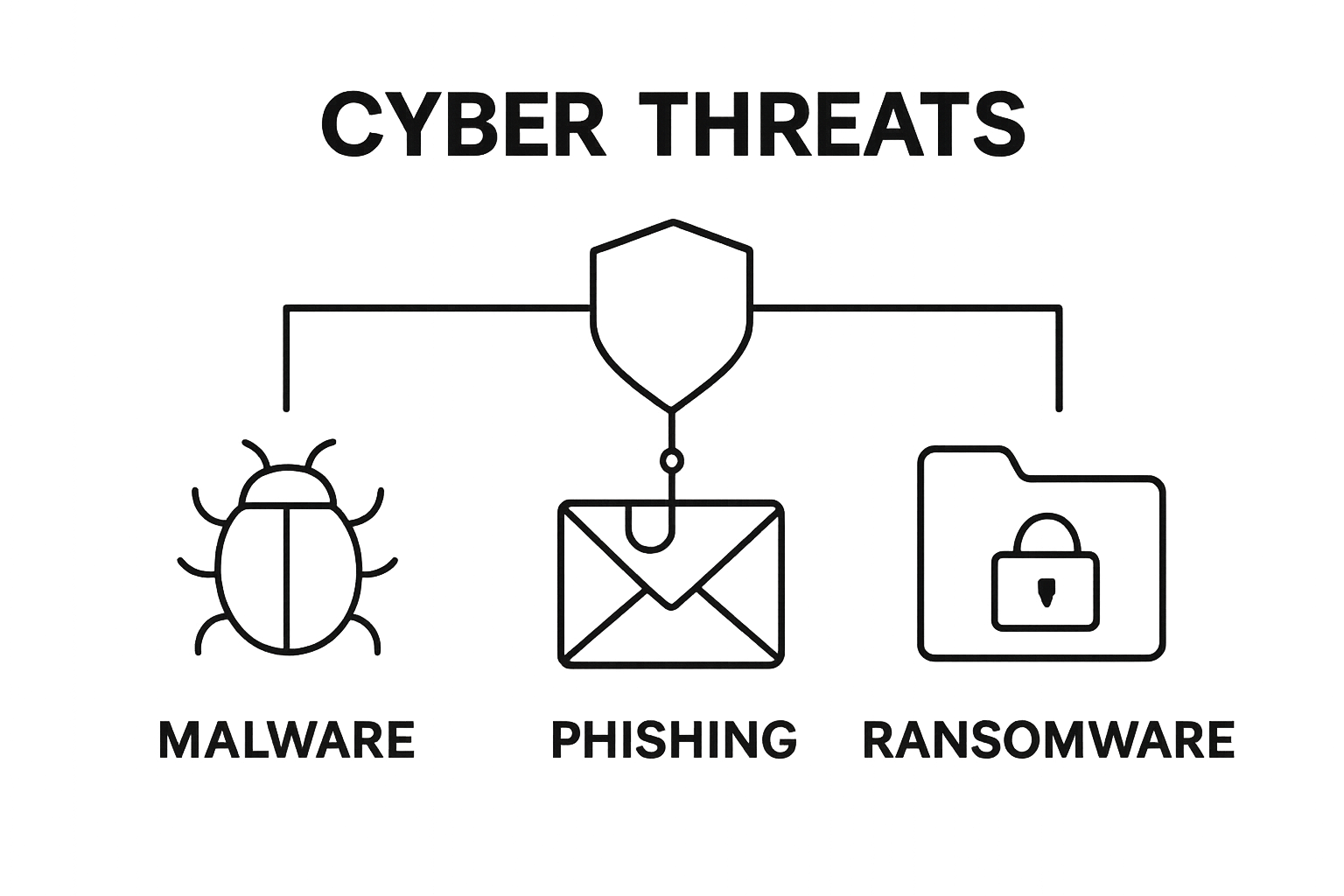
Cyber threats generate consequences that transcend technological domains. They potentially affect economic stability, organisational reputation, and individual psychological well-being. Explore emerging technology trends that impact cybersecurity to understand the dynamic landscape of digital risks.
The most significant threats emerge from interconnected vulnerabilities that exploit human behaviour, technological weaknesses, and systemic gaps.
The following table highlights the primary types of cyber threats discussed in the article, along with their descriptions and typical impacts on organisations.
| Threat Type | Description | Typical Impact |
|---|---|---|
| Malware Attacks | Malicious software designed to infiltrate and damage computer systems | Data loss, operational disruption, reputational harm |
| Phishing Attempts | Deceptive messages trying to obtain sensitive information | Credential theft, financial loss |
| Ransomware | Software that encrypts assets and demands payment for release | Financial cost, business downtime, data unavailability |
| Cybercriminals increasingly utilise advanced techniques that manipulate psychological triggers, making traditional defensive strategies insufficient. |
Understanding these threats requires a holistic approach that combines technological vigilance, continuous education, and adaptive security frameworks. Organisations must develop resilient strategies that anticipate potential risks, implement robust protective measures, and maintain rapid response capabilities in an ever-changing digital environment.
Effective cybersecurity requires a comprehensive strategy that extends beyond technological solutions. Businesses must adopt a holistic approach that integrates technical defences, employee training, and proactive risk management to create a robust protective environment.
According to the UK Government Cyber Governance Code of Practice, organisations need a structured approach to manage digital risks effectively.
Critical strategic elements include:

Human error represents one of the most significant cybersecurity vulnerabilities. Discover how to train employees on cybersecurity awareness to transform your workforce into a proactive line of defence.
Improving employee cybersecurity knowledge involves more than occasional training sessions. It requires creating a culture of digital awareness where staff understand their role in protecting organisational assets. This means developing ongoing education programmes, simulating potential threat scenarios, and fostering an environment where reporting potential risks is encouraged and rewarded.
Ultimately, successful cybersecurity implementation demands continuous adaptation. Businesses must remain agile, updating their strategies as technological landscapes and threat environments evolve. By combining technological solutions, strategic planning, and human expertise, organisations can build resilient defences that protect their digital infrastructure and maintain operational integrity.
Have you read about rising cyber threats and started to worry about hidden risks in your business? The article has shown how just one outdated system or untrained employee can expose your company to malware or phishing attacks. You do not have to manage this alone. At J700 Group, we help businesses across Lancashire and the North West to spot vulnerabilities early, secure data, and avoid costly downtime. If you want peace of mind and reliable systems that protect your valuable information, now is the time to take action.

Act today to shield your business from cyber risk. Speak with our Lancashire-based specialists for a no-obligation review. See how our proactive cybersecurity solutions and staff training can keep you ahead of evolving threats and support your success. Visit J700 Group Contact now and take the next step towards a safer future.
Cybersecurity is a protective strategy that involves defending digital systems, networks, and information from malicious attacks, unauthorized access, and disruptions that could compromise data integrity and operational continuity.
Cybersecurity is essential for businesses as it protects critical operations, financial stability, and reputation against potential digital threats. A breach can lead to financial losses, operational disruptions, and a loss of customer trust.
The main components of cybersecurity include technological protections like firewalls and encryption, human expertise in monitoring and responding to threats, and strategic protocols for managing digital risks effectively.
Organisations can enhance cybersecurity awareness by providing ongoing training for employees, developing a culture of digital awareness, simulating threat scenarios, and encouraging staff to report potential risks.
For years, businesses protected their data like a medieval castle: build a thick wall (a…
Read More
For many small and medium-sized businesses, cybersecurity is still viewed as an IT problem. Firewalls,…
Read More
Cloud technology is no longer a luxury or a cost-saving alternative to on-site servers. For…
Read More
Remember when we jokingly wondered if Apple was borrowing our name? Well, the rumours were…
Read More
AI hasn’t just changed the way we work, it has completely rewritten the rulebook for…
Read More
For many businesses, the office phone is like part of the furniture, it’s always there,…
Read More
We are thrilled to announce a significant milestone in the J700 Group journey. To keep…
Read More
For years, many small and medium-sized business owners in the North West have operated under…
Read More
In a modern healthcare setting, the stethoscope and the blood pressure cuff aren’t the only…
Read More
When people hear the word cybersecurity, they often imagine complex systems, expensive software and specialist…
Read More
As we count down to midnight, most of us are thinking about gym memberships or…
Read More
It’s Christmas Eve in Lancashire. The Preston bypass is a nightmare, the last-minute dash to…
Read More
For many businesses, the Christmas period means quieter offices, reduced staffing and systems left running…
Read More
Or: Why we’d like to have a word with Tim Cook this Christmas. There are…
Read More
Hackers Love Christmas: Learn Why your Business Could be at Risk This Holiday SeasonThe festive…
Read More
In recent months, high-profile companies like Land Rover and Co-op have made headlines due to…
Read More
Explore 7 essential tips for effective cloud solutions comparison to find the best fit for…
Read More
Learn how to secure business data for UK SMEs with this step-by-step guide focused on…
Read More
Cybersecurity basics explained for UK businesses—core concepts, major threats, essential safeguards, and compliance requirements. A…
Read More
Discover the essential role of IT support desks, core functions, key benefits, types of support,…
Read More
Discover 10 microsoft 365 alternatives for UK SMEs, comparing features and benefits to help your…
Read More
Discover the best microsoft 365 alternatives in our comparison of 10 top products to enhance…
Read More
Discover a business connectivity checklist with 7 actionable steps to boost IT reliability, security, and…
Read More
Discover 7 essential business continuity planning steps to protect your SME. Learn practical strategies for…
Read More
Small Business Office 365 comprehensive guide for UK SMEs: core features, setup process, security essentials,…
Read More
Small Business Office 365 guide for UK firms. Learn core features, setup, security, costs, and…
Read More
Small business Office 365 guide covering essential features, security, costs, local support, and practical benefits…
Read More
Follow this cybersecurity checklist for SMEs to secure your business in Lancashire and Manchester. Step-by-step…
Read More
Follow this cybersecurity checklist for SMEs to boost protection, reduce risks, and secure business data…
Read More
Cloud security explained: A comprehensive guide for UK businesses covering threat types, protection strategies, compliance,…
Read More
Data protection strategies for UK SMEs—types, key components, GDPR compliance, business risks, and best practices…
Read More
Why cybersecurity matters for UK businesses: core concepts, main risks, common threats, legal requirements, and…
Read More
Comprehensive guide to IT issues Lancashire businesses face, including security threats, system downtime, cloud solutions,…
Read More
Comprehensive guide on cyber security threats in the UK. Learn common types, key characteristics, real-world…
Read More
Follow this IT security checklist for a step-by-step process to secure your business effectively in…
Read More
Explore the benefits of managed IT services for businesses in Manchester and Lancashire, enhancing efficiency…
Read More
Explore the role of cybersecurity in business. Understand its importance, how it works, and key…
Read More
Discover 7 key advantages of Microsoft 365 for SMEs that can enhance productivity, collaboration, and…
Read More
Explore why use managed IT services and how they benefit businesses. Gain comprehensive insights on…
Read More
Comprehensive guide explaining cyber threats, focusing on their importance, how they work, and the key…
Read More