



For years, businesses protected their data like a medieval castle: build a thick wall (a…
Read More
Protecting business data is no longer only about stopping hackers. The stakes have soared, with over 80 percent of UK organisations reporting at least one cyber attack in the past year. Most companies lock down their tech but overlook a bigger issue. The real threat often slips in through everyday mistakes made by staff or simple oversights that no firewall can catch.
| Key Point | Explanation |
|---|---|
| 1. Assess your current data security needs | Understand your digital landscape and identify vulnerabilities before implementing protection strategies. |
| 2. Implement strong access controls | Use the principle of least privilege and multi-factor authentication to prevent unauthorized access. |
| 3. Encrypt sensitive business data | Protect important information using encryption to ensure that intercepted data remains unreadable. |
| 4. Train employees on data security | Establish engaging training programs to cultivate a workforce that actively protects against cyber threats. |
| 5. Regularly back up data securely | Develop a multi-tiered backup strategy to safeguard against data loss and ensure recovery options are available. |
Securing business data begins with a comprehensive understanding of your current digital landscape. Before implementing any sophisticated protection strategies, you need a clear picture of your existing infrastructure, potential vulnerabilities, and specific security requirements.
Start by creating a detailed inventory of all digital assets and information systems within your organisation. This includes mapping every device, from desktop computers and laptops to mobile phones, tablets, and network servers. Document each system’s operating software, age, and current security configuration. Pay special attention to devices that connect remotely or handle sensitive business information.
Next, conduct a thorough audit of your data storage practices. Identify where critical business information is currently stored – whether in cloud platforms, local servers, external hard drives, or employee devices. Cybersecurity experts at NCSC recommend categorising data according to its sensitivity level, which helps prioritise protection strategies.
Transition from inventory to risk assessment by evaluating potential security weaknesses. This involves understanding potential entry points for cyber threats. Review your current network configurations, user access protocols, and data transmission methods. Look for outdated software, unpatched systems, and weak authentication mechanisms that could compromise your business data.
A comprehensive assessment should include reviewing recent security incidents, if any, and understanding how they occurred. Document past vulnerabilities and create a baseline risk profile that will guide your future security investments. This proactive approach allows you to anticipate potential threats rather than merely reacting to them after an incident occurs.
By meticulously assessing your current data security needs, you create a solid foundation for developing a robust, tailored protection strategy that addresses your specific business requirements.
A summary table below outlines the key actions you should take when assessing your current data security needs, highlighting the purpose and benefit of each action.
| Action | Purpose | Benefit |
|---|---|---|
| Inventory all digital assets | Identify every device and system in use | Ensures complete understanding of digital landscape |
| Audit data storage practices | Locate where critical business information is stored | Highlights potential weaknesses in data handling |
| Categorise data by sensitivity | Classify information based on its importance | Prioritises protection for most sensitive data |
| Review network configurations | Examine current network and access protocols | Identifies entry points and weak configurations |
| Check software and patch status | Evaluate the currency of operating systems and applications | Prevents exposure from outdated or unpatched tools |
| Analyse recent security incidents | Study previous vulnerabilities and breaches | Guides future investment and security planning |
| Document a baseline risk profile | Establish a risk baseline for ongoing security monitoring | Provides reference for future improvement |
After assessing your current data security landscape, the next critical step is implementing robust access controls that protect your business information from unauthorized access. This process involves creating a comprehensive strategy that determines who can view, modify, or interact with your sensitive digital assets.
Begin by establishing a principle of least privilege across your organisation. This means each employee receives access only to the specific systems and data required for their job function. Research from the National Cyber Security Centre emphasizes that granular access control significantly reduces potential security breaches.
Implement multi factor authentication (MFA) as a standard practice.
This approach requires users to provide two or more verification methods to gain system access. Typical MFA strategies might combine a password with a time sensitive code sent to a mobile device or a biometric verification like fingerprint or facial recognition. By adding these additional layers, you create a more resilient barrier against unauthorized entry.
Create a systematic process for managing user credentials. This includes developing a robust onboarding procedure that grants appropriate access levels for new employees and an equally rigorous offboarding protocol that immediately revokes system access when staff members leave the organisation. Automated user management tools can help streamline these processes, ensuring no gaps exist in your security framework.
Regularly audit user permissions and access logs. Look for unusual login patterns, repeated access attempts from unfamiliar locations, or credentials being used outside standard working hours. These monitoring practices help identify potential security threats before they can escalate. Implement real time alerting systems that notify your IT security team about suspicious activities, enabling rapid response to potential breaches.
By meticulously controlling and monitoring system access, you create a powerful first line of defence in protecting your business data from potential intrusions and unauthorized interactions.
Encryption transforms your business data from vulnerable plain text into an unreadable format that protects critical information from potential unauthorized access. This crucial step acts as a powerful shield, ensuring that even if cybercriminals intercept your data, they cannot comprehend its contents.
Start by identifying and categorising your most sensitive business data. Financial records, customer information, strategic documents, and proprietary research require the highest level of encryption protection. The National Cyber Security Centre recommends implementing end to end encryption protocols that secure data both during transmission and while stored in digital repositories.
Choose encryption solutions that provide comprehensive coverage across multiple platforms. This means selecting tools that can protect data on desktop computers, mobile devices, cloud storage systems, and during network transmissions. Look for encryption technologies that offer robust algorithmic protection, such as AES 256 bit encryption, which provides extremely strong security against potential breaches.
Develop a systematic approach to encryption that covers every stage of data handling. This involves creating encrypted backup systems, securing email communications, and implementing encrypted file storage protocols. Ensure that your encryption strategy includes automatic encryption for sensitive documents, preventing accidental exposure of critical information.
Training becomes equally important in this process. Your team must understand how to use encryption tools effectively, recognising which information requires protection and how to maintain secure communication channels. Implement regular workshops that demonstrate practical encryption techniques, helping employees become active participants in your data security strategy.
By meticulously encrypting sensitive business data, you create an additional robust layer of protection that significantly reduces the risk of information compromise, safeguarding your organisation’s most valuable digital assets against potential cyber threats.
Employees represent both the strongest and most vulnerable component of your data security strategy. Human error can quickly transform even the most sophisticated technological defences into potential breach points. Developing a comprehensive training programme becomes critical in transforming your workforce into an active line of defence against cyber threats.
Begin by establishing regular, engaging training sessions that go beyond traditional boring compliance presentations. Interactive workshops that simulate real world cyber attack scenarios can help employees develop practical skills in recognising and responding to potential security risks. Design these sessions to be dynamic, using actual case studies from your industry that demonstrate the tangible consequences of data breaches.
Implement a continuous learning approach where security education becomes an ongoing process. This means creating monthly briefings, quarterly deep dive sessions, and immediate updates when new threat patterns emerge. Research from the National Cyber Security Centre highlights that consistent, practical training significantly reduces organisational vulnerability to cyber attacks.
Focus on teaching specific, actionable skills that employees can immediately implement.
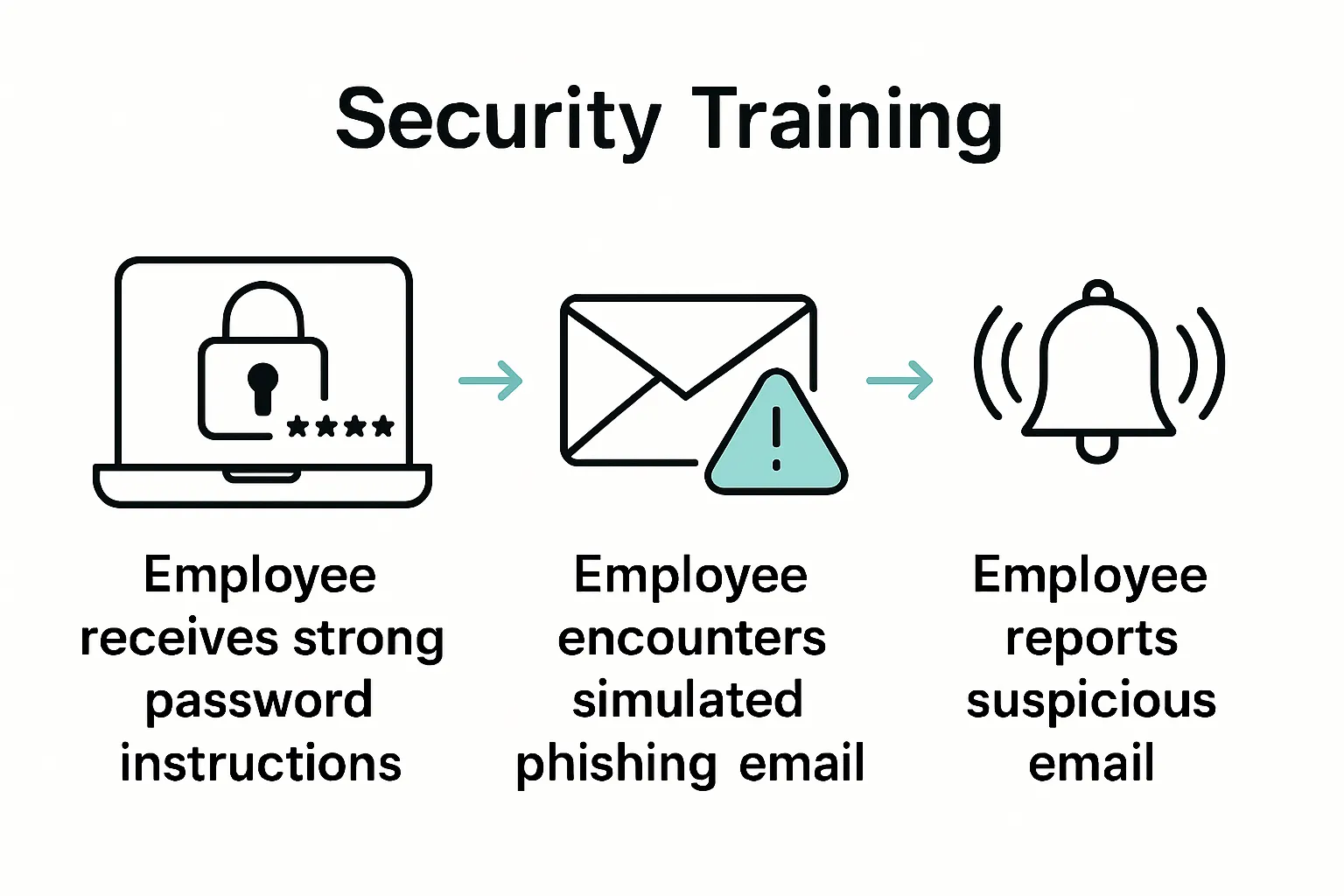 This includes understanding how to create strong passwords, recognise phishing attempts, safely handle sensitive information, and report suspicious digital activities. Develop clear, straightforward protocols that employees can follow without confusion.
Establish a reporting mechanism that encourages employees to communicate potential security concerns without fear of reprisal. Create an environment where asking questions and seeking clarification about data security is viewed as a positive contribution to the organisation’s overall protection strategy. By making security a collaborative effort, you transform potential vulnerabilities into collective strengths.
The following table provides an overview of core employee security training elements, associated skills, and the intended outcomes as discussed in the section on training staff for data security.
| Training Element | Key Skills Developed | Intended Outcome |
|---|---|---|
| Interactive workshops | Recognising and responding to cyber threats | Employees can identify and react to risks effectively |
| Continuous learning sessions | Staying updated on new threat patterns | Maintains organisational awareness and vigilance |
| Practical password creation training | Creating strong, secure passwords | Reduces risk from poor authentication practices |
| Phishing recognition exercises | Spotting suspicious emails and links | Minimises risk of successful phishing attacks |
| Reporting protocols | How to report security concerns effectively | Encourages quick response to potential threats |
| Safe handling of sensitive data | Correct management of confidential information | Prevents data exposure through human error |
| Culture of security awareness | Collective responsibility and communication | Builds resilient, security-minded workforce |
Through strategic, engaging training programmes, you can convert your employees from potential security risks into informed, proactive defenders of your business data.
Secure data backups represent a critical lifeline for businesses, providing protection against potential loss from cyber attacks, hardware failures, or unexpected system disruptions. Creating a comprehensive backup strategy goes far beyond simply copying files periodically.
Establish a multi tiered backup approach that includes local and offsite storage solutions. This means maintaining copies of critical business data across different physical and digital locations, reducing the risk of complete data loss. Local backups provide quick recovery options, while offsite or cloud based backups offer additional protection against localised incidents like physical damage or theft.
Implement an automated backup system that performs regular, scheduled data captures without requiring manual intervention. Choose backup solutions that allow incremental backups, which only save changes made since the last backup, reducing storage requirements and minimising system performance impact. The National Cyber Security Centre recommends creating multiple backup copies to ensure redundancy and reliability.
Develop a systematic backup rotation strategy that maintains multiple historical versions of your data. This approach allows you to restore information from different points in time, which becomes crucial if you need to recover from a ransomware attack or identify when a specific data corruption might have occurred.
Regularly test your backup restoration process to confirm the integrity and recoverability of your stored data. Schedule quarterly restoration drills where your IT team attempts to recover data from backups, ensuring that the process works smoothly and that all critical information can be successfully retrieved. Encryption should be applied to all backup files, protecting them from unauthorized access while stored or in transit.
By creating a comprehensive, multilayered backup strategy, you build a robust safety net that protects your business data against potential catastrophic losses.

Continuous testing and auditing form the backbone of a dynamic and responsive data security strategy. This critical step transforms your security approach from a static defence to an adaptive, proactive system that evolves alongside emerging digital threats.
Systematic security testing requires a multifaceted approach that goes beyond simple theoretical evaluations. Begin by conducting thorough penetration testing, which simulates real world cyber attack scenarios against your organisation’s digital infrastructure. These controlled simulations help identify potential weaknesses before actual malicious actors can exploit them. Design these tests to mirror sophisticated attack strategies, challenging every layer of your existing security protocols.
Implement both internal and external audit processes that examine your security infrastructure from multiple perspectives. Internal audits allow your team to assess current practices, while external professional assessments provide an unbiased, expert evaluation of your security posture. The National Cyber Security Centre recommends regular penetration testing to maintain robust defensive capabilities.
Develop a structured process for documenting and addressing any vulnerabilities discovered during testing. This means creating clear action plans that prioritise security gaps based on their potential impact and likelihood of exploitation. Each identified weakness should trigger a specific remediation strategy with clear timelines and responsible personnel.
Establish a continuous feedback loop where audit findings directly inform future security investments and training programmes. This approach ensures that your data protection strategy remains dynamic, adapting to the rapidly evolving landscape of digital threats. Regular reporting and transparent communication about security testing results help maintain organisational awareness and commitment to protecting critical business information.
By treating security testing as an ongoing, strategic process, you create a resilient defence mechanism that proactively identifies and mitigates potential risks before they can compromise your business data.
Struggling to keep up with the latest threats and secure every corner of your business infrastructure? If the steps in “6 Ways to Secure Business Data Effectively in 2025” feel overwhelming, you are not alone. Many business owners worry about vulnerabilities, weak access controls, and the risk of costly data breaches. Keeping pace with rapid changes in technology and cyber attacks can seem like a never-ending battle. Find practical advice and further insights over on our Cyber Security Archives to help you stay informed.

You do not have to manage these risks alone. J700 Group delivers complete business security solutions tailored to small and medium enterprises in Lancashire and the North West. Let our experienced team help you implement proactive access controls, secure regular data backups, and create a culture of staff cyber awareness. Take the first step to safeguard your company by contacting us at J700 Group. Your business data deserves advanced protection—do not wait until disaster strikes. Explore our Business Services to see how we can support your long-term growth and digital safety.
Begin by creating a detailed inventory of all digital assets and information systems within your organisation. Conduct a thorough audit of your data storage practices and evaluate potential vulnerabilities to understand your current digital landscape.
Robust access controls determine who can view or modify sensitive data within your organisation. They are essential for preventing unauthorized access and limiting exposure to potential security breaches through the principle of least privilege and multi-factor authentication.
Encryption transforms business data into an unreadable format, making it unintelligible to unauthorized users. Proper encryption methods secure sensitive information both during transmission and when stored, significantly reducing the risk of data compromise.
Employee training is vital as human error can create vulnerabilities in even the best security systems. Comprehensive training programmes help employees recognise security risks, utilise security tools effectively, and foster a culture of security awareness within the organisation.
For years, businesses protected their data like a medieval castle: build a thick wall (a…
Read More
For many small and medium-sized businesses, cybersecurity is still viewed as an IT problem. Firewalls,…
Read More
Cloud technology is no longer a luxury or a cost-saving alternative to on-site servers. For…
Read More
Remember when we jokingly wondered if Apple was borrowing our name? Well, the rumours were…
Read More
AI hasn’t just changed the way we work, it has completely rewritten the rulebook for…
Read More
For many businesses, the office phone is like part of the furniture, it’s always there,…
Read More
We are thrilled to announce a significant milestone in the J700 Group journey. To keep…
Read More
For years, many small and medium-sized business owners in the North West have operated under…
Read More
In a modern healthcare setting, the stethoscope and the blood pressure cuff aren’t the only…
Read More
When people hear the word cybersecurity, they often imagine complex systems, expensive software and specialist…
Read More
As we count down to midnight, most of us are thinking about gym memberships or…
Read More
It’s Christmas Eve in Lancashire. The Preston bypass is a nightmare, the last-minute dash to…
Read More
For many businesses, the Christmas period means quieter offices, reduced staffing and systems left running…
Read More
Or: Why we’d like to have a word with Tim Cook this Christmas. There are…
Read More
Hackers Love Christmas: Learn Why your Business Could be at Risk This Holiday SeasonThe festive…
Read More
In recent months, high-profile companies like Land Rover and Co-op have made headlines due to…
Read More
Explore 7 essential tips for effective cloud solutions comparison to find the best fit for…
Read More
Learn how to secure business data for UK SMEs with this step-by-step guide focused on…
Read More
Cybersecurity basics explained for UK businesses—core concepts, major threats, essential safeguards, and compliance requirements. A…
Read More
Discover the essential role of IT support desks, core functions, key benefits, types of support,…
Read More
Discover 10 microsoft 365 alternatives for UK SMEs, comparing features and benefits to help your…
Read More
Discover the best microsoft 365 alternatives in our comparison of 10 top products to enhance…
Read More
Discover a business connectivity checklist with 7 actionable steps to boost IT reliability, security, and…
Read More
Discover 7 essential business continuity planning steps to protect your SME. Learn practical strategies for…
Read More
Small Business Office 365 comprehensive guide for UK SMEs: core features, setup process, security essentials,…
Read More
Small Business Office 365 guide for UK firms. Learn core features, setup, security, costs, and…
Read More
Small business Office 365 guide covering essential features, security, costs, local support, and practical benefits…
Read More
Follow this cybersecurity checklist for SMEs to secure your business in Lancashire and Manchester. Step-by-step…
Read More
Follow this cybersecurity checklist for SMEs to boost protection, reduce risks, and secure business data…
Read More
Cloud security explained: A comprehensive guide for UK businesses covering threat types, protection strategies, compliance,…
Read More
Data protection strategies for UK SMEs—types, key components, GDPR compliance, business risks, and best practices…
Read More
Why cybersecurity matters for UK businesses: core concepts, main risks, common threats, legal requirements, and…
Read More
Comprehensive guide to IT issues Lancashire businesses face, including security threats, system downtime, cloud solutions,…
Read More
Comprehensive guide on cyber security threats in the UK. Learn common types, key characteristics, real-world…
Read More
Follow this IT security checklist for a step-by-step process to secure your business effectively in…
Read More
Explore the benefits of managed IT services for businesses in Manchester and Lancashire, enhancing efficiency…
Read More
Explore the role of cybersecurity in business. Understand its importance, how it works, and key…
Read More
Discover 7 key advantages of Microsoft 365 for SMEs that can enhance productivity, collaboration, and…
Read More
Explore why use managed IT services and how they benefit businesses. Gain comprehensive insights on…
Read More
Comprehensive guide explaining cyber threats, focusing on their importance, how they work, and the key…
Read More