



For years, businesses protected their data like a medieval castle: build a thick wall (a…
Read More
Cybersecurity is often seen as a technical shield against hackers and data breaches, and yet its purpose runs much deeper than most people imagine. Nearly 39 percent of UK businesses reported cyber attacks in 2021, costing thousands each time and shaking trust at every level. It is not just about locking doors online but about building a culture of resilience that keeps businesses strong even as threats evolve.
| Takeaway | Explanation |
|---|---|
| Understand the CIA triad | The principles of Confidentiality, Integrity, and Availability are essential for effective cybersecurity management. |
| Invest in technology layers | Implement multi-layered protections like firewalls and encryption to effectively shield against cyber threats. |
| Prioritise employee training | Regular security awareness training is crucial for empowering employees to recognise and respond to threats. |
| Adopt proactive security strategies | Develop adaptive strategies that anticipate potential digital risks and involve continuous monitoring. |
| Acknowledge cybersecurity’s business role | Treat cybersecurity as a key business strategy to protect financial stability and customer trust. |
Cybersecurity represents a comprehensive strategy for protecting digital systems, networks, and critical infrastructure from malicious cyber threats and potential breaches. At its fundamental level, cybersecurity aims to defend organisations against digital risks that could compromise operational integrity, financial stability, and reputation.
The primary objective of cybersecurity is safeguarding digital assets and information systems against unauthorised access, potential attacks, and data manipulation. The National Cyber Security Centre emphasises that effective cybersecurity involves multiple layers of protection across various technological domains.
Key components of cybersecurity include:
In the modern business landscape, cybersecurity transcends simple technical protection. It involves a holistic approach that integrates technological solutions, strategic planning, and human awareness. Businesses must recognize that cyber threats are dynamic and continuously evolving, requiring adaptable and proactive defence strategies.
The core purpose of cybersecurity encompasses three fundamental principles known as the **CIA triad
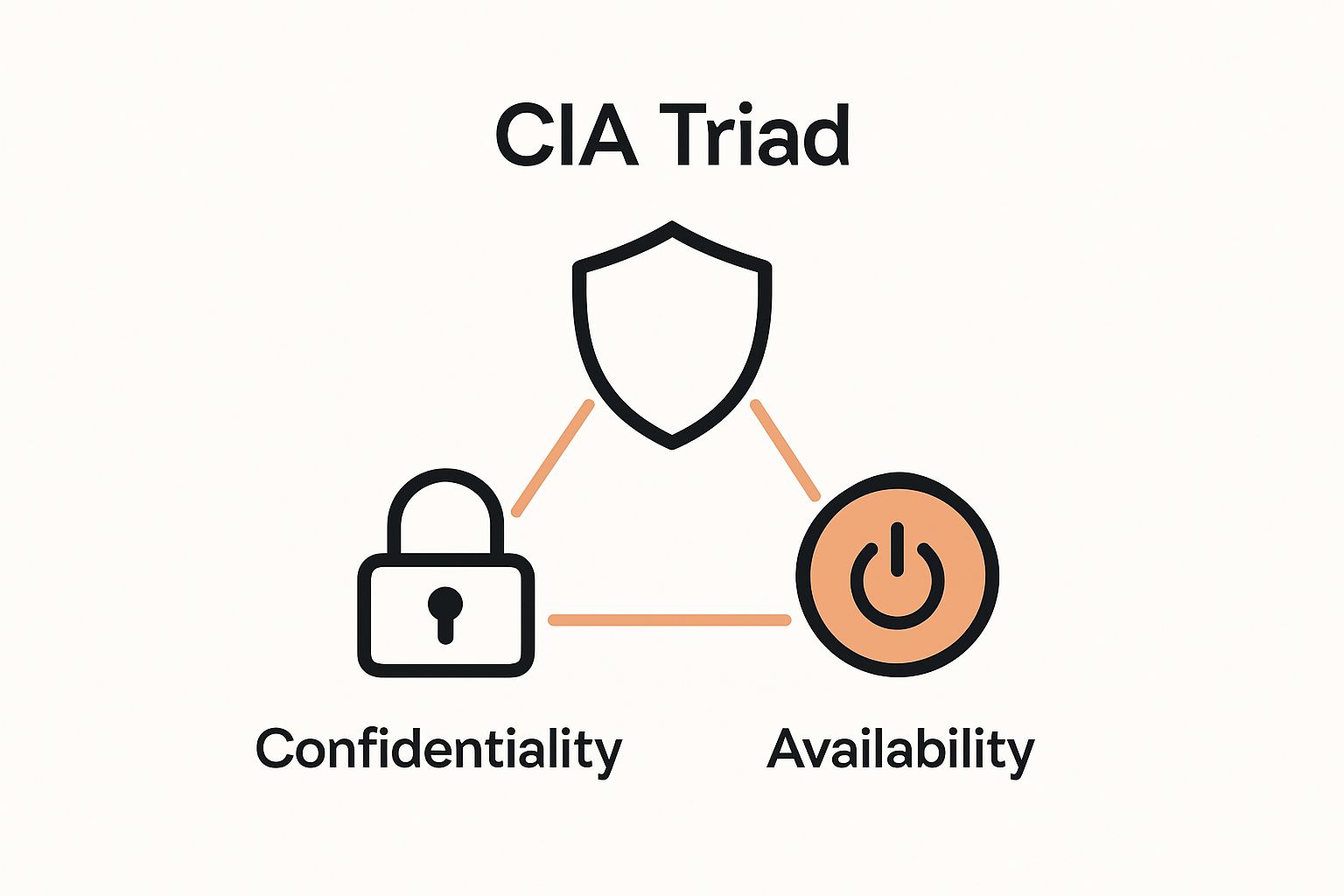 **:
**:
By implementing robust cybersecurity measures, organisations can mitigate risks, protect valuable digital assets, and maintain operational resilience in an increasingly interconnected technological environment. Understanding these principles is crucial for developing a comprehensive approach to digital security that addresses both technological and human factors.
Below is a summary table of the CIA triad, illustrating the core principles of cybersecurity as discussed in the article.
| Principle | Definition | Example in Business Context |
|---|---|---|
| Confidentiality | Restricting access to sensitive information to authorised individuals only | Only HR staff can view employee records |
| Integrity | Ensuring data is accurate, complete, and free from unauthorised alteration | Preventing unauthorised edits to invoices |
| Availability | Guaranteeing systems and data are accessible to legitimate users when needed | Online banking services remain operational |
Cybersecurity has transformed from a technical afterthought to a critical strategic imperative for businesses across every sector. The digital landscape presents unprecedented opportunities alongside significant vulnerabilities that can potentially devastate organisational operations, finances, and reputation.
Businesses face substantial financial consequences from cyber incidents. According to UK government research, approximately 39% of UK businesses reported experiencing cyber attacks in 2021, with average financial losses ranging between £8,460 to £13,400 per incident. These statistics underscore the profound economic implications of inadequate cybersecurity measures.
Key economic risks include:
Beyond immediate financial impacts, cybersecurity breaches can inflict long-lasting damage to an organisation’s reputation and customer trust. When sensitive data is compromised, businesses risk losing customer confidence, which can lead to significant market share erosion and diminished brand value. Learn more about the most common cybersecurity mistakes that could potentially harm your business reputation.
The implications of poor cybersecurity extend far beyond technical domains, affecting:
By recognising cybersecurity as a fundamental business strategy rather than a mere technical requirement, organisations can proactively protect their digital assets, maintain operational continuity, and safeguard their most valuable resource: trust.
This table outlines the main economic and reputational risks associated with cyber attacks on businesses, highlighting both immediate and long-term impacts mentioned in the article.
| Risk Type | Description | Example Impact |
|---|---|---|
| Financial Loss | Direct costs resulting from breaches or attacks | Costs of system repair and data recovery |
| Operational Downtime | Interruptions to normal business operations | Temporary inability to process orders |
| Legal Penalties | Fines for non-compliance with data protection regulations | Penalty for breaching GDPR |
| Reputation Damage | Loss of customer trust and negative brand perception | Customers switch to competitors |
| Market Share Loss | Reduced competitiveness due to diminished reputation | Declining sales following a data breach |
| Implementing robust cybersecurity measures is not just about preventing attacks but about creating a resilient, adaptive digital ecosystem that can withstand and quickly respond to emerging technological threats. |
Cybersecurity functions as a comprehensive defensive strategy that safeguards digital infrastructure through multiple interconnected protection mechanisms. Businesses require sophisticated, multi-layered approaches to effectively shield their technological assets from increasingly complex cyber threats.
The National Cyber Security Centre emphasises that robust cybersecurity involves implementing strategic technological defences across different organisational domains. These protection layers work synergistically to detect, prevent, and mitigate potential security breaches.
Key technological protection mechanisms include:
Cybersecurity protection extends beyond technological solutions, encompassing comprehensive strategic planning and human awareness. Organisations must develop adaptive strategies that anticipate and respond to emerging digital risks. Learn more about advanced cybersecurity strategy implementation to understand sophisticated defensive approaches.
Businesses can enhance their cybersecurity protection through:
By integrating technological tools, strategic approaches, and human expertise, businesses create resilient digital environments capable of withstanding sophisticated cyber threats. The goal is not merely preventing attacks but developing an adaptive, proactive security ecosystem that can dynamically respond to evolving digital challenges.
The following table compares key technological and strategic defence approaches, clarifying how different elements jointly enhance business cybersecurity.
| Defence Approach | Description | Example Implementation |
|---|---|---|
| Network Security Firewalls | Block unauthorised access to internal networks | Configuring firewalls on routers |
| Endpoint Protection | Secure devices such as computers and mobile phones | Install antivirus software |
| Encryption Technologies | Protect sensitive data by encoding information | Use encrypted email for communication |
| Security Awareness Training | Educate staff to recognise and avoid common threats | Conduct phishing simulation workshops |
| Incident Response Planning | Prepare for rapid reaction to security breaches | Develop a formal incident response plan |
Cybersecurity strategies represent a complex ecosystem of technological, procedural, and human-centric approaches designed to protect digital assets and mitigate potential cyber risks. Understanding these fundamental concepts enables organisations to develop comprehensive and adaptive security frameworks.
The National Cyber Security Centre highlights key strategic principles that form the backbone of effective cybersecurity management. These principles transcend simple technical implementations and require holistic organisational commitment.
Critical foundational security concepts include:
Effective cybersecurity strategies go beyond reactive approaches, emphasising proactive and predictive defence mechanisms. Organisations must develop adaptive frameworks that anticipate potential threats and implement multilayered protective strategies. Learn more about emerging technology trends that are reshaping cybersecurity approaches.
Key strategic methodologies encompass:
By integrating these strategic concepts, businesses can create robust cybersecurity ecosystems that not only defend against current threats but also remain flexible enough to adapt to emerging digital challenges. The ultimate goal is transforming cybersecurity from a reactive technical function into a proactive, strategic business enabler.

If you are concerned about digital threats or the risk of business interruptions caused by cyber attacks, you are not alone. As covered in our article, cybersecurity is no longer just a technical issue—it is essential for safeguarding your financial health, customer trust, and business continuity. Many businesses are still leaving gaps in their digital protection, making them prime targets for costly attacks. Discover how our expert team can help you avoid common cybersecurity mistakes and put robust strategic measures in place. For more insights and updates, explore our Cyber Security Archives.

Do not let your business fall victim to avoidable cyber risks. The J700 Group team, based in Lancashire and trusted across the North West, specialises in secure, reliable IT solutions tailored for SMEs. Take control of your cyber future today—visit our contact page or get started with a consultation. Your business security cannot wait.
Cybersecurity aims to protect digital assets and ensure operational integrity by preventing unauthorised access and cyber threats. To implement effective cybersecurity measures, start by conducting a risk assessment to identify vulnerabilities within your organisation’s digital infrastructure.
To assess economic risks, analyse your potential financial losses from data breaches, operational downtime, and recovery costs. Conduct a detailed cost analysis to understand these impacts better and prioritise cybersecurity investments accordingly.
A robust cybersecurity strategy should incorporate risk assessment, continuous vulnerability management, security awareness training, and incident response planning. Develop an actionable plan that covers these components within the next 30 days to enhance your security posture.
Cybersecurity directly impacts customer trust by safeguarding sensitive information and demonstrating your commitment to data protection. To bolster customer confidence, initiate regular communication about your cybersecurity measures and how they protect clients’ data.
To ensure your team is well-informed, implement regular security awareness training sessions that cover potential cyber threats and response protocols. Schedule these sessions at least quarterly to keep everyone updated on the latest security practices.
It’s essential to review your cybersecurity measures at least annually or whenever there are significant changes to your business operations or threat landscape. Establish a routine evaluation process to ensure your strategies remain effective against emerging cyber threats.
For years, businesses protected their data like a medieval castle: build a thick wall (a…
Read More
For many small and medium-sized businesses, cybersecurity is still viewed as an IT problem. Firewalls,…
Read More
Cloud technology is no longer a luxury or a cost-saving alternative to on-site servers. For…
Read More
Remember when we jokingly wondered if Apple was borrowing our name? Well, the rumours were…
Read More
AI hasn’t just changed the way we work, it has completely rewritten the rulebook for…
Read More
For many businesses, the office phone is like part of the furniture, it’s always there,…
Read More
We are thrilled to announce a significant milestone in the J700 Group journey. To keep…
Read More
For years, many small and medium-sized business owners in the North West have operated under…
Read More
In a modern healthcare setting, the stethoscope and the blood pressure cuff aren’t the only…
Read More
When people hear the word cybersecurity, they often imagine complex systems, expensive software and specialist…
Read More
As we count down to midnight, most of us are thinking about gym memberships or…
Read More
It’s Christmas Eve in Lancashire. The Preston bypass is a nightmare, the last-minute dash to…
Read More
For many businesses, the Christmas period means quieter offices, reduced staffing and systems left running…
Read More
Or: Why we’d like to have a word with Tim Cook this Christmas. There are…
Read More
Hackers Love Christmas: Learn Why your Business Could be at Risk This Holiday SeasonThe festive…
Read More
In recent months, high-profile companies like Land Rover and Co-op have made headlines due to…
Read More
Explore 7 essential tips for effective cloud solutions comparison to find the best fit for…
Read More
Learn how to secure business data for UK SMEs with this step-by-step guide focused on…
Read More
Cybersecurity basics explained for UK businesses—core concepts, major threats, essential safeguards, and compliance requirements. A…
Read More
Discover the essential role of IT support desks, core functions, key benefits, types of support,…
Read More
Discover 10 microsoft 365 alternatives for UK SMEs, comparing features and benefits to help your…
Read More
Discover the best microsoft 365 alternatives in our comparison of 10 top products to enhance…
Read More
Discover a business connectivity checklist with 7 actionable steps to boost IT reliability, security, and…
Read More
Discover 7 essential business continuity planning steps to protect your SME. Learn practical strategies for…
Read More
Small Business Office 365 comprehensive guide for UK SMEs: core features, setup process, security essentials,…
Read More
Small Business Office 365 guide for UK firms. Learn core features, setup, security, costs, and…
Read More
Small business Office 365 guide covering essential features, security, costs, local support, and practical benefits…
Read More
Follow this cybersecurity checklist for SMEs to secure your business in Lancashire and Manchester. Step-by-step…
Read More
Follow this cybersecurity checklist for SMEs to boost protection, reduce risks, and secure business data…
Read More
Cloud security explained: A comprehensive guide for UK businesses covering threat types, protection strategies, compliance,…
Read More
Data protection strategies for UK SMEs—types, key components, GDPR compliance, business risks, and best practices…
Read More
Why cybersecurity matters for UK businesses: core concepts, main risks, common threats, legal requirements, and…
Read More
Comprehensive guide to IT issues Lancashire businesses face, including security threats, system downtime, cloud solutions,…
Read More
Comprehensive guide on cyber security threats in the UK. Learn common types, key characteristics, real-world…
Read More
Follow this IT security checklist for a step-by-step process to secure your business effectively in…
Read More
Explore the benefits of managed IT services for businesses in Manchester and Lancashire, enhancing efficiency…
Read More
Explore the role of cybersecurity in business. Understand its importance, how it works, and key…
Read More
Discover 7 key advantages of Microsoft 365 for SMEs that can enhance productivity, collaboration, and…
Read More
Explore why use managed IT services and how they benefit businesses. Gain comprehensive insights on…
Read More
Comprehensive guide explaining cyber threats, focusing on their importance, how they work, and the key…
Read More