



For years, businesses protected their data like a medieval castle: build a thick wall (a…
Read More
Over 39 percent of UK businesses reported cyber attacks last year, making digital threats a growing concern for companies in Lancashire and Manchester. Even a single missed vulnerability can open the door to costly breaches. By understanding the unique risks your business faces, you can take practical steps to close security gaps, protect valuable data, and build long term trust with customers and partners.
| Key Point | Explanation |
|---|---|
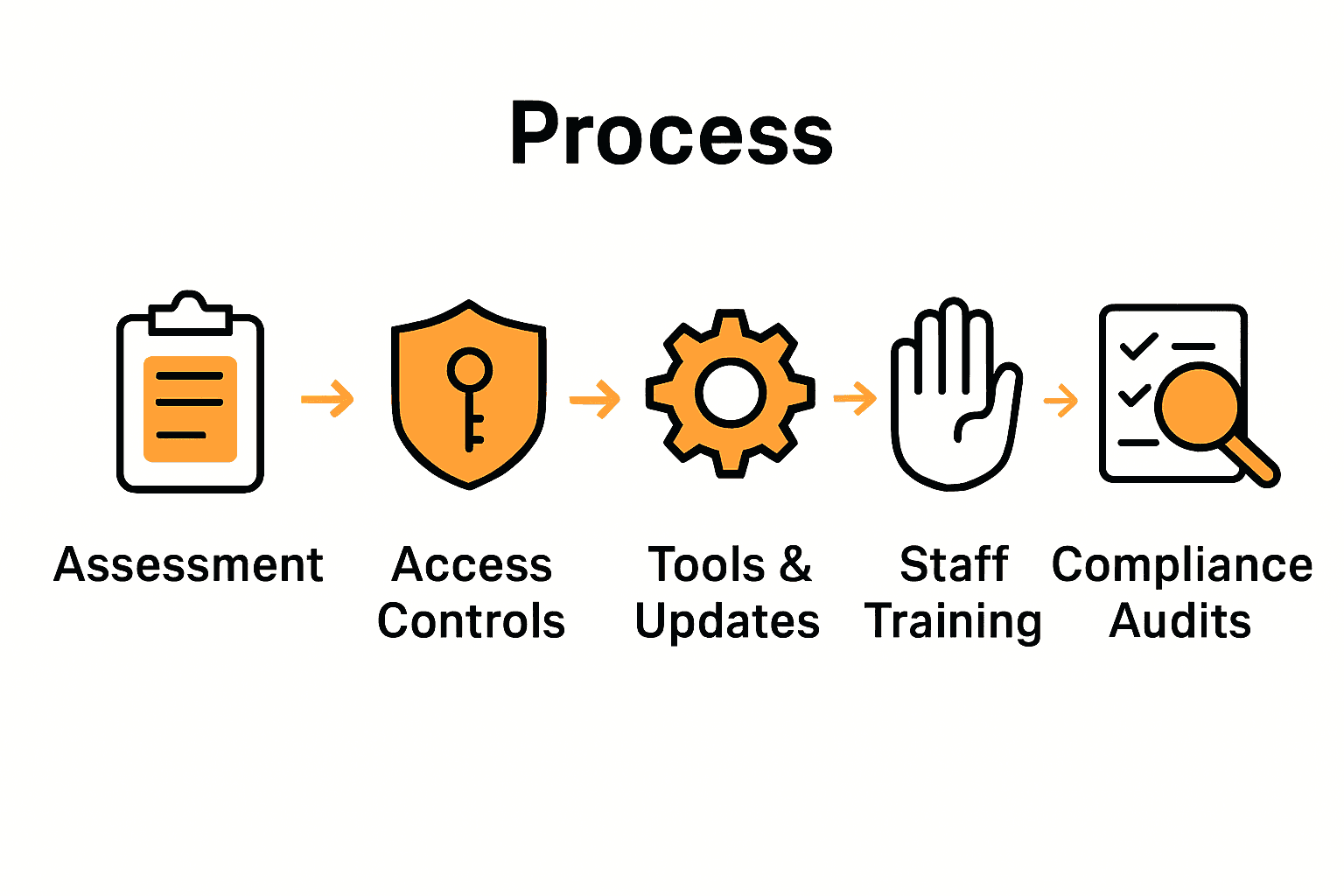
| 1. Conduct a thorough vulnerability assessment | Identify digital weaknesses using comprehensive audits and vulnerability scans to understand your cybersecurity landscape. |
| 2. Implement role-based access controls | Design user permissions based on job responsibilities to minimize security risks while ensuring operational efficiency. |
| 3. Regularly train employees on security | Create a continuous learning environment with regular security awareness sessions to empower staff against cyber threats. |
| 4. Utilize automated cybersecurity tools | Choose solutions that automatically update and protect across various digital environments for comprehensive security coverage. |
| 5. Establish ongoing security audits | Schedule regular vulnerability scans and compliance checks to maintain strong security protocols and adapt to new threats. |
In this crucial step, you will systematically evaluate your business’s digital vulnerabilities and create a foundational understanding of your current cybersecurity landscape. By identifying potential weaknesses, you can develop a targeted strategy to protect your Lancashire and Manchester based enterprise.
Start by conducting a comprehensive internal audit of your existing IT infrastructure. This means mapping out all digital assets including computers, networks, cloud services, and mobile devices used across your organisation. According to the UK Government’s cyber security guidance for business, SMEs should leverage tools like the “Check your cyber security” toolkit to streamline this assessment.
Next, perform a detailed vulnerability scan using specialised tools. Research from Finch Technical Solutions recommends several UK relevant options like the Cyber Essentials Readiness Tool from NCSC, Microsoft Secure Score, and Qualys Free Community Edition. These tools provide personalised recommendations and help pinpoint specific security gaps in your system.
Here is a comparison of popular cybersecurity tools recommended for UK SMEs:
| Tool Name | Main Purpose | Key Features |
|---|---|---|
| Cyber Essentials Readiness Tool | Self-assessment | UK specific guidance Actionable steps |
| Microsoft Secure Score | Security measurement | Real-time scoring Personalised recommendations |
| Qualys Free Community Edition | Vulnerability scanning | Automated scans Misconfiguration detection |
| Tenable Nessus Essentials | Vulnerability scanning | Free for small networks Comprehensive reporting |
| Darktrace | Threat detection | Real-time monitoring AI-driven responses |
| Microsoft Defender for Business | Endpoint protection | Integrated security Automated updates |
Pro Tip: Document every discovered vulnerability, no matter how minor it seems. Small gaps can become significant entry points for cybercriminals targeting businesses in Lancashire and the North West.
Pay special attention to human factors. Review employee access levels, password policies, and existing security training programmes. Many cybersecurity breaches stem from unintentional human errors rather than sophisticated technical attacks.
Once you have completed this initial assessment, you will have a clear roadmap of your current cybersecurity posture. The next step involves prioritising and addressing these identified risks systematically.
In this critical step, you will design a robust system of user permissions that protects your organisation’s digital assets while allowing necessary operational flexibility. By implementing strategic access controls, you can significantly reduce the risk of unauthorised data breaches in your Lancashire or Manchester business.
Begin by mapping out your organisation’s roles and responsibilities. According to the UK Government Cyber Essentials scheme, secure configuration requires carefully limiting user access to only what is absolutely necessary for their specific job functions. This principle of “least privilege” minimises potential security vulnerabilities.
Implement role based access control across your digital infrastructure. As CyberSmart recommends, create specific permission levels that align with each employee’s professional responsibilities. This means an accounting team member should not automatically have the same system access as your IT administrator.
Pro Tip: Review and update user permissions quarterly. Staff roles change, and your access controls must remain dynamic and current.
Utilise multi factor authentication for all critical system access. This adds an extra layer of security beyond traditional username and password combinations. Consider using authentication methods like SMS codes, authenticator apps, or physical security keys that provide additional verification.
Document your access control policy comprehensively.
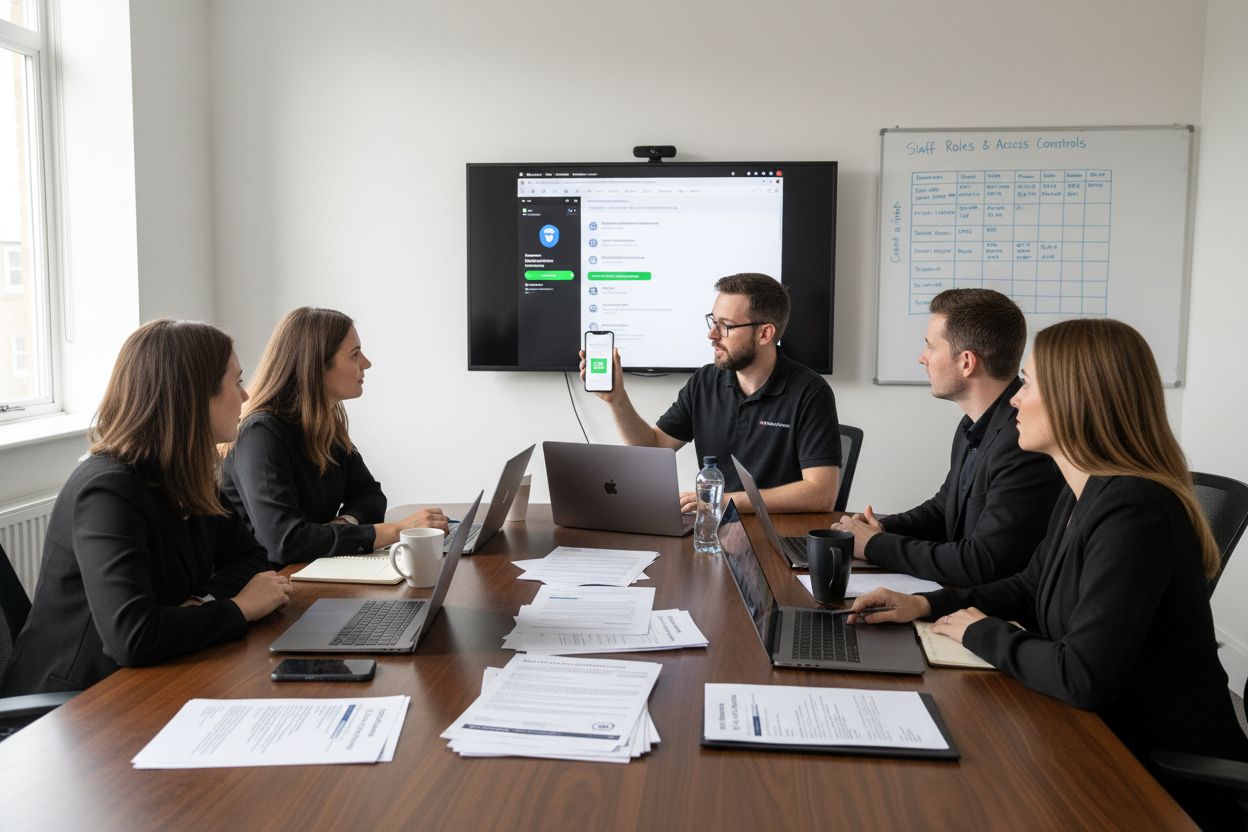 Ensure every team member understands the rationale behind permission restrictions and knows the proper protocols for requesting additional access when required.
With secure access controls established, you are ready to move towards developing comprehensive password management strategies that further protect your digital ecosystem.
In this essential step, you will fortify your Lancashire or Manchester business with strategic cybersecurity tools that provide comprehensive protection against digital threats. Your goal is to create a multi layered defence system that monitors, prevents, and responds to potential security risks.
Begin by selecting robust security solutions tailored to SMEs. According to Finch Technical Solutions, UK businesses should consider tools like Microsoft Defender for Business, Darktrace, and CyberSmart for endpoint protection and real time threat detection. These platforms offer advanced monitoring capabilities specifically designed for smaller organisations.
Prioritise software that provides comprehensive coverage across different digital environments. This means selecting tools that protect your cloud services, network infrastructure, and individual devices. Look for solutions that offer integrated security features such as firewall protection, malware scanning, and vulnerability management.
Pro Tip: Always choose tools with automatic update capabilities. Cybersecurity threats evolve rapidly, and your protection must remain current.
As recommended by the UK Government cyber security guidance, ensure you maintain regular software patches and updates across all systems. This includes operating systems, security software, and business applications. Automated update features can help streamline this critical maintenance process.
Consider implementing a centralised management platform that allows you to monitor and control security settings across all your business devices. This approach provides a unified view of your cybersecurity landscape and enables quick response to potential threats.
With your cybersecurity tools in place, you are now prepared to develop a comprehensive incident response strategy that ensures rapid action during potential security events.
In this critical step, you will transform your Lancashire or Manchester business team into a proactive human firewall against cyber threats. By developing a comprehensive security awareness programme, you can turn your employees from potential vulnerabilities into your strongest line of defence.
Start by leveraging the UK Government’s free online training resources. Their courses like “Top Tips for Staff” and “Introduction to Cyber Security” provide excellent foundational knowledge for employees at all levels. Ensure every team member completes these fundamental training modules to build a baseline understanding of cybersecurity risks.
According to the UK Cyber Security Group, effective security training requires more than just a one time workshop. Implement regular refresher training sessions that keep cybersecurity top of mind. This might include monthly email updates, quarterly interactive workshops, and annual comprehensive training programmes.
Pro Tip: Conduct realistic phishing simulations to test and improve your team’s threat recognition skills. Make these exercises constructive learning opportunities rather than punitive measures.
Develop clear, straightforward protocols for reporting suspicious activities. Create an easy reporting mechanism where employees feel comfortable and empowered to flag potential security incidents without fear of criticism. This could be a dedicated email address, an internal reporting tool, or a direct line to your IT security team.
Align your training with recognised UK standards like ISO 27001, IASME Cyber Assurance, and Cyber Essentials. This ensures your programme meets national best practices and provides a structured approach to security awareness.
With a robust staff training programme in place, you are now ready to develop a comprehensive incident response plan that transforms your team’s awareness into coordinated action.
In this final step, you will establish a robust system of continuous security validation for your Lancashire or Manchester business. Your objective is to create a dynamic monitoring approach that proactively identifies vulnerabilities and ensures your cybersecurity defences remain strong and adaptive.
Begin by implementing comprehensive vulnerability scanning tools. Finch Technical Solutions recommends using vulnerability scanners like Qualys Free Community and Tenable Nessus Essentials. These tools provide automated assessments that can detect potential security misconfigurations across your digital infrastructure.
Leverage Microsoft Secure Score to get a quantitative measurement of your organisation’s security posture. This tool provides actionable recommendations and tracks your progress in real time. Regularly review and act on these recommendations to continuously improve your security standing.
Pro Tip: Schedule quarterly comprehensive security audits. Treat these as strategic health checks for your digital ecosystem rather than routine administrative tasks.
According to UK Government guidance, SMEs should consider obtaining Cyber Essentials certification. This process not only validates your security practices but also provides a structured framework for ongoing compliance. Engage with local Cyber Resilience Centres and Cyber Advisors who can offer personalised guidance specific to businesses in the North West region.
Develop a comprehensive incident response plan that includes clear protocols for monitoring, detecting, and responding to potential security breaches. Ensure this plan is not just a document but a living strategy that evolves with your business and emerging threat landscapes.
With these protocols in place, you have established a proactive and resilient approach to cybersecurity that protects your business and builds trust with your stakeholders.
Have you made a start on our Cybersecurity Checklist but find that juggling vulnerability scans, access controls and staff training feels overwhelming? Many Lancashire and Manchester SMEs struggle to keep pace with the latest threats and never-ending compliance demands. If you are losing sleep over user permissions, software updates or the fear of a costly data breach, you are not alone. Secure your path with confidence by turning to a partner who truly understands local business needs and the importance of robust cyber protection. Discover more guidance in our Cyber Security resources.

Take control of your business security today. With expert help from J700 Group, your company can implement every step from our tailored checklist using trusted local solutions. Get started now to prevent downtime, protect your reputation and guarantee continuity. Speak to our Lancashire-based team through our contact page or browse our practical advice in IT Tips and Tricks. Your business deserves proactive protection and peace of mind for the year ahead.
Begin by conducting a comprehensive internal audit of your existing IT infrastructure. Map out all digital assets, including computers and networks, to build a foundational understanding of vulnerabilities within the next 30 days.
Implement role-based access control by defining user permissions based on job functions. Ensure to restrict access to only what’s necessary for each role, and review these permissions quarterly to adapt to any changes in team responsibilities.
Select robust cybersecurity solutions that offer comprehensive protection across digital environments, such as endpoint protection and real-time threat detection. Aim to choose at least two different tools that cover various aspects of your security needs within the next few weeks.
Develop a security awareness program that includes regular training sessions and practical exercises such as phishing simulations. Schedule these training sessions at least quarterly to keep cybersecurity top of mind for all employees.
Your incident response plan should detail protocols for monitoring, detecting, and responding to potential security breaches. Create a living document and review it at least annually to ensure it evolves with your business and current threat landscapes.
Conduct comprehensive security audits and vulnerability scans at least quarterly to ensure your cybersecurity protocols remain effective. Address any identified vulnerabilities promptly to maintain a proactive defense against potential threats.
For years, businesses protected their data like a medieval castle: build a thick wall (a…
Read More
For many small and medium-sized businesses, cybersecurity is still viewed as an IT problem. Firewalls,…
Read More
Cloud technology is no longer a luxury or a cost-saving alternative to on-site servers. For…
Read More
Remember when we jokingly wondered if Apple was borrowing our name? Well, the rumours were…
Read More
AI hasn’t just changed the way we work, it has completely rewritten the rulebook for…
Read More
For many businesses, the office phone is like part of the furniture, it’s always there,…
Read More
We are thrilled to announce a significant milestone in the J700 Group journey. To keep…
Read More
For years, many small and medium-sized business owners in the North West have operated under…
Read More
In a modern healthcare setting, the stethoscope and the blood pressure cuff aren’t the only…
Read More
When people hear the word cybersecurity, they often imagine complex systems, expensive software and specialist…
Read More
As we count down to midnight, most of us are thinking about gym memberships or…
Read More
It’s Christmas Eve in Lancashire. The Preston bypass is a nightmare, the last-minute dash to…
Read More
For many businesses, the Christmas period means quieter offices, reduced staffing and systems left running…
Read More
Or: Why we’d like to have a word with Tim Cook this Christmas. There are…
Read More
Hackers Love Christmas: Learn Why your Business Could be at Risk This Holiday SeasonThe festive…
Read More
In recent months, high-profile companies like Land Rover and Co-op have made headlines due to…
Read More
Explore 7 essential tips for effective cloud solutions comparison to find the best fit for…
Read More
Learn how to secure business data for UK SMEs with this step-by-step guide focused on…
Read More
Cybersecurity basics explained for UK businesses—core concepts, major threats, essential safeguards, and compliance requirements. A…
Read More
Discover the essential role of IT support desks, core functions, key benefits, types of support,…
Read More
Discover 10 microsoft 365 alternatives for UK SMEs, comparing features and benefits to help your…
Read More
Discover the best microsoft 365 alternatives in our comparison of 10 top products to enhance…
Read More
Discover a business connectivity checklist with 7 actionable steps to boost IT reliability, security, and…
Read More
Discover 7 essential business continuity planning steps to protect your SME. Learn practical strategies for…
Read More
Small Business Office 365 comprehensive guide for UK SMEs: core features, setup process, security essentials,…
Read More
Small Business Office 365 guide for UK firms. Learn core features, setup, security, costs, and…
Read More
Small business Office 365 guide covering essential features, security, costs, local support, and practical benefits…
Read More
Follow this cybersecurity checklist for SMEs to secure your business in Lancashire and Manchester. Step-by-step…
Read More
Follow this cybersecurity checklist for SMEs to boost protection, reduce risks, and secure business data…
Read More
Cloud security explained: A comprehensive guide for UK businesses covering threat types, protection strategies, compliance,…
Read More
Data protection strategies for UK SMEs—types, key components, GDPR compliance, business risks, and best practices…
Read More
Why cybersecurity matters for UK businesses: core concepts, main risks, common threats, legal requirements, and…
Read More
Comprehensive guide to IT issues Lancashire businesses face, including security threats, system downtime, cloud solutions,…
Read More
Comprehensive guide on cyber security threats in the UK. Learn common types, key characteristics, real-world…
Read More
Follow this IT security checklist for a step-by-step process to secure your business effectively in…
Read More
Explore the benefits of managed IT services for businesses in Manchester and Lancashire, enhancing efficiency…
Read More
Explore the role of cybersecurity in business. Understand its importance, how it works, and key…
Read More
Discover 7 key advantages of Microsoft 365 for SMEs that can enhance productivity, collaboration, and…
Read More
Explore why use managed IT services and how they benefit businesses. Gain comprehensive insights on…
Read More
Comprehensive guide explaining cyber threats, focusing on their importance, how they work, and the key…
Read More