



For years, businesses protected their data like a medieval castle: build a thick wall (a…
Read More
Over 43 percent of UK businesses have suffered a cyber attack in the last year, costing some organisations thousands in lost revenue and recovery efforts. This rising wave of digital threats puts every company in Lancashire and Manchester at risk, no matter their size or sector. By understanding the true nature of cyber security threats, business owners can take meaningful steps to protect their operations and keep sensitive information secure.
| Point | Details |
|---|---|
| Understanding Cyber Threats | Businesses must recognize cyber threats as real dangers that can compromise information systems and digital assets. |
| Common Attack Types | Ransomware, hacking, phishing, malware, and DDoS attacks are prevalent and require vigilant defense strategies. |
| Financial and Operational Risks | Cyber attacks can lead to substantial financial losses and disrupt business operations, highlighting the need for proactive measures. |
| Best Practices for Prevention | Implementing multi-layered security approaches, regular staff training, and incident response plans is crucial for safeguarding against cyber threats. |
In the bustling digital landscape of Lancashire and Manchester, cyber security threats represent sophisticated digital risks that can devastate small and medium enterprises. According to the UK government’s Cyber Assessment Framework, a cyber threat is anything capable of compromising the security of information systems, internet-connected devices, data, and services.
Businesses across Preston, Bolton, and Burnley need to understand that cyber threats are not just abstract concepts but real dangers with tangible consequences. The Northern Ireland Cyber Security Centre emphasises that these threats involve three critical components:
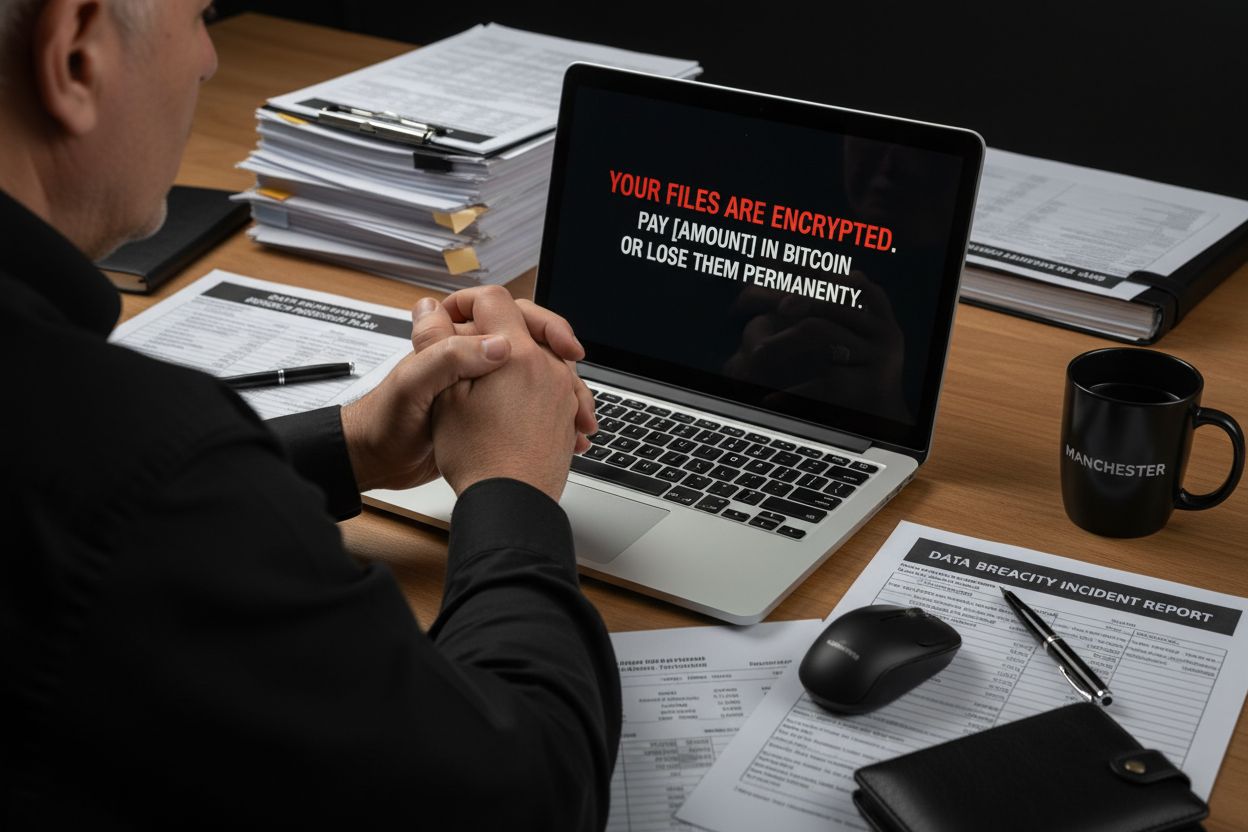
Learn more about the biggest cybersecurity mistakes small businesses make, which can help you proactively protect your digital infrastructure. In our experience supporting Lancashire businesses, understanding these threats is the first step towards building a robust cyber defence strategy that safeguards your digital assets and maintains business continuity.
Cyber threats represent a significant risk for businesses across Lancashire and Manchester, with criminal tactics evolving rapidly. According to the UK National Crime Agency, the most prevalent cyber threats facing UK businesses include:
Businesses in Preston, Bolton, Burnley, and across the North West are particularly vulnerable to these threats, especially ransomware-as-a-service operated by Russian-language criminal groups. These sophisticated attacks can paralyse entire business operations, causing significant financial and reputational damage.
Here’s a summary of the most common cyber security threats affecting UK businesses:
| Threat Type | Description | Key Impact |
|---|---|---|
| Ransomware | Locks systems, demands payment | Data loss Financial loss Operational freeze |
| Hacking | Unauthorised access to systems | Confidentiality breach Data theft |
| Phishing | Fraudulent emails or messages | Credential theft Financial fraud |
| Malware | Software causing damage/disruption | System compromise Service outage |
| DDoS Attacks | Overwhelms networks/services | Service unavailability Lost revenue |
Discover how cyber attacks can devastate UK businesses, and learn crucial strategies to protect your digital infrastructure. Understanding these threats is the first step in developing a comprehensive cyber defence strategy that safeguards your business’s digital assets and ensures continuous, secure operations.
Cyber attacks are increasingly sophisticated, targeting businesses across Lancashire and the UK with alarming precision. Research from the UK government reveals a stark reality: 43% of businesses experienced cyber attacks in the past year, impacting over 600,000 businesses and 61,000 charities.
The threat landscape varies significantly by business size and sector:
Learn about the latest scam call tactics targeting businesses, which represent another critical vector of cyber threats. According to the Cyber Security Breaches Survey 2025, phishing remains the most common attack method, with ransomware incidents rising from under 0.5% to 1% in just one year. Businesses in Preston, Manchester, and across Lancashire must recognize that no organisation is too small to be targeted in today’s interconnected digital ecosystem.
Cyber attacks pose devastating financial and operational risks for businesses across Lancashire and the UK. According to government research, the average cost of cyber crime per business ranges from £990 to £1,970, with cyber-facilitated fraud averaging £5,900. These figures represent just the direct financial impact of an estimated 8.58 million cyber incidents affecting businesses annually.
The consequences extend far beyond immediate monetary losses:
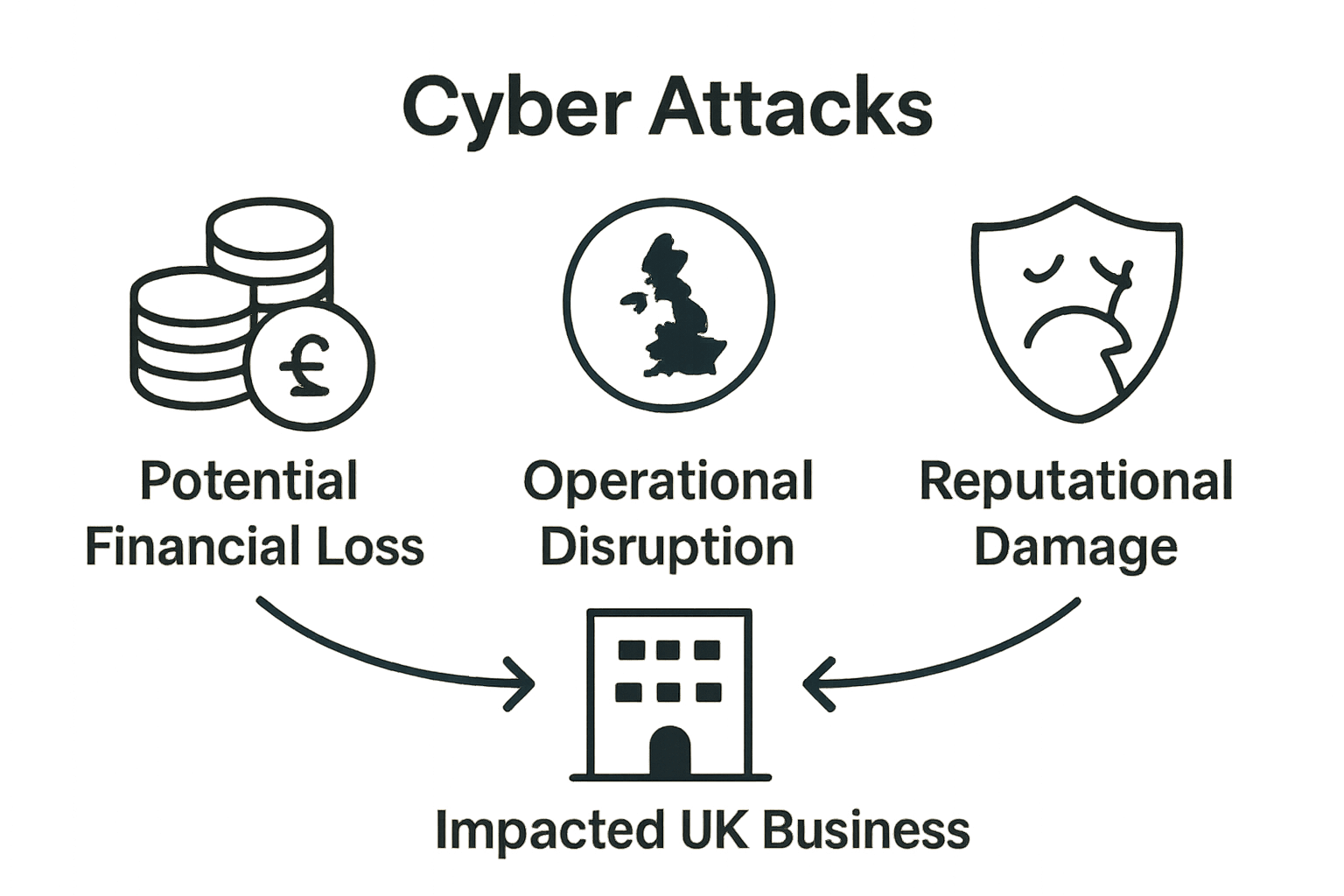
Read about devastating cyber attacks on UK institutions, which illustrate the potential severity. The British Library’s experience powerfully demonstrates these risks: a ransomware attack by the Rhysida group forced them to spend £6-7 million (40% of their reserves) on recovery after public data release, highlighting how a single cyber incident can critically destabilize an organisation. For businesses in Manchester, Preston, and across the North West, understanding these risks is not just prudent – it’s essential for survival in today’s digital landscape.
Protecting your business from cyber threats requires a strategic, multi-layered approach tailored to the unique digital landscape of Lancashire and the UK. The UK’s Cyber Assessment Framework provides a comprehensive blueprint for organisations, emphasising four critical objectives:
Businesses in Preston, Manchester, and across the North West must also look to the future. Our guide on cybersecurity strategy highlights emerging challenges like quantum computing. The National Cyber Security Centre recommends businesses begin preparing for post-quantum cryptography by 2028, anticipating potential encryption vulnerabilities by 2035.
Key prevention practices include regular staff training, implementing multi-factor authentication, maintaining updated software, conducting periodic security audits, and developing comprehensive incident response plans. Remember: in cyber defence, proactive preparation is always more cost-effective than reactive recovery.
Understanding cyber security threats is one thing, but actively guarding your business is another. If reading about ransomware, phishing, or unauthorised network access in our guide has left you concerned, you are not alone. Many businesses in Lancashire and Manchester face the very real risk of operational disruption, data breaches and significant financial loss just as described above. From rapidly evolving threats to the anxiety of possible reputational damage, these risks demand action—before your company is the next target.

Take control of your cyber security now. The expert team at J700 Group delivers proven managed IT solutions to protect Lancashire SMEs like yours from devastating cyber attacks. We provide everything from 24/7 monitoring to tailored recovery plans, turning complex threat prevention into straightforward peace of mind. Visit our contact page to connect with our Lancashire-based experts and secure your business today before the next attack strikes. Your peace of mind starts now.
The most common cyber security threats include ransomware, hacking, phishing, malware, and Distributed Denial-of-Service (DDoS) attacks. These threats can lead to significant operational and financial damage if not properly managed.
Businesses can prevent cyber security threats by implementing a multi-layered approach that includes regular staff training, using multi-factor authentication, maintaining updated software, conducting periodic security audits, and developing incident response plans.
Cyber attacks can lead to operational disruptions, reputational damage, data compromise, and significant recovery costs. On average, the financial impact of cyber crime per business can range from £990 to £1,970 for direct losses.
Understanding cyber security threats is crucial for businesses as it enables them to build robust defence strategies, protect their digital assets, and ensure business continuity in an increasingly interconnected digital landscape.
For years, businesses protected their data like a medieval castle: build a thick wall (a…
Read More
For many small and medium-sized businesses, cybersecurity is still viewed as an IT problem. Firewalls,…
Read More
Cloud technology is no longer a luxury or a cost-saving alternative to on-site servers. For…
Read More
Remember when we jokingly wondered if Apple was borrowing our name? Well, the rumours were…
Read More
AI hasn’t just changed the way we work, it has completely rewritten the rulebook for…
Read More
For many businesses, the office phone is like part of the furniture, it’s always there,…
Read More
We are thrilled to announce a significant milestone in the J700 Group journey. To keep…
Read More
For years, many small and medium-sized business owners in the North West have operated under…
Read More
In a modern healthcare setting, the stethoscope and the blood pressure cuff aren’t the only…
Read More
When people hear the word cybersecurity, they often imagine complex systems, expensive software and specialist…
Read More
As we count down to midnight, most of us are thinking about gym memberships or…
Read More
It’s Christmas Eve in Lancashire. The Preston bypass is a nightmare, the last-minute dash to…
Read More
For many businesses, the Christmas period means quieter offices, reduced staffing and systems left running…
Read More
Or: Why we’d like to have a word with Tim Cook this Christmas. There are…
Read More
Hackers Love Christmas: Learn Why your Business Could be at Risk This Holiday SeasonThe festive…
Read More
In recent months, high-profile companies like Land Rover and Co-op have made headlines due to…
Read More
Explore 7 essential tips for effective cloud solutions comparison to find the best fit for…
Read More
Learn how to secure business data for UK SMEs with this step-by-step guide focused on…
Read More
Cybersecurity basics explained for UK businesses—core concepts, major threats, essential safeguards, and compliance requirements. A…
Read More
Discover the essential role of IT support desks, core functions, key benefits, types of support,…
Read More
Discover 10 microsoft 365 alternatives for UK SMEs, comparing features and benefits to help your…
Read More
Discover the best microsoft 365 alternatives in our comparison of 10 top products to enhance…
Read More
Discover a business connectivity checklist with 7 actionable steps to boost IT reliability, security, and…
Read More
Discover 7 essential business continuity planning steps to protect your SME. Learn practical strategies for…
Read More
Small Business Office 365 comprehensive guide for UK SMEs: core features, setup process, security essentials,…
Read More
Small Business Office 365 guide for UK firms. Learn core features, setup, security, costs, and…
Read More
Small business Office 365 guide covering essential features, security, costs, local support, and practical benefits…
Read More
Follow this cybersecurity checklist for SMEs to secure your business in Lancashire and Manchester. Step-by-step…
Read More
Follow this cybersecurity checklist for SMEs to boost protection, reduce risks, and secure business data…
Read More
Cloud security explained: A comprehensive guide for UK businesses covering threat types, protection strategies, compliance,…
Read More
Data protection strategies for UK SMEs—types, key components, GDPR compliance, business risks, and best practices…
Read More
Why cybersecurity matters for UK businesses: core concepts, main risks, common threats, legal requirements, and…
Read More
Comprehensive guide to IT issues Lancashire businesses face, including security threats, system downtime, cloud solutions,…
Read More
Comprehensive guide on cyber security threats in the UK. Learn common types, key characteristics, real-world…
Read More
Follow this IT security checklist for a step-by-step process to secure your business effectively in…
Read More
Explore the benefits of managed IT services for businesses in Manchester and Lancashire, enhancing efficiency…
Read More
Explore the role of cybersecurity in business. Understand its importance, how it works, and key…
Read More
Discover 7 key advantages of Microsoft 365 for SMEs that can enhance productivity, collaboration, and…
Read More
Explore why use managed IT services and how they benefit businesses. Gain comprehensive insights on…
Read More
Comprehensive guide explaining cyber threats, focusing on their importance, how they work, and the key…
Read More