



For years, businesses protected their data like a medieval castle: build a thick wall (a…
Read More
When people hear the word cybersecurity, they often imagine complex systems, expensive software and specialist knowledge.The reality is that some of the most effective security measures are also the simplest and they’re often the ones businesses overlook.
At J700 Group, many of the cyber incidents we see don’t start with sophisticated attacks. They start with small gaps in everyday security practices. The good news is that these gaps are usually easy to fix.
Here are three simple steps every business can take today to be more secure.
Passwords are still one of the most common ways cybercriminals gain access to business systems.
Reused passwords, short passwords or passwords based on names and dates make it much easier for attackers to break in especially when credentials from previous data breaches are widely available online.
What we recommend:
A strong password won’t stop every attack but a weak one can undo all your other security efforts.
Multi-factor authentication adds an extra layer of protection by requiring more than just a password to log in such as a code sent to your phone or an authentication app.
This means that even if a password is compromised, an attacker is far less likely to gain access.
MFA is now available on most:
Yet many businesses still haven’t enabled it.
Put simply: MFA turns a single mistake into a recoverable one instead of a business-ending incident.
Updates are often postponed because they feel inconvenient but outdated systems are one of the easiest targets for cybercriminals.
Software updates don’t just add new features; they fix known security vulnerabilities that attackers actively look for.
Delaying updates can leave your business exposed to:
Best practice:
Keeping systems updated is one of the simplest ways to stay ahead of common threats.
These three steps are some of the most common security gaps we see and they’re also some of the easiest to fix.
Cybersecurity doesn’t have to be complicated to be effective. By strengthening the basics, businesses can significantly reduce their risk without overwhelming their teams.
If you’re unsure where your business currently stands, a quick review can often highlight simple improvements that make a big difference.
For years, businesses protected their data like a medieval castle: build a thick wall (a…
Read More
For many small and medium-sized businesses, cybersecurity is still viewed as an IT problem. Firewalls,…
Read More
Cloud technology is no longer a luxury or a cost-saving alternative to on-site servers. For…
Read More
Remember when we jokingly wondered if Apple was borrowing our name? Well, the rumours were…
Read More
AI hasn’t just changed the way we work, it has completely rewritten the rulebook for…
Read More
For many businesses, the office phone is like part of the furniture, it’s always there,…
Read More
We are thrilled to announce a significant milestone in the J700 Group journey. To keep…
Read More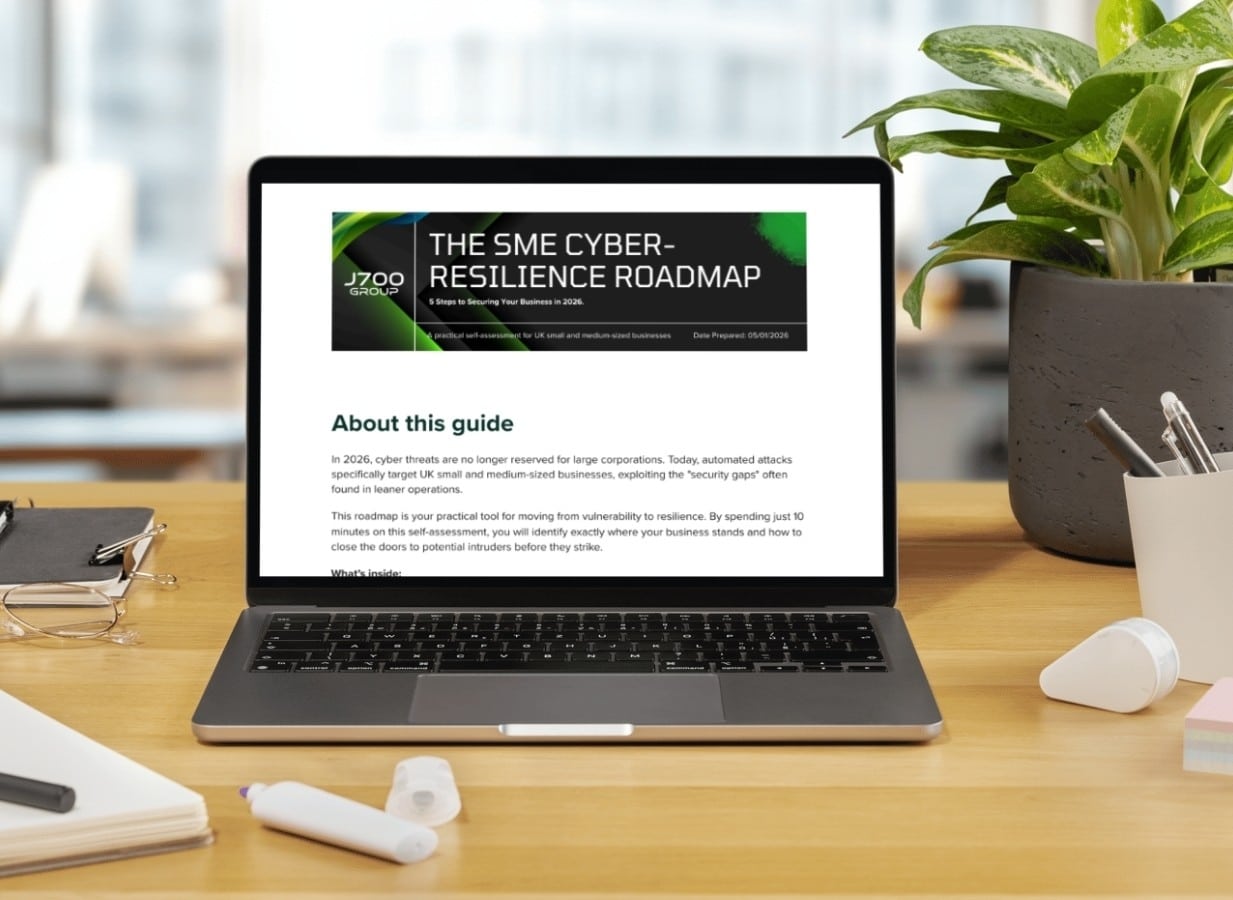
For years, many small and medium-sized business owners in the North West have operated under…
Read More
In a modern healthcare setting, the stethoscope and the blood pressure cuff aren’t the only…
Read More
When people hear the word cybersecurity, they often imagine complex systems, expensive software and specialist…
Read More
As we count down to midnight, most of us are thinking about gym memberships or…
Read More
It’s Christmas Eve in Lancashire. The Preston bypass is a nightmare, the last-minute dash to…
Read More
For many businesses, the Christmas period means quieter offices, reduced staffing and systems left running…
Read More
Or: Why we’d like to have a word with Tim Cook this Christmas. There are…
Read More
Hackers Love Christmas: Learn Why your Business Could be at Risk This Holiday SeasonThe festive…
Read More
In recent months, high-profile companies like Land Rover and Co-op have made headlines due to…
Read More
Explore 7 essential tips for effective cloud solutions comparison to find the best fit for…
Read More
Learn how to secure business data for UK SMEs with this step-by-step guide focused on…
Read More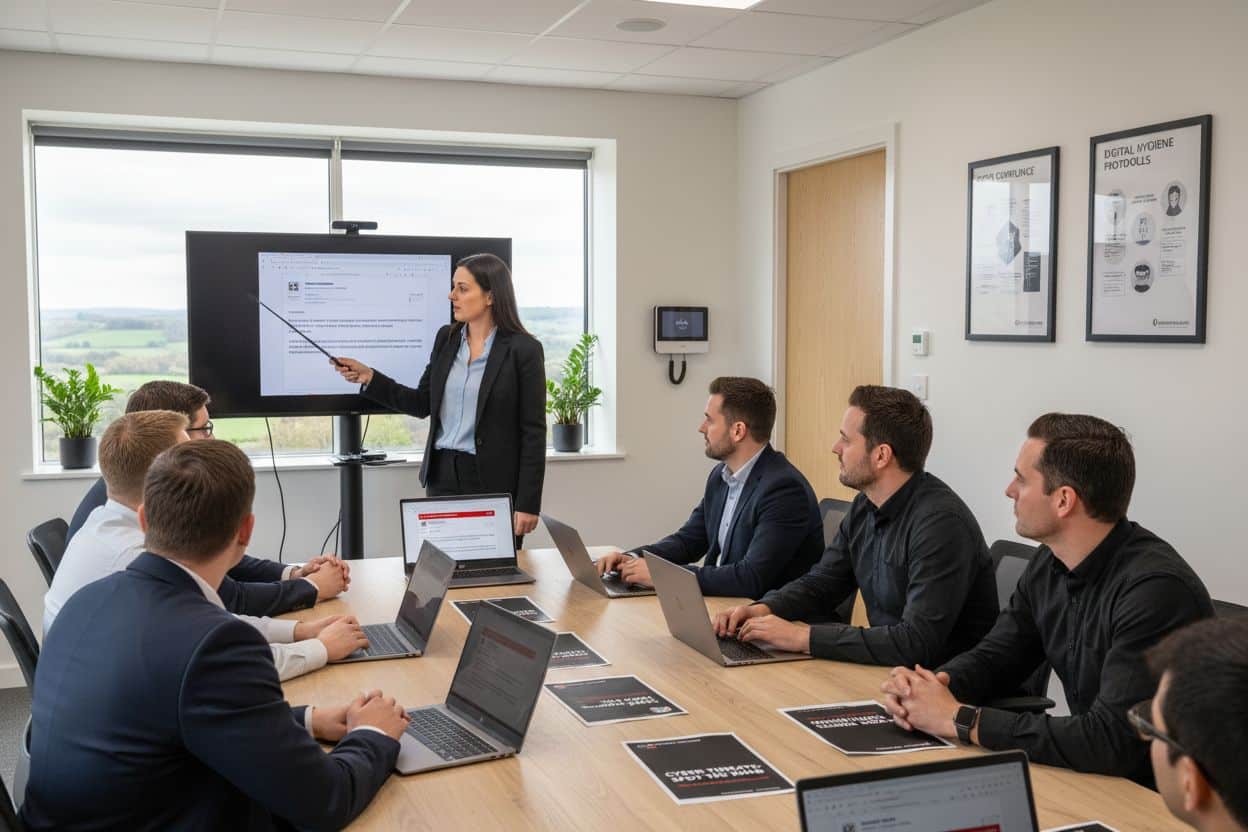
Cybersecurity basics explained for UK businesses—core concepts, major threats, essential safeguards, and compliance requirements. A…
Read More
Discover the essential role of IT support desks, core functions, key benefits, types of support,…
Read More
Discover 10 microsoft 365 alternatives for UK SMEs, comparing features and benefits to help your…
Read More
Discover the best microsoft 365 alternatives in our comparison of 10 top products to enhance…
Read More
Discover a business connectivity checklist with 7 actionable steps to boost IT reliability, security, and…
Read More
Discover 7 essential business continuity planning steps to protect your SME. Learn practical strategies for…
Read More
Small Business Office 365 comprehensive guide for UK SMEs: core features, setup process, security essentials,…
Read More
Small Business Office 365 guide for UK firms. Learn core features, setup, security, costs, and…
Read More
Small business Office 365 guide covering essential features, security, costs, local support, and practical benefits…
Read More
Follow this cybersecurity checklist for SMEs to secure your business in Lancashire and Manchester. Step-by-step…
Read More
Follow this cybersecurity checklist for SMEs to boost protection, reduce risks, and secure business data…
Read More
Cloud security explained: A comprehensive guide for UK businesses covering threat types, protection strategies, compliance,…
Read More
Data protection strategies for UK SMEs—types, key components, GDPR compliance, business risks, and best practices…
Read More
Why cybersecurity matters for UK businesses: core concepts, main risks, common threats, legal requirements, and…
Read More
Comprehensive guide to IT issues Lancashire businesses face, including security threats, system downtime, cloud solutions,…
Read More
Comprehensive guide on cyber security threats in the UK. Learn common types, key characteristics, real-world…
Read More
Follow this IT security checklist for a step-by-step process to secure your business effectively in…
Read More
Explore the benefits of managed IT services for businesses in Manchester and Lancashire, enhancing efficiency…
Read More
Explore the role of cybersecurity in business. Understand its importance, how it works, and key…
Read More
Discover 7 key advantages of Microsoft 365 for SMEs that can enhance productivity, collaboration, and…
Read More
Explore why use managed IT services and how they benefit businesses. Gain comprehensive insights on…
Read More
Comprehensive guide explaining cyber threats, focusing on their importance, how they work, and the key…
Read More