



Why Zero Trust Security Is No Longer Optional for Lancashire and Manchester SMEs Most small…
Read More
Phishing. It seems you can’t read an article on cybersecurity without it coming up. That’s because phishing is still the number one delivery vehicle for cyberattacks.
A cybercriminal may want to steal employee login credentials, launch a ransomware attack for a payout, or possibly plant spyware to steal sensitive info. Sending a phishing email can do them all
80% of surveyed security professionals say that phishing campaigns have significantly increased post-pandemic.
Phishing not only continues to work, but it’s increasing in volume due to the move to remote teams as many employees are now working from home. They don’t have the same network protections they had when working from the office.
So Why has phishing continued to work so well after all these years?
Aren’t people finally learning what phishing looks like?
People are generally more aware of phishing emails and how to spot them than they were a decade ago. But it’s also true that these emails are becoming harder to spot as scammers evolve their tactics.
One of the newest tactics is particularly hard to detect. It is the reply-chain phishing attack.
Just about everyone is familiar with reply chains in email. An email is copied to one or more people, one replies, and that reply sits at the bottom of the new message. Then another person chimes in on the conversation, replying to the same email.
Soon, you have a chain of email replies on a particular topic. It lists each reply one under the other so everyone can follow the conversation.
You don’t expect a phishing email tucked inside that ongoing email conversation. Most people are expecting phishing to come in as a new message, not a message included in an ongoing reply chain.
The reply-chain phishing attack is particularly insidious because it does exactly that. It inserts a convincing phishing email in the ongoing thread of an email reply chain.
How does a hacker gain access to the reply chain conversation? By hacking the email account of one of those people copied on the email chain.
The hacker can email from an email address that the other recipients recognize and trust. They also gain the benefit of reading down through the chain of replies. This enables them to craft a response that looks like it fits.
For example, they may see that everyone has been weighing in on a new product idea for a product called Superbug. So, they send a reply that says, “I’ve drafted up some thoughts on the new Superbug product, here’s a link to see them.”
The link will go to a malicious phishing site. The site might infect a visitor’s system with malware or present a form to steal more login credentials.
The reply won’t seem like a phishing email at all. It will be convincing because:
Business email compromise (BEC) is so common that it now has its own acronym. Weak and unsecured passwords can lead to email breaches. So do data breaches that reveal databases full of user logins. Both are contributors to how common BEC is becoming.
In 2021, 77% of organisations saw business email compromise attacks. This is up from 65% the year before.
Credential theft has become the main cause of data breaches globally. So, there is a pretty good chance of a compromise of one of your company’s email accounts at some point.
The reply-chain phishing attack is one of the ways that hackers turn that BEC into money. They either use it to plant ransomware or other malware or to steal sensitive data to sell on the Dark Web.
Here are some ways J700 Group recommends you can lessen the risk of reply-chain phishing in your organization:
This reduces the risk that employees will reuse passwords across many apps. It also keeps them from using weak passwords since they won’t need to remember them anymore.
Present a system challenge (question or required code). Using this for email logins from a strange IP address can stop account compromise.
Awareness is a big part of catching anything that might be slightly “off” in an email reply. Many attackers do make mistakes.
Do you have enough protection in place on your business email accounts to prevent a breach? Let J700 Group know if you’d like some help! We have email security solutions that can keep you better protected.
#Phishing #ReplyChainPhishing #EmailSecurity #Cybersecurity #BEC

Why Zero Trust Security Is No Longer Optional for Lancashire and Manchester SMEs Most small…
Read More
A practical guide for SMEs across Lancashire and the North West If you’ve been hearing…
Read More
Running a business in Lancashire is hard enough without your IT company adding to your…
Read More
Most businesses don’t lose data because of a dramatic cyberattack. They lose it, or expose…
Read More
For manufacturers, downtime isn’t just frustrating, it’s expensive. When production stops, everything slows down. Orders…
Read More
Artificial Intelligence is no longer something businesses are experimenting with. In 2026, it’s becoming part…
Read More
An email landed in my inbox this week from “Jonathan Cundliffe” — our Managing Director.…
Read More
For years, businesses protected their data like a medieval castle: build a thick wall (a…
Read More
For many small and medium-sized businesses, cybersecurity is still viewed as an IT problem. Firewalls,…
Read More
Cloud technology is no longer a luxury or a cost-saving alternative to on-site servers. For…
Read More
Remember when we jokingly wondered if Apple was borrowing our name? Well, the rumours were…
Read More
AI hasn’t just changed the way we work, it has completely rewritten the rulebook for…
Read More
For many businesses, the office phone is like part of the furniture, it’s always there,…
Read More
We are thrilled to announce a significant milestone in the J700 Group journey. To keep…
Read More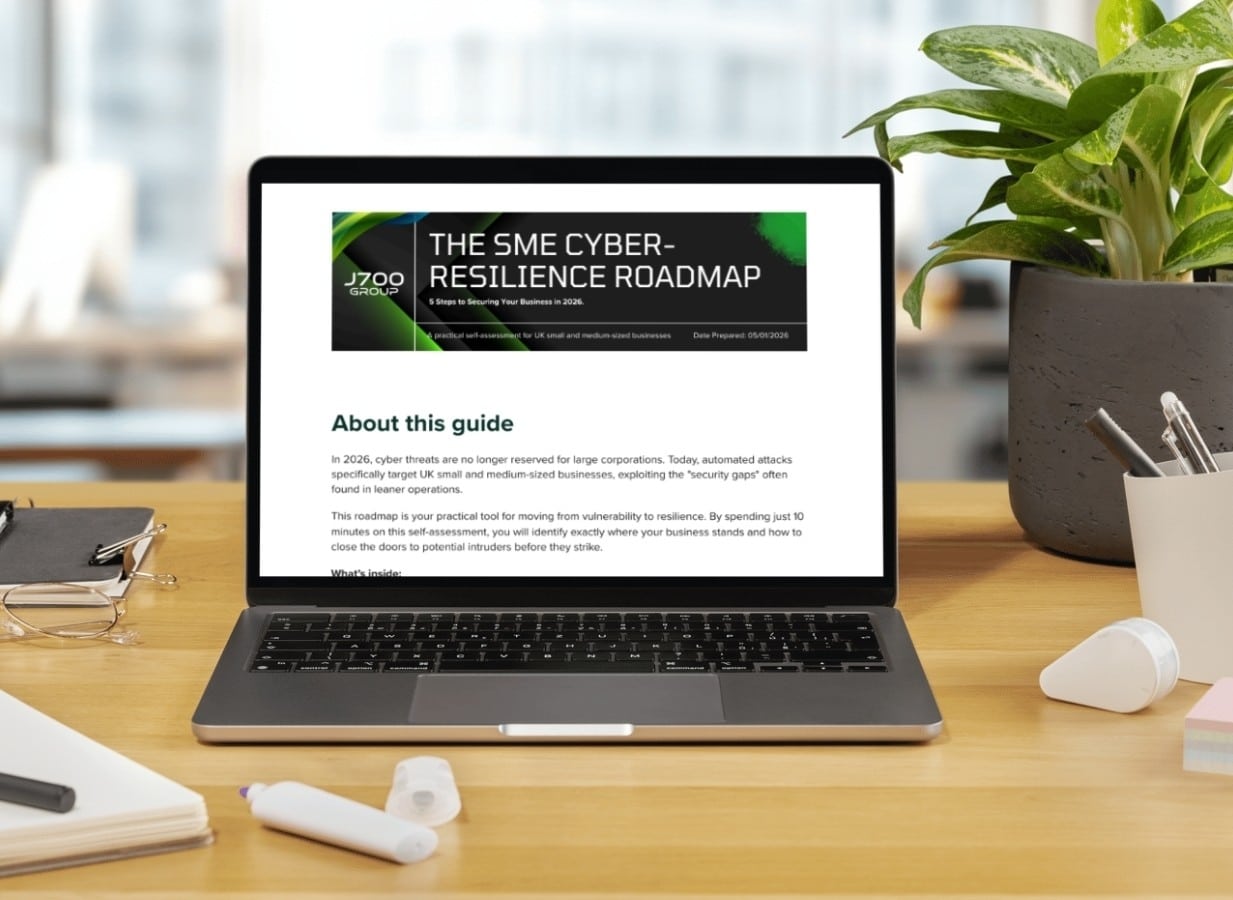
For years, many small and medium-sized business owners in the North West have operated under…
Read More
In a modern healthcare setting, the stethoscope and the blood pressure cuff aren’t the only…
Read More
When people hear the word cybersecurity, they often imagine complex systems, expensive software and specialist…
Read More
As we count down to midnight, most of us are thinking about gym memberships or…
Read More
It’s Christmas Eve in Lancashire. The Preston bypass is a nightmare, the last-minute dash to…
Read More
For many businesses, the Christmas period means quieter offices, reduced staffing and systems left running…
Read More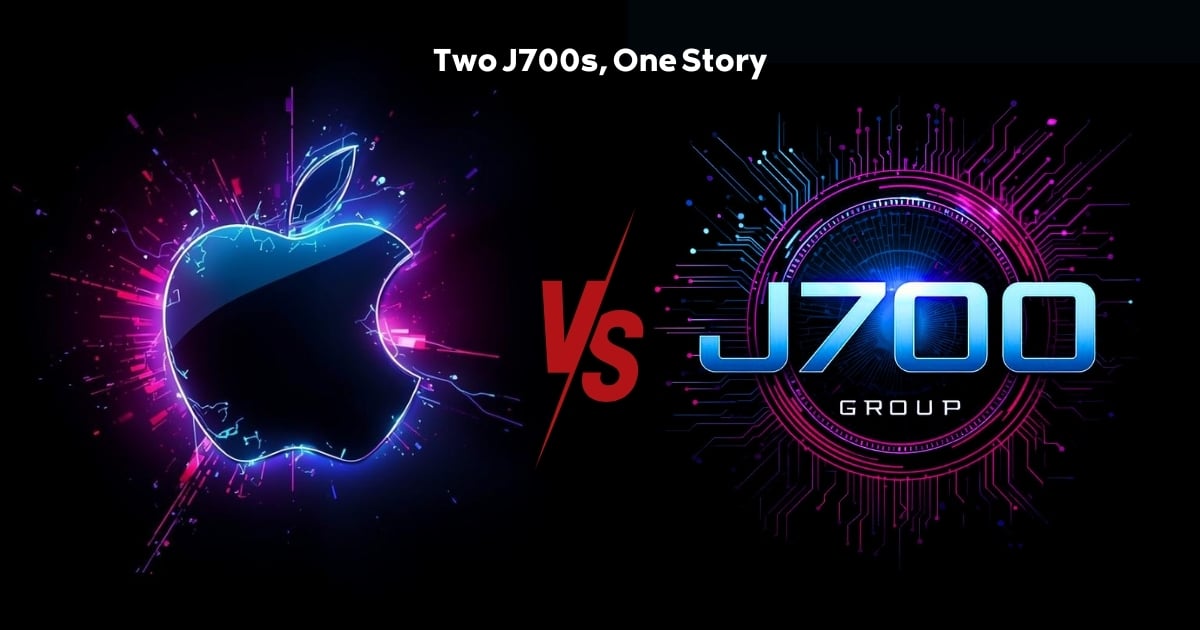
Or: Why we’d like to have a word with Tim Cook this Christmas. There are…
Read More
Hackers Love Christmas: Learn Why your Business Could be at Risk This Holiday SeasonThe festive…
Read More
In recent months, high-profile companies like Land Rover and Co-op have made headlines due to…
Read More
Explore 7 essential tips for effective cloud solutions comparison to find the best fit for…
Read More
Learn how to secure business data for UK SMEs with this step-by-step guide focused on…
Read More
Cybersecurity basics explained for UK businesses—core concepts, major threats, essential safeguards, and compliance requirements. A…
Read More
Discover the essential role of IT support desks, core functions, key benefits, types of support,…
Read More
Discover 10 microsoft 365 alternatives for UK SMEs, comparing features and benefits to help your…
Read More
Discover the best microsoft 365 alternatives in our comparison of 10 top products to enhance…
Read More
Discover the best microsoft 365 alternatives in our comparison of 10 top products to enhance…
Read More
Discover a business connectivity checklist with 7 actionable steps to boost IT reliability, security, and…
Read More
Discover 7 essential business continuity planning steps to protect your SME. Learn practical strategies for…
Read More
Small Business Office 365 comprehensive guide for UK SMEs: core features, setup process, security essentials,…
Read More
Small Business Office 365 guide for UK firms. Learn core features, setup, security, costs, and…
Read More
Small business Office 365 guide covering essential features, security, costs, local support, and practical benefits…
Read More
Follow this cybersecurity checklist for SMEs to secure your business in Lancashire and Manchester. Step-by-step…
Read More
Follow this cybersecurity checklist for SMEs to boost protection, reduce risks, and secure business data…
Read More
Cloud security explained: A comprehensive guide for UK businesses covering threat types, protection strategies, compliance,…
Read More
Data protection strategies for UK SMEs—types, key components, GDPR compliance, business risks, and best practices…
Read More
Why cybersecurity matters for UK businesses: core concepts, main risks, common threats, legal requirements, and…
Read More