
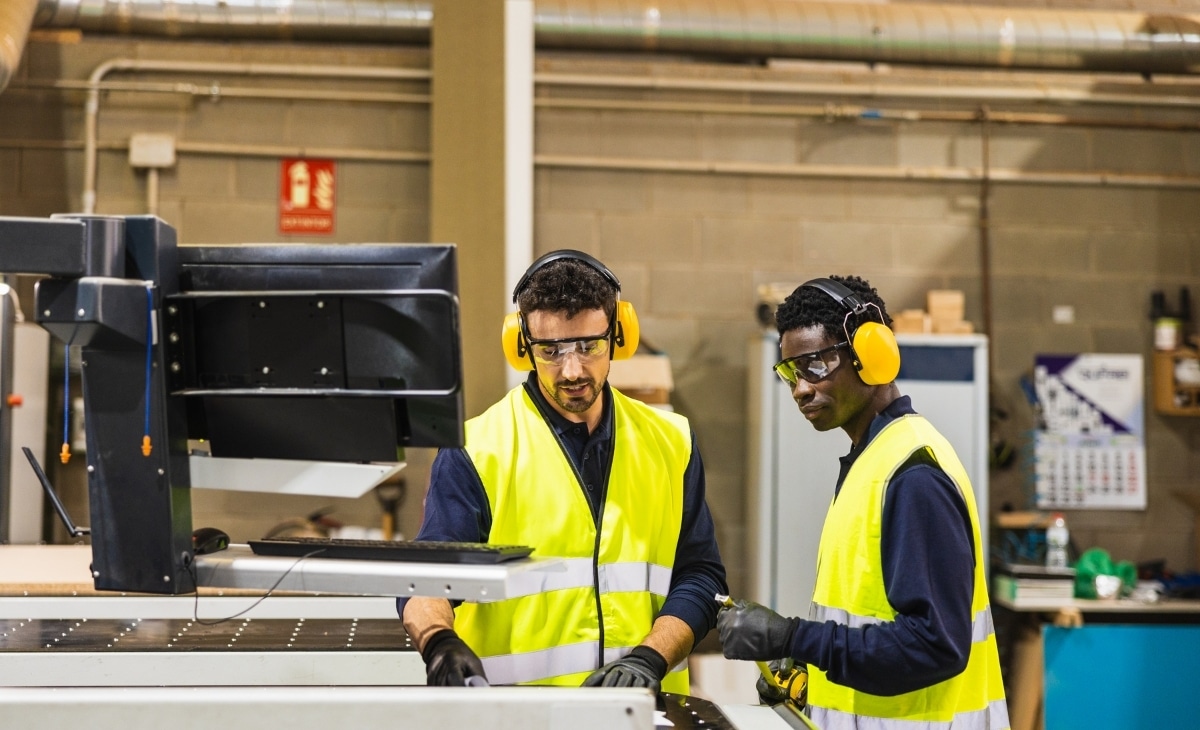
For manufacturers, downtime isn’t just frustrating, it’s expensive.
When production stops, everything slows down. Orders get delayed, staff are left waiting, and customer commitments start to slip. Even a short disruption can have a knock-on effect across the entire business.
And yet, many manufacturing businesses still treat IT as something that sits in the background, only looked at when something goes wrong.
In 2026, that approach is becoming increasingly risky.
The Reality: Manufacturing Is a Growing Target
Manufacturers are no longer under the radar when it comes to cyber threats. In fact, they’ve become an increasingly attractive target, particularly small and medium-sized businesses.
This is largely due to how manufacturing environments operate. Many rely on a mix of older systems, always-on production lines and interconnected supply chains. When combined, these create more opportunities for disruption.
Attackers understand this. They know that when production is affected, businesses are under pressure to act quickly, which increases the likelihood of reactive decisions.
When Systems Fail, the Impact Spreads Fast
When IT systems go down, the issue rarely stays within the IT department.
Production lines can come to a halt, teams lose access to key systems, and orders begin to back up. What starts as a technical issue quickly becomes an operational one.
For many manufacturers, the biggest risk isn’t just the immediate disruption, it’s the longer-term impact on customer trust and delivery reliability.
The Common Challenges Behind the Scenes
Many of the risks manufacturers face aren’t caused by a single issue, but by a combination of small gaps that build up over time.
One of the most common challenges is the reliance on systems that still work. These are often critical to production, but weren’t designed with modern security in mind. Updating or replacing them isn’t always straightforward, which can leave businesses exposed.
There’s also the challenge of visibility. Manufacturing environments often span office systems, production machinery and third-party integrations. Without a clear view across all of these, it becomes much harder to spot issues early or respond quickly.
Another key factor is the difference between IT and operational technology. Production systems require stability, so applying updates or changes needs to be handled carefully. Without the right approach, even well-intentioned fixes can cause disruption.
And finally, many businesses simply don’t have a clear plan for when something goes wrong. When an issue arises, teams are left figuring things out in real time, which can lead to delays and increased downtime.
What a More Resilient Approach Looks Like
The goal isn’t to overhaul everything overnight. It’s to build an IT environment that supports production rather than putting it at risk.
That typically starts with better visibility, understanding what systems are in place and how they interact. From there, businesses can introduce more proactive monitoring, allowing issues to be identified before they impact operations.
Security also plays a key role, particularly when it comes to controlling access and separating production systems from standard office environments. This reduces the likelihood of one issue spreading across the business.
Equally important is ensuring that backups are not only in place, but actually usable. Being able to restore systems quickly can make the difference between a minor issue and a major disruption.
And perhaps most importantly, having a clear plan in place gives teams confidence. When everyone knows what to do and who to contact, response times improve significantly.
The Shift Towards Operational Resilience
The most forward-thinking manufacturers are starting to view IT differently.
Rather than treating it as a support function, they’re recognising it as a key part of operational resilience. It’s not just about fixing problems, it’s about preventing them and minimising their impact.
This shift allows businesses to reduce unplanned downtime, improve reliability and maintain stronger relationships with customers.
Because in manufacturing, consistency is everything
Final Thoughts
IT should never be the reason production stops.
But without the right visibility, planning and protection in place, it often becomes exactly that.
For manufacturers across Lancashire and Manchester, the focus now is on building systems that are not only functional, but resilient, supporting the business even when challenges arise.
Worried about how IT could impact your production?
J700 Group works with manufacturing businesses to reduce downtime, strengthen security and keep operations running smoothly, without disrupting the shop floor.
If you’d like a clearer picture of where your risks are, get in touch with our team today.
Recommended
- From Downtime to Drive: How a Bury Manufacturer Rebuilt Trust in Their IT
- IT Support Burnley
- 7 Key Advantages of Microsoft 365 for SMEs
- Understanding Business Continuity Planning Guide
- Cyber Essentials